
DIY Cat Window Beds: Sustainable Materials for Cozy Winter Lounging
DIY Cat Window Beds: Sustainable Materials for Cozy Winter Lounging
Create a cozy and eco-friendly window bed for your cat using sustainable materials like reclaimed wood and repurposed sweaters. You'll need basic tools including a drill, hacksaw, and measuring tape to construct a sturdy frame that supports your cat's weight plus a 50% safety margin. Measure your window sill carefully, then attach washable cushion covers and memory foam padding for comfort. Install mounting hardware securely, ensuring all materials are pet-safe and non-toxic. Clean surfaces thoroughly before mounting, and test the bed's stability before allowing your cat to use it. Our detailed guide will walk you through each step of crafting the perfect sustainable lounging spot.
Choosing Sustainable Building Materials
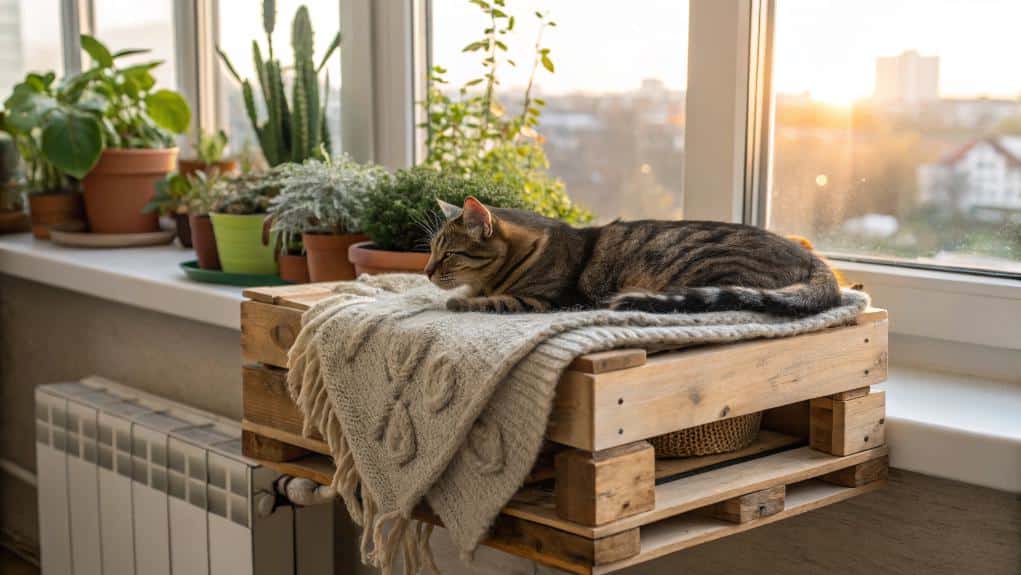
When creating a DIY cat window bed, choosing sustainable materials isn't just good for the environment—it's practical for your pet's comfort and safety. Through sustainable sourcing, you'll find materials that are both durable and environmentally responsible, ensuring your feline friend's perch will last for years to come.
Consider using reclaimed wood as your primary building material, which you can often source from local salvage yards or renovation projects. The wood's unique historical character adds a charming aesthetic to your home while reducing waste in landfills. Adding old sweaters as padding creates an extra layer of warmth and comfort while promoting sustainable reuse. Sourcing from sustainably managed forests helps ensure your project has a minimal environmental impact. Choosing pet-safe materials is essential when selecting eco-friendly options for your furry companion. Similar to the growing trend where 70% of pet owners are willing to pay more for eco-friendly products, DIY enthusiasts are increasingly choosing sustainable materials for their projects.
For cushioning, opt for eco-friendly alternatives like sheep's wool, which provides excellent insulation while being naturally breathable and sustainable. You'll want to incorporate cork as a base material, as it's both lightweight and naturally fire-retardant, making it ideal for window installations. Selecting eco-conscious suppliers helps support businesses committed to environmental stewardship.
If you're looking to enhance insulation, especially for cold windows, consider adding a layer of recycled rubber underneath the bed's base. This material offers excellent thermal properties and helps prevent heat loss.
For finishing touches, select non-toxic, sustainable adhesives and fasteners that won't compromise your commitment to environmental responsibility.
Remember to verify that all materials are pet-safe and properly sealed to prevent any harmful exposure to your cat.
Planning Your Window Bed Design
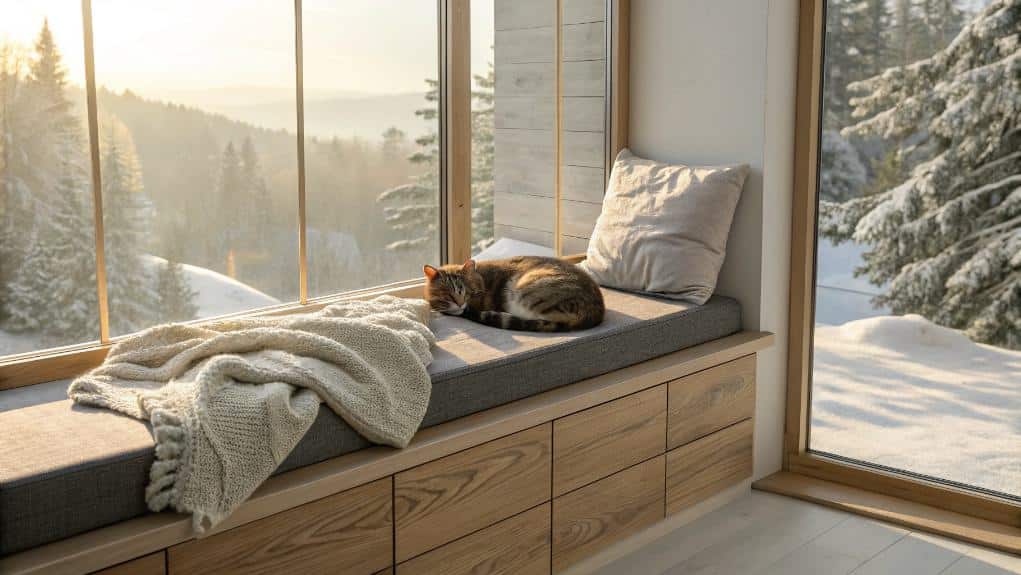
A successful window bed design starts with precise measurements and thoughtful planning. Before you begin construction, carefully measure your window sill's length, width, and height to guarantee your cat's bed will fit securely and comfortably. Adding a wicker basket can create an eco-friendly and cozy sleeping spot for your feline friend.
When developing your design considerations, account for both structural stability and your cat's preferences for lounging positions. The ideal height allows for a slight upward tilt when installed to ensure proper balance. Consider utilizing discounted wood scraps from your local home improvement store's coal wood bin for a cost-effective build.
To create a well-planned window bed that meets safety and comfort requirements, follow these essential steps:
- Calculate the maximum weight capacity needed by adding your cat's weight plus an extra 50% for safety margin.
- Sketch your design with precise measurements, including support brackets and cushioning thickness.
- Map out anchor points for secure attachment, guaranteeing they won't interfere with window operation.
- List required materials based on your measurements, including primary support structures and comfort layers.
Consider how your cat interacts with existing furniture and favorite spots when planning the bed's height and orientation.
You'll want to incorporate features that match these preferences while guaranteeing the design doesn't obstruct window function.
Remember to plan for easy maintenance by selecting materials that you can readily clean and replace when needed.
Essential Tools and Equipment
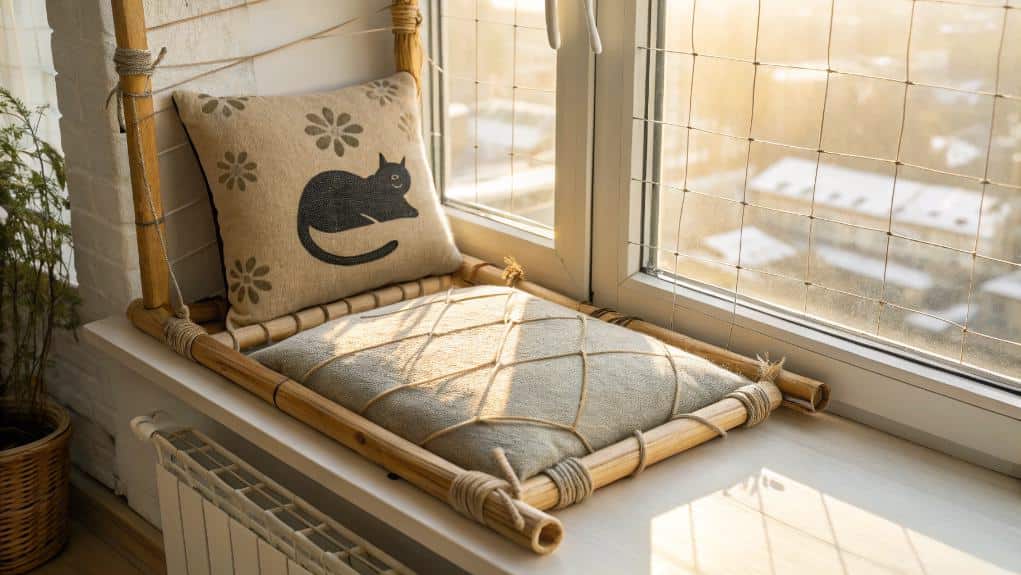
Now that you've planned your design, gathering the right tools and equipment will set you up for successful construction. For proper project organization, separate your tools into essential categories: construction tools, basic materials, safety equipment, and customization items.
You'll need a drilling machine, hacksaw, and measuring tape for the main construction phase, while keeping your tool maintenance current guarantees precise, safe work. The essential 1.4m of PVC pipes can be purchased at any local hardware store. Consider having a screw gun for efficient assembly of wooden components. A soft blanket lining adds necessary comfort for your cat during winter months.
Begin by assembling your safety equipment, including protective glasses and gloves, as these should be readily available throughout the project. For the basic structure, you'll need PVC pipes, suction cups, and steel cable, along with fabric for the bed surface.
Keep these materials organized by function, storing cutting tools separately from assembly equipment. If you're planning customizations, set aside your optional tools like scissors, hot glue gun, and stapler in a designated area.
Your materials list should include both structural components and comfort elements, such as pillows or foam padding. Remember to check each tool's condition before starting, making sure your screwdriver tips aren't worn and your utility knife is sharp for clean, accurate cuts.
Step-by-Step Assembly Guide

Through careful planning and organization, you'll build your cat window bed in three main phases: structure assembly, bedding attachment, and final mounting. The project uses scrap lumber from your garage to keep costs minimal.
Begin by measuring your window's dimensions precisely, as these measurements will guide your material cuts and assembly techniques. Consider utilizing spalted maple wood, known for its unique dark lines and durability. When you're ready to construct, cut your chosen materials according to your measurements, guaranteeing each piece aligns perfectly with your planned design. Consider using strong tape for secure joins, similar to methods used in winter cat shelters. Drawing inspiration from bamboo construction, you can incorporate eco-friendly materials that offer both strength and sustainability.
For successful assembly, follow these essential steps:
- Connect your frame pieces using appropriate fasteners, confirming each joint is secure and stable.
- Wrap and secure your chosen fabric around the frame, adding padding for comfort.
- Attach mounting hardware, such as suction cups or brackets, testing their grip strength.
- Position and secure the cat bed to your window, checking for stability and proper weight distribution.
As you work through each phase, maintain focus on creating secure connections between components. Your cat bed's durability depends heavily on proper assembly techniques and material selection.
Remember to test the bed's stability before allowing your cat to use it, and perform regular maintenance checks to verify all components remain secure over time.
Comfort and Safety Features
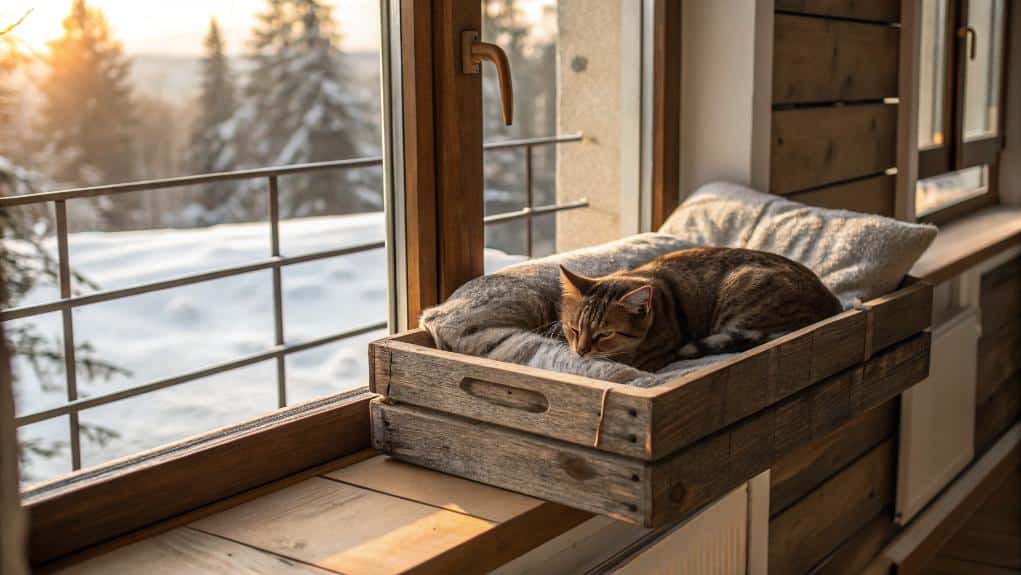
Creating a safe and comfortable window bed requires careful attention to both essential safety measures and comfort features that'll keep your cat secure and content. When designing your DIY window bed, you'll need to balance comfort preferences with safety standards, guaranteeing that all materials and mounting systems meet necessary requirements. Regular cleaning and maintenance should include alcohol-based cleaners for mounting surfaces. Placing cat trees nearby can provide alternative elevated spots for viewing. Using sticky suction cups provides reliable window attachment when properly installed. To maximize comfort, incorporate washable cushion covers and guarantee proper padding support to prevent sagging. You'll want to position heating elements strategically during winter months, while maintaining adequate ventilation through breathable fabric choices. Using non-toxic materials helps protect pets with allergies or sensitivities. When addressing safety concerns, regularly inspect mounting hardware and guarantee all attachment points remain secure. Remember to measure your cat's weight and select materials that can support at least twice that amount. For ideal accessibility, design the bed with open edges or gentle slopes that accommodate your cat's climbing abilities, particularly if you're building for senior cats or those with mobility issues.
| Feature Type | Essential Elements | Implementation Tips |
|---|---|---|
| Safety | Secure mounting | Use heavy-duty brackets rated for 2x cat's weight |
| Comfort | Cushioning | Layer memory foam with breathable covers |
| Materials | Non-toxic components | Select pet-safe fabrics and adhesives |
Conclusion
You'll find that building a sustainable window bed transforms both your cat's comfort and your home's eco-footprint. Consider Sarah from Portland, who crafted a bed using reclaimed cedar planks and organic cotton batting, creating a cozy perch her cats use daily while reducing landfill waste. By following these guidelines and prioritizing sustainable materials, you're providing your feline companion with a safe, environmentally conscious lounging spot that'll last for years to come.