
DIY Herbal Teas for Pet Relaxation
DIY Herbal Teas for Pet Relaxation
DIY herbal teas offer anxious pets a gentle alternative to pharmaceuticals. Valerian root enhances GABA for noise phobias, while chamomile soothes nervous systems and digestive upset. Passionflower works wonders for hyperactive companions. Brew safely by cooling boiled water completely, using one tablespoon dried herbs per cup, and steeping 5-7 minutes. Always strain thoroughly and consult your vet first—especially for pets with health conditions. Proper techniques unlock these natural remedies’ full calming potential.
Main Points
- Use valerian root, chamomile, or passionflower to create calming teas that address anxiety, sleep issues, and hyperactivity in pets.
- Steep one tablespoon of dried herbs in 8 ounces of boiling water for 5-7 minutes, then cool completely before serving.
- Always strain herbal teas thoroughly and avoid any ingredients containing caffeine or theobromine which are toxic to pets.
- Store prepared teas in the refrigerator and discard after 24 hours to maintain freshness and prevent bacterial growth.
- Consult your veterinarian before introducing herbal remedies, especially for pets with existing health conditions or medications.
Understanding Stress Signals and Anxiety Behaviors in Pets
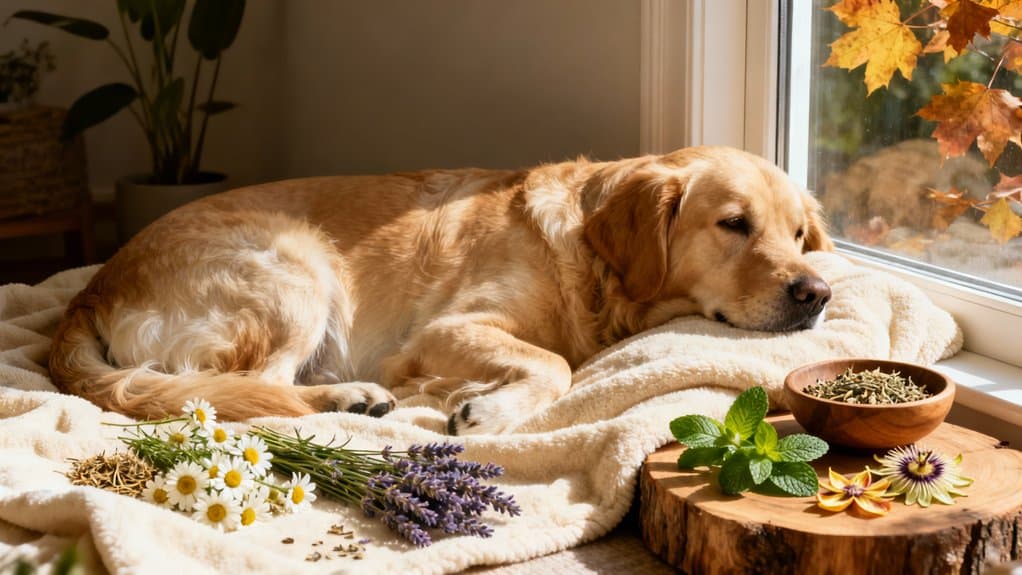
How often do pet parents miss the subtle ways their furry companions signal distress? More than we’d like to admit. That anxious lip licking? Not thirst. The excessive yawning during calm moments? Stress, not sleepiness.
Recognizing stress signals requires detective work. Watch for whale eye—when pets show the whites of their eyes. Notice tucked tails, pinned ears, or sudden “guilty” behavior that’s actually anxiety.
These anxiety triggers range from thunderstorms to vet visits to unexpected routine changes. During fireworks season, pets often experience their most intense panic episodes as the loud, unpredictable sounds can trigger severe stress responses. Pheromone diffusers can provide additional support by releasing calming scents that help reduce anxiety during these stressful events.
Physical symptoms matter too. Panting without exercise, digestive upsets, or obsessive grooming all signal distress. Context is everything—growling during play differs from stress-induced vocalizations. For pets experiencing severe anxiety episodes, compression vests can provide therapeutic pressure that helps reduce stress responses naturally.
Multiple signals together paint the clearest picture. Individual pets express anxiety differently, so knowing your companion’s baseline behavior helps identify when something’s amiss. Dogs may choose to isolate themselves when feeling overwhelmed by their environment. Dogs can display over 30 different calming signals as they attempt to manage their stress levels. Since dogs cannot express stress verbally, pet parents must rely on observing behavioral and physical changes to understand their companion’s emotional state.
Essential Herbs and Their Calming Properties for Animal Wellness
When stress signals start appearing, nature offers a gentle pharmacy of herbs that can help restore balance to anxious pets. Understanding herb benefits empowers pet parents to choose effective relaxation techniques tailored to their furry companions’ specific needs.
| Herb | Primary Action | Best Used For |
|---|---|---|
| Valerian Root | GABA enhancement | Acute anxiety, noise phobias |
| Chamomile | Nervous system soothing | Sleep issues, digestive upset |
| Passionflower | Nervous system quieting | Hyperactivity, chronic anxiety |
These botanical allies work beautifully together. Valerian acts fast. Perfect for thunderstorm meltdowns. Chamomile soothes both mind and tummy—because stressed pets often get upset stomachs too. Passionflower brings long-term emotional balance. These calming herbs are also nutrient-dense, providing essential vitamins and minerals that support overall wellness while reducing anxiety. Creating a safe space with herbal teas can help pets feel more secure during storm season.
Traditional Chinese Medicine adds depth with spirit-calming herbs like biota seed, creating comprehensive formulas that address root causes rather than just symptoms. Heat-draining herbs like Rehmannia help clear excess emotions while maintaining your pet’s unique personality. Proper dilution of herbal teas is crucial to ensure safety and prevent any adverse reactions in sensitive pets. For more severe anxiety episodes, Bach flower remedies can be used alongside herbal teas to provide immediate emergency relief.
Step-by-Step Brewing Methods and Safety Guidelines
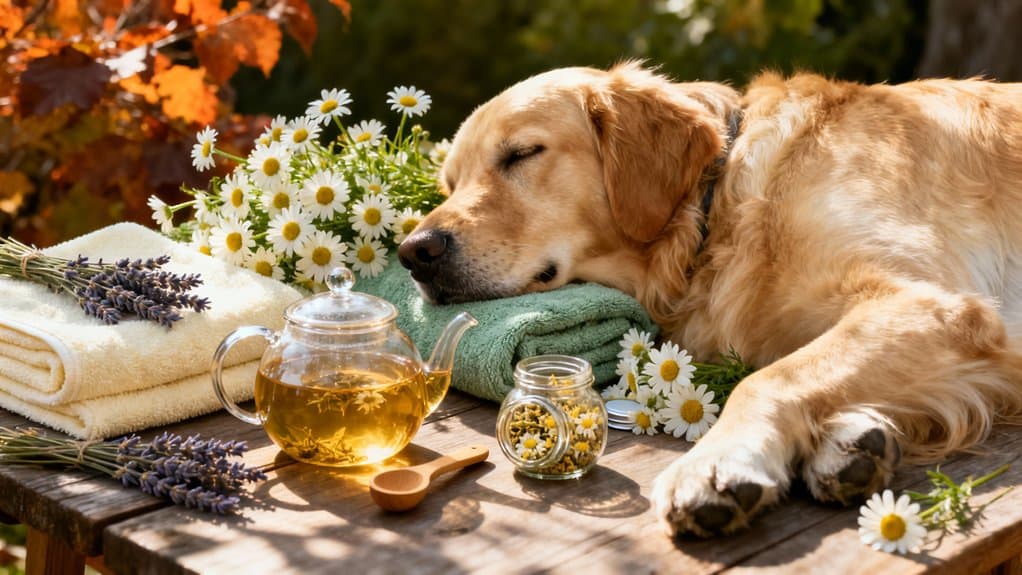
Knowing which herbs help anxious pets is only half the battle—brewing them safely makes all the difference. Proper brewing techniques start with boiling water to 212°F, then cooling completely before serving. Nobody wants a scalded Schnauzer.
Use one tablespoon dried herbs per 8-ounce cup, steeping 5-7 minutes for optimal strength without bitterness. Herbal safety isn’t negotiable. Always strain thoroughly—pets don’t need herbal debris floating around.
Skip anything with caffeine or theobromine entirely. Your anxious cat doesn’t need a caffeine buzz on top of everything else. Store dried herbs in airtight containers and discard prepared teas after 24 hours.
Most importantly, consult your veterinarian before introducing new herbs, especially for pets with existing health conditions. Using filtered water removes impurities that could affect your pet’s sensitive system. A small amount of honey can be added to enhance flavor if desired. For pets who need multiple doses throughout the day, you can re-steep the same herbs several times to extract different beneficial compounds. Smart brewing keeps tails wagging safely.
Frequently Asked Questions
How Long Do Homemade Herbal Teas Stay Fresh When Stored Properly?
Homemade herbal teas maintain optimal shelf life for 6 months to 2 years when dry, or 3-5 days when brewed and refrigerated. Following proper storage tips—airtight containers, cool dark places—helps caregivers preserve maximum potency for their pets.
Can I Give Herbal Tea to Pregnant or Nursing Pets Safely?
Navigating delicate waters, herbal tea safety during pet pregnancy requires extreme caution. Most herbs lack proper research for expectant or nursing animals. Veterinary guidance becomes essential before introducing any botanical preparations to vulnerable mothers and developing offspring.
What’s the Ideal Serving Temperature for Herbal Teas Given to Pets?
Herbal teas should be served at 80°F-90°F (27°C-32°C) for pet safety. After ideal steeping at higher temperatures for extraction, herbal blends must cool to lukewarm before serving to prevent oral burns in sensitive pets.
How Much Does It Cost to Make Herbal Teas Versus Commercial Products?
DIY herbal teas cost $0.10-$0.30 per serving versus $0.50-$1.10 for commercial products. This cost comparison reveals homemade savings of up to 80%, enabling caregivers to provide affordable wellness support while maintaining quality ingredients for their pets.
Can Herbal Teas Interact With My Pet’s Current Prescription Medications?
Yes, herbal interactions with prescription medications can occur, affecting medication safety. Pet owners should consult veterinarians before introducing herbal teas, especially for animals on heart medications or chemotherapy with narrow therapeutic ranges.
Conclusion
Creating homemade herbal teas offers pet parents a gentle pathway to supporting their furry friends’ emotional well-being. However, the proof is in the pudding—success requires careful attention to dosing, proper herb selection, and close observation of your pet’s response. While these natural remedies can complement your wellness toolkit, they shouldn’t replace professional veterinary care for serious anxiety issues. Start small. Watch closely. Your pet’s calm demeanor will speak volumes.
References
- https://www.petmima.com.au/blogs/pet-tips/how-herbs-help-manage-stress-and-anxiety-in-cats-and-dogs
- https://felcana.com/blogs/blog/tea-for-dogs
- https://www.petmd.com/dog/behavior/dog-calming-products-help-ease-dog-anxiety
- https://www.hedc.org/the-health-benefits-of-herbal-tea/
- https://pmc.ncbi.nlm.nih.gov/articles/PMC8308238/
- https://agresearchmag.ars.usda.gov/2011/mar/tea
- https://pmc.ncbi.nlm.nih.gov/articles/PMC11521711/
- https://mypetnutritionist.com/post/7-wonderful-herbs-for-dogs/
- https://zebracbd.com/blogs/cbd-education/tea-for-relaxation
- https://www.akc.org/expert-advice/training/how-to-tell-if-your-dog-is-stressed/