
Holiday Plant Safety: Complete Pet Protection Guide
Holiday Plant Safety: Complete Pet Protection Guide
Keep your pets safe this holiday season by being aware of toxic plants in your festive decor. Common holiday plants like mistletoe, holly, and lilies can cause severe illness or death if ingested by your furry friends. You'll need to either remove these dangerous plants or place them well out of reach. Consider pet-friendly alternatives like Christmas cactus, African violets, or Boston ferns for worry-free decorating. Watch for warning signs like vomiting, lethargy, or excessive drooling, and keep your vet's emergency number handy. Understanding which plants pose risks and how to prevent accidents will help guarantee your celebrations stay joyful and safe.
Main Points
- Create physical barriers between pets and toxic holiday plants like mistletoe, holly, and yew, which can cause severe health issues.
- Replace traditional holiday plants with pet-safe alternatives like Christmas cactus, African violets, or Boston ferns.
- Keep emergency veterinary and poison control numbers readily accessible, and watch for poisoning symptoms like vomiting or lethargy.
- Remove fallen plant debris promptly and supervise pets around holiday decorations to prevent accidental ingestion.
- Store all holiday plants out of reach and regularly inspect the area for fallen berries, leaves, or plant parts.
Understanding Holiday Plant Dangers
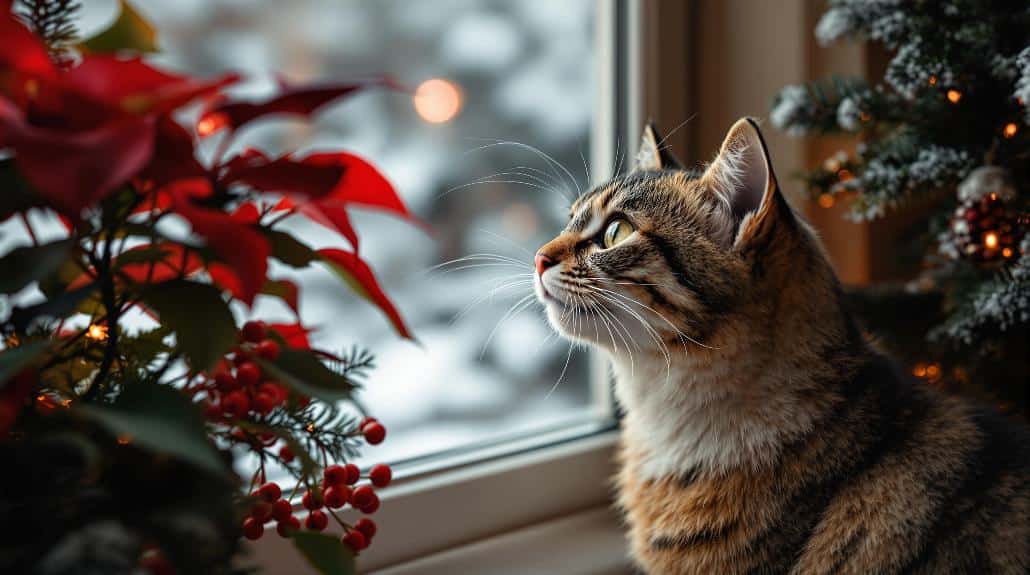
More concerning are plants like mistletoe and holly, which can trigger severe gastrointestinal problems and heart issues if consumed.
African violets and Christmas cactus make safe alternatives for festive holiday decor.
Lilies pose an especially grave threat to cats, as even small amounts can lead to kidney failure.
Don't forget about your Christmas tree water, which can harbor harmful bacteria that may cause stomach upset in curious pets who drink it.
Always place these plants in areas your pets can't access, and monitor their behavior when new holiday decorations enter your home.
While poinsettias have a mild reputation, they can cause mild digestive upset if eaten by pets, though they're not actually poisonous as commonly believed.
Consider using artificial plants instead of real ones to completely eliminate any risk of plant-related toxicity.
Most Toxic Holiday Plants
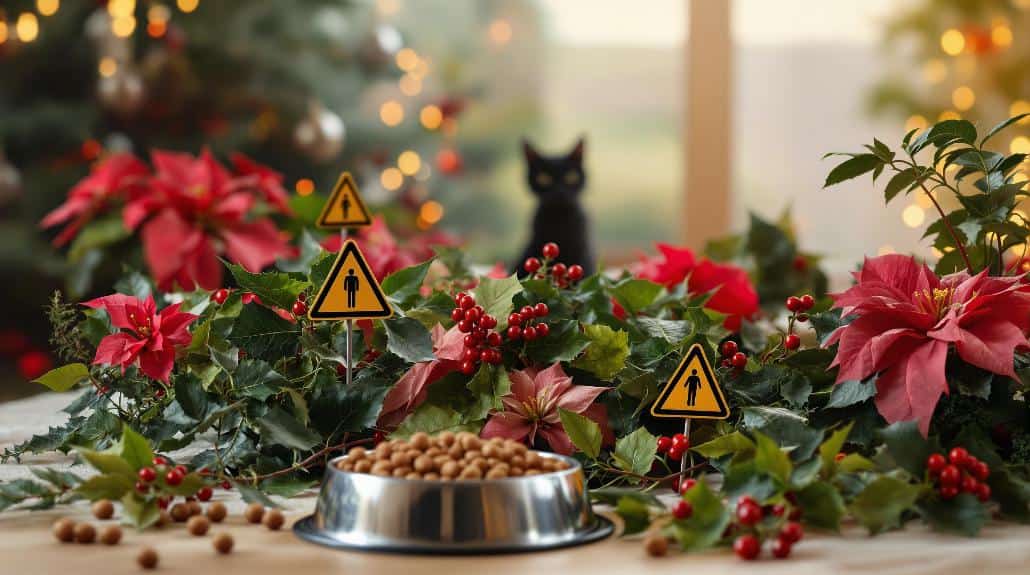
During the holiday season, several popular decorative plants pose serious health risks to pets, with holly, yew, mistletoe, and amaryllis ranking among the most dangerous.
Holly's berries and leaves contain saponins that can trigger severe gastrointestinal issues in your pets. Even small amounts can cause vomiting and lethargy, while larger quantities may become life-threatening and affect your pet's ability to walk. English Ivy can cause severe skin irritation and digestive problems if pets come in contact with it. The Jerusalem Cherry can cause drowsiness and hallucinations in pets if ingested. Poinsettias are often misunderstood as deadly but typically cause only mild stomach upset if eaten.
You'll need to be especially careful with yew, as it's potentially lethal even in small amounts. The taxines in yew quickly affect heart rhythm, and you might notice symptoms like trembling, convulsions, and breathing difficulties in your pets.
While the red arils aren't toxic, all other plant parts pose severe risks.
Mistletoe can cause immediate stomach problems if your pet ingests any part of the plant. In severe cases, you'll need to watch for seizures, low blood pressure, and breathing issues.
Similarly, amaryllis contains lycorine, which triggers gastrointestinal distress and may affect your pet's heart rate. The bulb is particularly toxic, but all plant parts can cause poisoning symptoms.
Pet Safety During Festivities
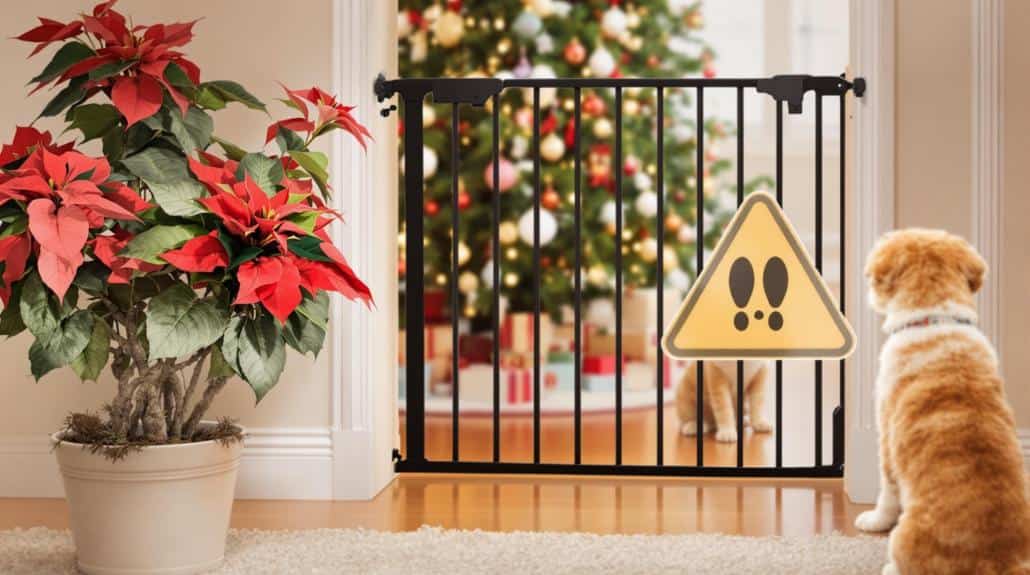
Four key strategies can help keep your pets safe during holiday festivities.
First, maintain constant supervision when your pets are around holiday decorations, especially plants. You'll want to monitor their behavior and intervene quickly if they show interest in potentially harmful items. Common warning signs include drooling and vomiting, which often indicate plant ingestion. Keeping true lilies completely out of the home is essential, as they are deadly to cats. Natural remedies, such as holistic remedies for your pet's allergies, can also help manage allergic reactions to certain plants. Natural essential oils safe for your furry friends can also be a helpful addition for maintaining a safe environment for your pets during the holiday season.
Second, create physical barriers by placing plants in elevated locations or using protective covers to prevent access. Regular inspections of these barriers will help ensure plant debris doesn't fall within reach of pets. Consider including pet first aid kits in your home to address any immediate health concerns your pet may have.
Don't hesitate to switch to pet-friendly alternatives for your holiday decor. Consider safe options like Christmas cactus, African violets, or Boston ferns instead of toxic traditional plants.
If you're unsure about a plant's safety, consult the ASPCA's toxicity lists before bringing it into your home.
Be prepared for emergencies by keeping your vet's contact information and the ASPCA Animal Poison Control Center number (888-426-4435) readily available.
If your pet ingests a suspicious plant, identify the species and preserve a sample for analysis.
Remember to inform all household members and guests about plant safety protocols, including keeping pets away from tree water and limiting decorative accessories that could provide access to harmful plants.
Signs of Plant Poisoning
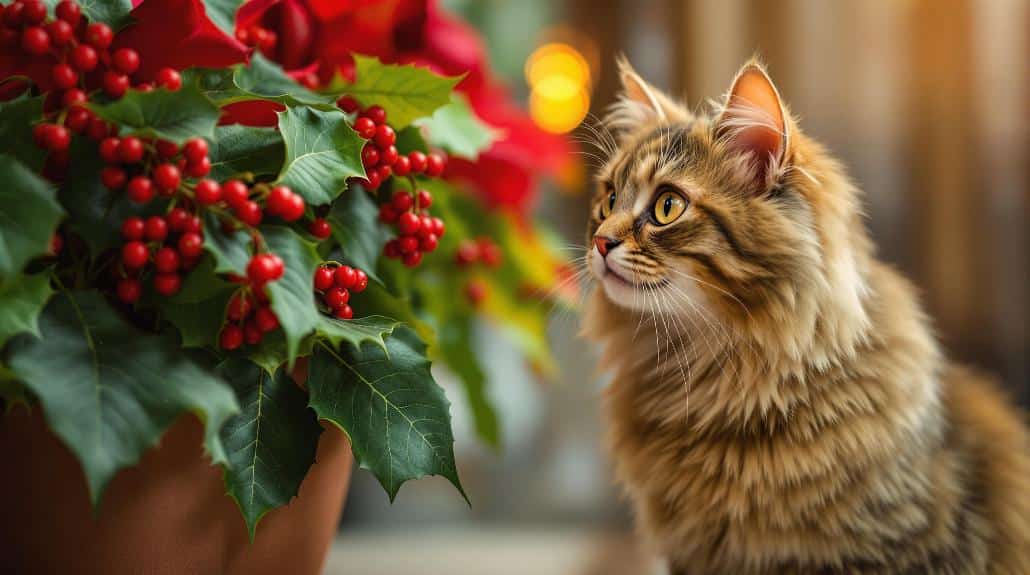
Recognizing plant poisoning symptoms in pets can mean the difference between life and death. Your pet may show various signs if they've ingested toxic plants, including drowsiness, vomiting, diarrhea, and loss of appetite. Pet age matters since puppies are more likely to explore and chew on dangerous plants. Even seemingly safe Christmas decorations like pine needles from trees can cause internal injuries or blockages.
Watch for specific indicators like excessive drooling, mouth ulcers, or tremors, which often point to plant-related poisoning.
Different plants trigger distinct symptoms in your pets. For example, daylilies can cause severe gastrointestinal upset in dogs, while foxglove and lily of the valley may lead to dangerous heart problems. Particularly concerning are serious neurological signs that may include seizures or loss of balance.
If you notice any unusual behavior or symptoms, don't wait – contact your veterinarian immediately.
- Your beloved pet could suffer permanent organ damage if you delay seeking treatment.
- Every minute counts when dealing with plant poisoning – quick action saves lives.
- The heartbreak of losing a pet to preventable plant poisoning is devastating.
Never try to induce vomiting without professional guidance, as this could worsen your pet's condition. Instead, collect samples of the suspected plant and any vomit for identification.
Your vet may administer activated charcoal to absorb toxins and conduct blood tests to assess organ function.
Safe Holiday Plant Alternatives
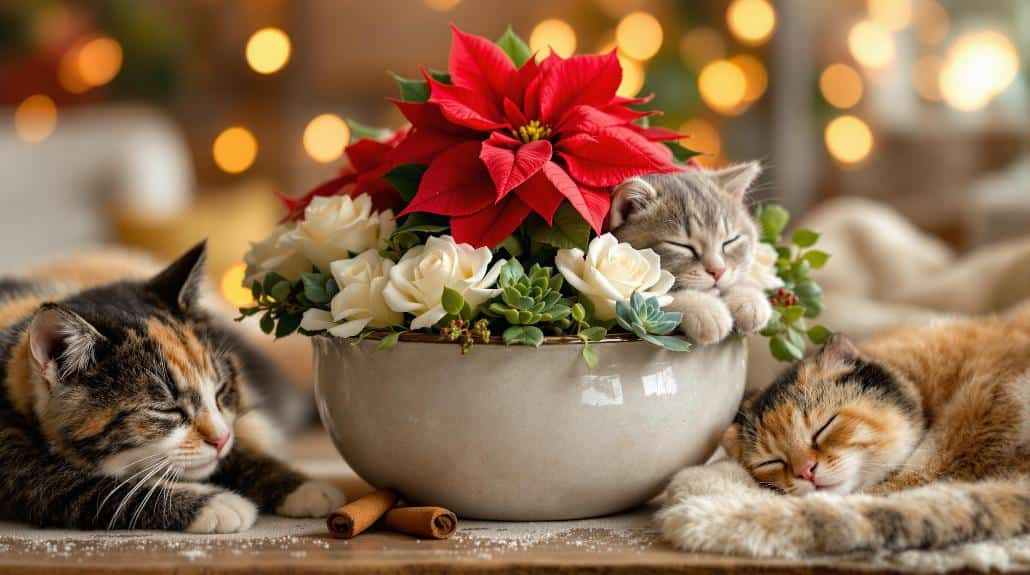
A festive home needn't put your pets at risk during the holidays. You'll find several beautiful and safe alternatives to traditional holiday plants that can keep both your home festive and your pets healthy. Holiday decor should be carefully selected since toxic plants can hallucinate pets if ingested.
Instead of potentially harmful holiday favorites, consider these pet-safe options that offer similar aesthetic appeal:
| Traditional Plant | Safe Alternative | Key Benefits |
|---|---|---|
| Poinsettia | Red Roses | Non-toxic, classic look, versatile for decorating |
| Holly | Autumn Olive | Safe berries, similar appearance, edible for humans |
| Mistletoe | Christmas Cactus | Long-lasting, colorful blooms, completely non-toxic |
For additional holiday greenery, you'll love waxflower with its pine-like foliage and clustered blooms. It's not only safe but can last up to three weeks with proper care. The stunning Phalaenopsis orchid can add an elegant touch to your seasonal arrangements while remaining completely safe for pets. You can display it alone or combine it with other pet-friendly flowers for stunning arrangements. Remember to maintain your safe alternatives by changing water regularly and trimming stems. While Christmas cactus may cause mild stomach upset if consumed in large quantities, it's generally safe and makes an excellent long-term addition to your holiday decor collection. Choosing sustainable pet products not only protects your pets but also supports environmentally friendly practices. By opting for natural pet care products, you can ensure that your holiday decorations and pet supplies align with eco-friendly values.
Emergency Response Measures
Emergency readiness forms the backbone of responsible pet ownership. You'll need a thorough plan that includes specific steps for evacuating with your pets and designated meeting points where your family can reunite. Keep your pet's emergency kit in an easily accessible location, stocked with essential items like food, water, and any necessary medications. In winter weather, ensure the kit includes a warm blanket to protect your pet during car breakdowns.
- Your pet's life depends on your quick thinking – maintain updated contact information for your veterinarian and the nearest 24-hour emergency animal hospital clearly posted where everyone can find it.
- Those precious minutes during an emergency can mean the difference between life and death – practice your evacuation plan regularly so your pet becomes familiar with carriers and emergency procedures.
- Your furry family member relies on you completely – designate a trusted neighbor who can help if you're not home during an emergency.
Ensure you've installed working smoke detectors throughout your home and keep emergency supplies like first aid kits within reach. Having an outdoor meeting point for your family and pets is crucial for emergency situations. Consider scheduling winter maintenance checks of your heating systems to prevent carbon monoxide dangers to your pets. In the event of an emergency, knowing essential tips for pet emergency care can help mitigate potential harm to your pets and ensure their safety.
Place pet rescue alert stickers near your front door to inform emergency responders about the number and types of pets inside.
Remember to update your emergency kit regularly, checking expiration dates on food and medications.
Pet-Proofing Holiday Decorations
During the holiday season, keeping your pets safe around decorations requires careful planning and smart placement strategies. Start by mounting decorations high where your pets can't reach them and secure your holiday tree with a sturdy base, potentially anchoring it to the wall for extra stability. LED lights are the safest lighting choice since they don't get hot enough to burn curious pets. Glass ornaments should be replaced with plastic decorations for added safety. Consider choosing allergy-friendly pet food to prevent any allergic reactions during the festive season. Organic pet foods are often free from harmful additives and pesticides, providing a healthier option for your pets.
Don't use tinsel in your decorations, as it can cause severe digestive problems if ingested, potentially requiring surgery. Keep snow globes out of reach since they contain toxic chemicals, and verify all electrical wires are protected with cable tidies to prevent shocking hazards. Prepare a first aid kit in case your pet encounters any holiday-related accidents. Consider using organic pest control methods to ensure that any pest control measures taken are safe for your pets.
If you're using holiday plants, opt for pet-safe alternatives instead of toxic varieties like holly, mistletoe, and certain lilies. You'll want to create pet-free zones using barriers like baby gates for dogs or aluminum foil deterrents for cats.
Consider using a small tabletop tree instead of a full-sized one, and always cover the tree stand to prevent pets from drinking the water. Don't hang edible decorations like popcorn strings or candy canes, and secure all ornaments firmly to prevent them from falling.
When accidents happen, immediately clean up any broken decorations to protect your pets from injury.
Natural Vs Artificial Plants
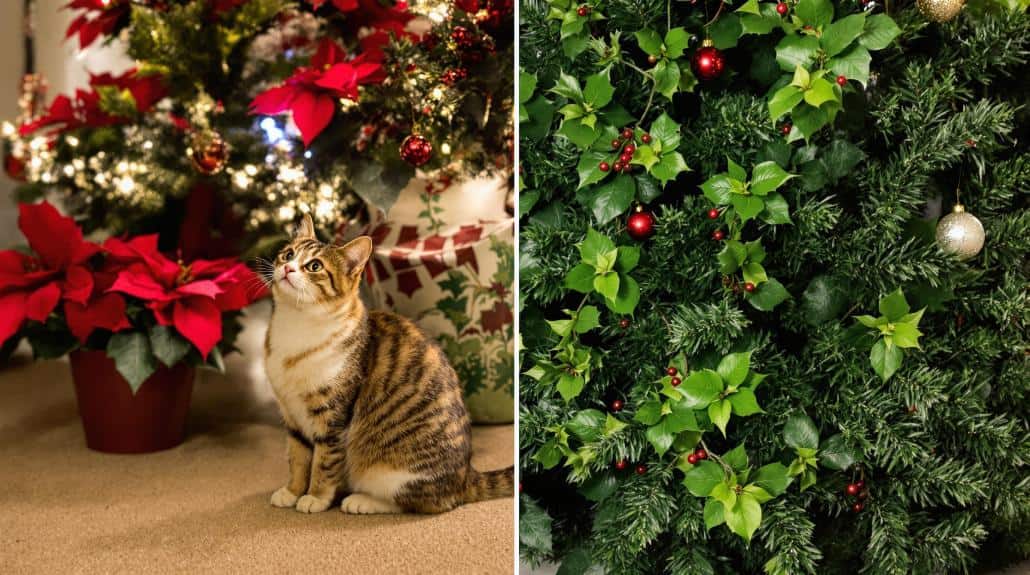
Plant selection can make the difference between a safe and hazardous environment for your pets. Common houseplants like lilies, pothos, and philodendron can cause severe reactions in cats and dogs, ranging from oral irritation to kidney failure. Oleander and mistletoe are among the most dangerous holiday plants for pets. Taking pictures of suspected toxic plants can help with proper identification during emergency veterinary visits.
You'll need to be particularly vigilant with cats, as they're especially sensitive to certain plant toxins. For pet owners interested in natural remedies, herbal medicine for pets can offer alternative solutions to some health concerns, but it's important to ensure these remedies are safe and appropriately used. Cranberry extract, for example, is a popular ingredient that supports urinary health in pets by preventing bacterial adherence in the urinary tract. Natural herbal solutions can provide nutritional benefits, but consulting with a veterinarian is essential to avoid adverse effects.
While natural plants pose significant risks, artificial plants offer a safer alternative for pet owners. They're typically made from non-toxic materials like silk and plastic, eliminating the risk of poisoning. Positive reinforcement training can help keep pets away from any decorative plants.
You won't have to worry about your pets ingesting harmful substances found in real plants, such as calcium oxalate crystals or saponins.
- Your beloved cat could suffer kidney failure within hours of ingesting lily leaves.
- Your dog's painful mouth swelling from chewing on philodendron can require emergency care.
- Your pet's life could be saved by simply choosing artificial plants over toxic varieties.
Remember to research any real plants before bringing them home, and consider replacing hazardous varieties with artificial ones.
If you suspect plant poisoning, contact your veterinarian immediately, as quick action can mean the difference between life and death.
Year-Round Plant Safety Tips
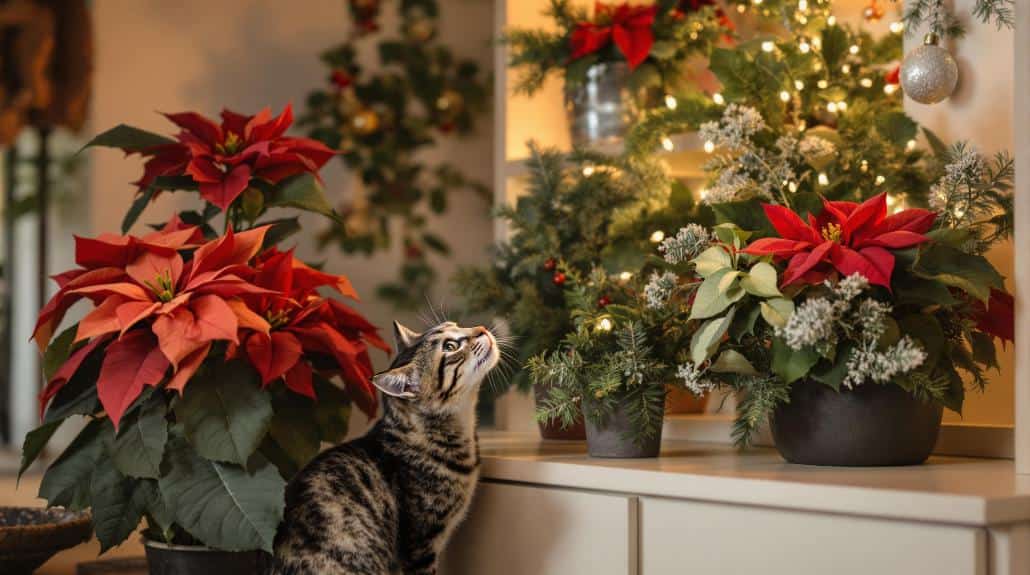
Safety precautions for your plants shouldn't be limited to specific seasons or occasions. Establish a year-round strategy to protect your pets from potentially harmful plants by carefully selecting pet-safe varieties like Christmas cactus while avoiding toxic options such as lilies and holly. Spruce and fir trees make safe holiday choices for homes with pets.
Keep all plants, even non-toxic ones, out of your pet's reach to prevent accidents and digestive issues. You'll want to develop consistent watering routines for your plants to maintain their health and prevent them from becoming hazards. Consider using non-breakable containers for potted plants to minimize injury risks from broken materials.
When bringing new plants into your home, use protective covers during transportation and acclimation periods. Set up physical barriers like baby gates if needed, and provide your pets with engaging alternatives to keep them from showing interest in your plants.
Don't forget to supervise your pets when they're in areas with plants, and remove any fallen leaves or debris promptly. Store the ASPCA and Poison Control numbers in your phone, and watch for signs of plant toxicity such as vomiting or lethargy.
If you notice these symptoms, contact your vet immediately. Regular monitoring and maintenance of your plants will create a safer environment for your pets throughout the year.
Frequently Asked Questions
Can Pets Develop Immunity to Toxic Holiday Plants Over Time?
No, your pets can't develop immunity to toxic holiday plants over time.
In fact, repeated exposure to plants like lilies, amaryllis, and yew can lead to cumulative poisoning, making each incident potentially more dangerous.
Your pet's body won't build up resistance to these toxins, so they'll remain vulnerable to severe health issues with every exposure.
It's crucial to keep toxic plants away from your pets year-round.
How Long Do Holiday Plant Toxins Remain Active in Dried Arrangements?
Like a sleeping dragon that never truly slumbers, toxins in dried holiday plants remain potent guardians of their ancient defenses.
You'll find these toxins can stay active for months or even years in dried arrangements. While drying methods may slightly reduce potency, they won't eliminate the risk.
In holly berries and other toxic parts, you're looking at dangerous compounds that stubbornly persist, much like a well-preserved secret from nature's vault.
Do Outdoor Holiday Plants Pose the Same Risks as Indoor Ones?
While outdoor and indoor holiday plants both pose risks to pets, you'll find that outdoor plants often present higher hazards.
You'll need to be extra vigilant with outdoor varieties like holly, yew, and mistletoe, as they're typically more toxic than common indoor plants.
Your pets also have greater access to outdoor plants, increasing the risk of ingestion.
Don't forget that outdoor plants can be exposed to pesticides, adding another layer of potential danger.
Should Holiday Plants Be Composted or Disposed of in Regular Trash?
You should definitely compost your holiday plants rather than sending them to regular trash.
Composting transforms the plants into nutrient-rich soil while preventing carbon from being released as CO2. You'll help reduce landfill waste and create valuable fertilizer for gardens.
Most cities offer convenient drop-off points for holiday plant composting, or you can compost at home by balancing "greens" and "browns" in your compost bin.
Can Essential Oils From Holiday Plants Affect Pets Through Diffusers?
Did you know that pets' sense of smell can be up to 100,000 times more sensitive than humans?
Yes, essential oils from plants can absolutely affect your pets through diffusers. When you're using a diffuser, your pet's experiencing these scents much more intensely than you are.
You'll want to be especially careful with holiday plants like pine and cinnamon, as they're toxic to pets. It's best to avoid diffusing these oils altogether.