
Holistic Solutions for Cat Stress and Anxiety
Holistic Solutions for Cat Stress and Anxiety
To address cat stress and anxiety holistically, start by identifying triggers and creating a safe space. Incorporate natural calming herbs like chamomile and valerian root into your cat's environment. Consider supplements such as L-theanine or melatonin, but consult your vet for proper dosage. Enrich your cat's surroundings with interactive toys, scratching posts, and high perches. Establish consistent routines for feeding and playtime to provide structure. Use pheromone diffusers and gentle massage to promote relaxation. Implement behavioral techniques like desensitization and positive reinforcement. Remember, a multi-faceted approach combining environmental, nutritional, and behavioral strategies often yields the best results for feline well-being.
Main Points
- Use natural calming herbs like chamomile, valerian root, and lemon balm to reduce feline stress.
- Create a soothing environment with quiet spaces, pheromone diffusers, and safe retreats for your cat.
- Implement behavioral techniques including consistent routines, desensitization, and positive reinforcement to manage anxiety.
- Provide environmental enrichment through interactive toys, vertical spaces, and stimulating play sessions.
- Incorporate holistic approaches such as gentle massage, play therapy, and maintaining a calm demeanor during interactions.
Understanding Feline Anxiety
Understanding feline anxiety is vital for cat owners who want to provide the best care for their furry companions. Anxiety in cats affects a significant portion of the feline population, with approximately 20-25% of cats experiencing symptoms.
To identify anxiety in your cat, watch for signs such as over-grooming, litter box avoidance, and changes in tail position, particularly tucking. Environmental changes, like moving to a new home or introducing new pets, can trigger anxiety responses. Additionally, separation anxiety, often linked to abandonment or rehoming experiences, is a common issue in domesticated cats.
Exploring natural calming aids can be an effective way to help manage your cat's anxiety and promote overall well-being.
To start relieving stress and anxiety in your feline friend, first identify potential stressors in their environment. Once identified, work on minimizing these triggers while creating a safe, comfortable space for your cat.
Consider incorporating calming herbs for cats, such as chamomile or valerian root, into their routine. These can be offered in the form of treats or diffused scents.
Natural Calming Herbs for Cats
When considering natural remedies for your cat's anxiety, you'll find several effective herbs that can promote relaxation and reduce stress.
These include chamomile, valerian root, lemon balm, hops, and catnip, each offering unique calming properties that can benefit your feline companion.
Spot-on treatments containing valerian extract are particularly effective for cats, offering easy application and quick absorption.
To guarantee safe administration, always consult with your veterinarian before introducing any new herbs to your cat's routine, and follow recommended dosages carefully, typically in the form of teas, tinctures, or dried herbs added to food or bedding.
Top Anxiety-Reducing Herbs
Several natural herbs can effectively reduce anxiety in cats, offering a holistic approach to stress management.
Chamomile, known for its anti-anxiety properties, works similarly in cats as it does in humans, promoting relaxation and reducing stress by acting on the brain and nervous system. You can introduce chamomile to your cat's environment through dried flowers or specially formulated treats.
Valerian root is another powerful option, acting as a natural sedative for cats. It induces euphoria and relaxation, making it particularly useful for calming cats after periods of excitement. To use valerian root, you can sprinkle a small amount of the dried herb on your cat's bedding or incorporate it into homemade treats.
Lemon balm, with its historical use dating back to the Middle Ages, offers a calming effect on cats. You can grow lemon balm in your garden or use it in dried form, adding it to your cat's favorite resting areas.
When using these herbs, always start with small amounts and observe your cat's reaction, gradually increasing the dosage if needed. Consult with your veterinarian before introducing any new herbs into your cat's routine, especially if they've pre-existing health conditions.
Safe Administration Methods
For safe administration of natural calming herbs to cats, it's important to choose the right method and form. Dried herbs, such as chamomile and valerian root, can be safely used by incorporating them into your cat's environment. Place these herbs in toys or collars to allow gradual exposure to their calming effects.
When selecting anxiety supplements for your feline friend, avoid essential oils due to their potential liver toxicity. Instead, opt for dried herbal forms or professionally formulated tinctures for safe administration methods.
To effectively use calming herbs:
- Introduce dried herbs gradually through toys or collars
- Administer small doses of professionally formulated tinctures
- Use catnip 15 minutes before stressful events as a distraction method
When using tinctures, follow the recommended dosage carefully. For catnip, allow your cat to experience the initial hyperactivity, which is followed by a period of relaxation. This can be particularly useful before vet visits or travel.
As you implement these safe administration methods, closely monitor your cat's behavior and adjust the dosage as needed. Remember, the goal is to provide effective anxiety relief while ensuring your cat's safety and well-being.
Effective Supplements for Stress Relief
In light of the growing interest in holistic pet care, several supplements have emerged as effective options for relieving stress in cats. L-Theanine, derived from green tea, stands out as a potent aid in increasing serotonin, dopamine, and GABA levels, promoting relaxation and reducing stress in felines.
Melatonin, known for its sleep-inducing properties, can also alleviate anxiety through various pathways, making it beneficial for stressed cats. Additionally, Magnesium supplementation is essential, as low levels can elevate cortisol and stress hormones, contributing to anxiety in cats.
Similar to dog anxiety supplements, these natural remedies can be administered in various forms such as chews, powders, or liquids, offering flexibility in dosage and administration.
To implement these supplements effectively, start by consulting with your veterinarian to determine the appropriate dosage for your cat's size and specific needs.
Administer L-Theanine in the form of treats or powder mixed with food, typically once or twice daily. For Melatonin, use liquid drops or specially formulated cat treats, given 30 minutes before bedtime or stressful events.
Magnesium can be incorporated through diet or supplements, but make certain you're using a form that's easily absorbed by cats, such as magnesium citrate. Always monitor your cat's response to these supplements and adjust as needed under professional guidance.
Creating a Soothing Environment
While supplements can help manage cat stress, creating a soothing environment is equally important for your feline friend's well-being. Start by minimizing loud noises and providing a quiet, comfortable space where your cat can retreat when feeling anxious.
Incorporate calming scents, such as lavender or pheromone diffusers, to promote relaxation and reduce stress levels. Synthetic pheromones have shown a 90% success rate in reducing unwanted behaviors like urine marking and destructive scratching.
Environmental enrichment is essential for stress relief, so guarantee you provide:
- Interactive toys to keep your cat mentally stimulated
- Scratching posts to alleviate boredom and anxiety
- High perches or hiding spots for a sense of security
Designating these areas allows your cat to feel in control of their surroundings, contributing to a stress-free environment.
Additionally, establish regular routines for feeding and playtime to create predictability, which greatly reduces anxiety by fostering a sense of security.
Remember, a calm environment isn't just about physical space; it's about creating an atmosphere that caters to your cat's natural instincts and needs.
Behavioral Techniques for Anxiety Management
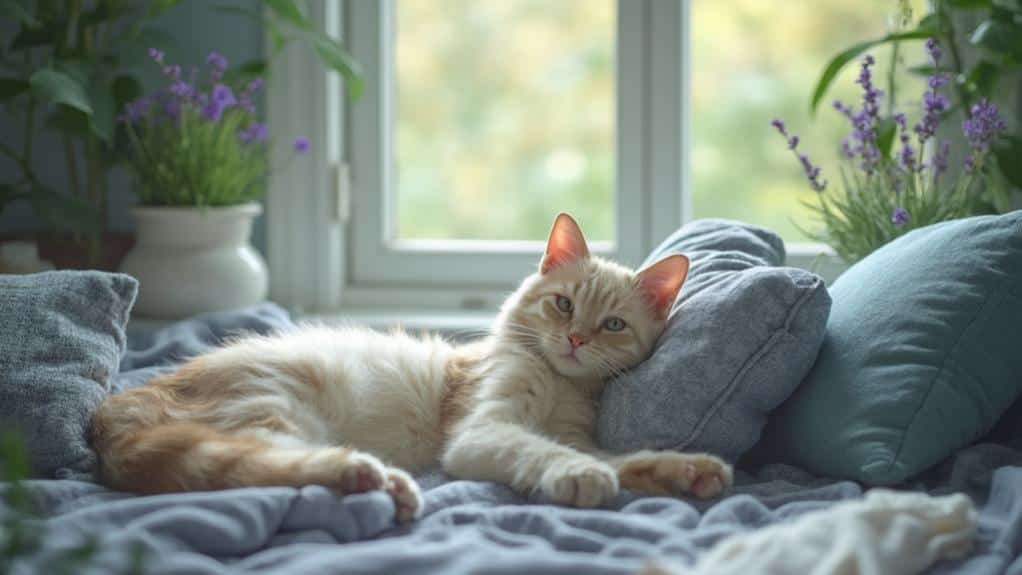
Implementing behavioral techniques can greatly reduce anxiety in cats and improve their overall well-being. Start by establishing a consistent daily routine, which provides structure and predictability, helping your cat feel secure in their environment.
Create a safe space with familiar bedding and toys, offering comfort during overwhelming situations. Engage your cat in interactive play sessions using toys that simulate hunting behavior, which can release pent-up energy and alleviate anxiety symptoms. Consider incorporating calming hemp chews as an additional natural anxiety relief option, especially for cats with mobility issues or arthritis.
To further reduce stress, practice gradual desensitization to anxiety triggers. For example, when introducing new pets or people, do so slowly to help your cat adjust without becoming overwhelmed.
Implement positive reinforcement techniques by rewarding calm behavior with treats or praise, encouraging desirable responses to stressful situations. This approach can considerably improve your cat's emotional well-being over time.
Combine these methods with the creation of a soothing environment to maximize their effectiveness. By consistently applying these behavioral techniques, you'll provide your cat with the tools to manage anxiety and develop a more relaxed demeanor, ultimately leading to a happier, healthier feline companion.
Holistic Approaches to Cat Wellness
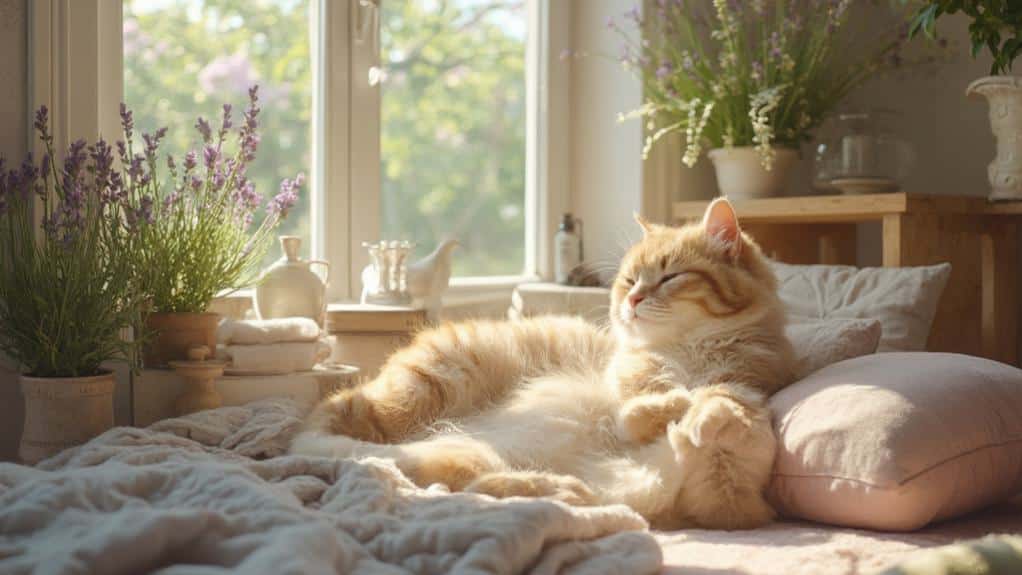
When exploring holistic approaches to cat wellness, you'll find that natural remedies, mind-body balance techniques, and environmental enrichment strategies work together to create a thorough stress-management plan.
Start by incorporating calming herbs and supplements into your cat's routine, while also focusing on creating a stimulating environment with interactive toys and safe spaces.
Natural anxiety solutions can help calm your cat and provide relief from stress without resorting to medication. These solutions often include herbal remedies, pheromone therapy, and behavior modification techniques.
To further support your cat's emotional well-being, consider using pheromone diffusers or flower essences, and don't forget to consult with your veterinarian to guarantee a well-rounded approach that addresses any underlying health issues.
Natural Remedies for Calmness
Cat owners seeking gentle, non-pharmaceutical solutions to feline anxiety have a variety of natural remedies at their disposal. Herbs like chamomile and valerian root offer effective stress relief without harmful side effects, promoting relaxation in cats.
Catnip, containing nepetalactone, can induce euphoria followed by calmness, making it ideal for reducing anxiety before stressful events. For immediate calming effects, consider Bach Rescue Remedy, a blend of flower essences available in alcohol-free form for cats.
To create a soothing environment and reduce overall stress levels, incorporate:
- Calming scents like pheromones
- Essential oils (used cautiously)
- Herbal supplements such as lemon balm and hops
When administering natural remedies, start with small doses and observe your cat's response. Chamomile can be brewed as a weak tea and added to food or water, while valerian root is often available in capsule form.
For catnip, offer small amounts in toys or sprinkle dried leaves in your cat's favorite areas. Always consult with a veterinarian before introducing new supplements, especially if your cat has existing health conditions or is taking medications.
Mind-Body Balance Techniques
Moving beyond herbal remedies, holistic approaches to feline wellness encompass a range of mind-body balance techniques. These methods can greatly reduce Cat Anxiety and promote overall well-being.
To implement these holistic solutions, start by incorporating gentle massage and stretching into your cat's routine. This practice helps alleviate physical tension, which often contributes to stress.
Next, engage your cat in play therapy using interactive toys. This stimulates their natural instincts while providing a sense of security and reducing anxiety. As you interact with your cat, maintain a calm demeanor. Your own meditation practice can positively influence your cat's stress levels, as they're highly attuned to your emotions.
Create a serene environment by using soft music and dim lighting, enhancing your cat's sense of safety. Establish regular routines and predictable schedules to offer comfort and stability. This consistent framework helps reduce anxiety by providing familiarity.
Environmental Enrichment Strategies
Environmental enrichment strategies form an essential component of holistic cat wellness.
These approaches aim to stimulate your cat's natural instincts, reducing stress and anxiety while promoting overall well-being.
To create an enriching environment for your feline companion, consider implementing the following:
- Interactive toys and puzzle feeders to engage hunting instincts
- Vertical spaces like cat trees and shelves for exploration and retreat
- Scratching posts and pads to satisfy natural urges and prevent destructive behavior
Frequently Asked Questions
How Do I Help My Cat With Stress and Anxiety?
To help your cat with stress and anxiety, start by identifying stress signals in feline behavior.
Create a calm environment through environmental enrichment, providing hiding spots and vertical spaces.
Implement a consistent routine and use pheromone diffusers to reduce anxiety.
Consider calming supplements or herbs, but consult your vet first.
Engage your cat in interactive play to alleviate stress.
Be patient and observant, as reducing anxiety may take time.
What Are Natural Mood Stabilizers for Cats?
While essential oils and calming music can help, natural mood stabilizers for cats are more diverse.
You'll find herbs like chamomile and valerian root effective in reducing anxiety. L-Theanine, derived from green tea, boosts serotonin and dopamine levels. Magnesium and B vitamins play vital roles in stabilizing mood.
Don't forget catnip's euphoric effects or Bach Flower Remedies for immediate stress relief. Interactive toys can also help by providing distraction and mental stimulation, indirectly improving your cat's mood.
What Natural Things Calm Cats Down?
To calm your cat naturally, you can employ various cat calming techniques.
Start by providing feline relaxation toys, such as puzzle feeders or interactive toys, which engage their minds and reduce stress.
Play soothing music options designed for cats, featuring soft melodies and nature sounds.
Create a calming environment with comfortable hiding spots and elevated perches.
You can also try gentle grooming sessions, which mimic maternal care and promote relaxation.
Is There an Herb That Calms Cats?
Like a soothing lullaby for your feline friend, herbal remedies can provide calming effects for cats.
You'll find several herbs that promote feline relaxation. Chamomile, known for its gentle properties, acts on your cat's nervous system to reduce anxiety.
Valerian root mimics catnip's effects, inducing euphoria followed by docility. Lemon balm, with its historical use, improves mood and decreases stress.
Dried hops flowers offer a calming influence, while catnip can help alleviate stress when given before anxiety-inducing events.
Conclusion
You've now learned several holistic approaches to manage your cat's stress and anxiety. By implementing a combination of natural herbs, supplements, environmental changes, and behavioral techniques, you're well-equipped to support your feline friend's emotional well-being. Remember, consistency is key in addressing anxiety. Notably, studies show that up to 89% of cats exhibit stress-related behaviors at some point in their lives. With these holistic methods, you can greatly improve your cat's quality of life and strengthen your bond.