
Natural Allergy Relief for Cats
Natural Allergy Relief for Cats
Natural allergy relief for cats combines smart environmental changes with gentle remedies that actually work. Hard flooring beats carpets by reducing allergens thirteen times, while HEPA air purifiers tackle airborne dander like tiny allergen-eating machines. Anti-Fel d 1 diets neutralize the primary culprit proteins, and natural antihistamines like quercetin offer chemical-free relief. Regular brushing, omega-3 supplements, and designated cat-free zones create a breathable home environment. These proven strategies transform allergy management from survival mode into comfortable coexistence.
Main Points
- Quercetin acts as a natural antihistamine while stinging nettle effectively reduces inflammation in allergic cats.
- Anti-Fel d 1 diets like Pro Plan LiveClear neutralize primary allergens directly in cat saliva and hair.
- Regular brushing and veterinarian-approved shampoos remove loose allergens before they spread throughout the home environment.
- Omega-3 supplements enhance skin barrier health and probiotics support immune function through gut modulation.
- Steam therapy with herbal infusions opens airways while avoiding smoke and strong perfumes reduces symptoms.
Environmental Modifications to Reduce Cat Allergens
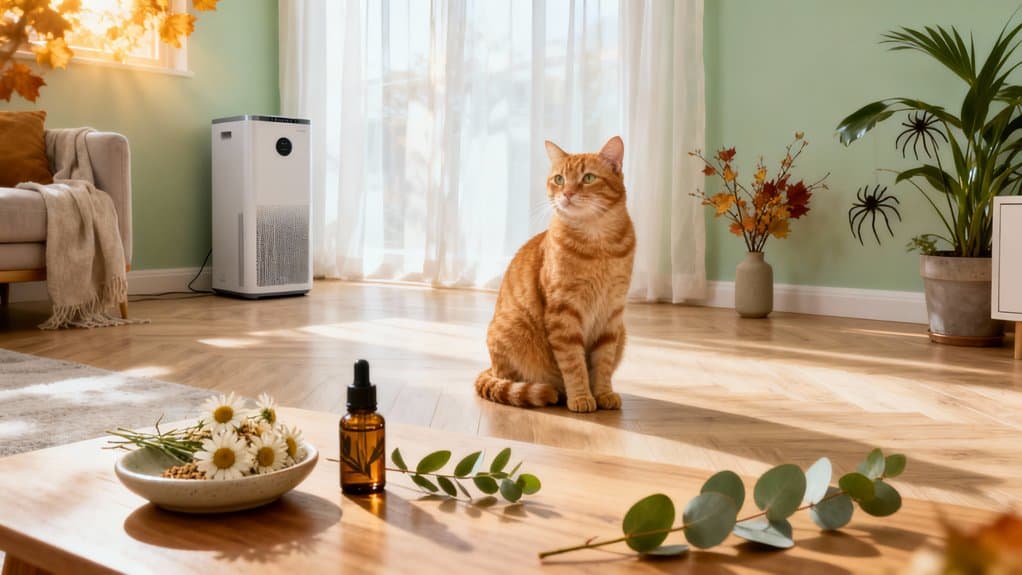
While many cat parents assume they’re doomed to a lifetime of sniffles and watery eyes, creating an allergen-reduced environment doesn’t require rehoming their beloved feline—just some strategic household tweaks.
Start with surface management basics. Trade carpets for hard flooring—they harbor thirteen times fewer allergens than their fluffy counterparts.
Weekly washing of bedding at high temperatures eliminates that pesky Fel d 1 protein causing all the drama.
Air quality improvements pack serious punch. HEPA air purifiers reduce allergens up to seven-fold in cat hangout zones. Revolutionary, right?
Regular vacuuming with HEPA filters plus wet mopping beats dry cleaning every time—nobody wants airborne cat dander parties. Additionally, avoid exposure to cigarette smoke and strong perfumes, which can worsen allergic symptoms in both cats and their owners.
Simple restrictions help too. Keep Whiskers out of bedrooms. Designate specific cat zones. Your sinuses will thank you later. Consider switching to ProPlan Live Clear food, which neutralizes the main allergen cats produce.
Dietary and Grooming Approaches for Healthier Cat Skin
Beyond tweaking the home environment, what goes into a cat’s body—and how owners care for their skin and coat—plays a surprisingly powerful role in allergen production.
Revolutionary dietary changes now include anti-Fel d 1 diets that actually neutralize the primary cat allergen in saliva and hair. Pro Plan LiveClear reduces active allergens by 47% within three weeks. Pretty amazing stuff.
For food-allergic cats causing their own skin misery, novel protein diets featuring rabbit or duck work wonders. Patience required—up to ten weeks for results.
Smart grooming techniques matter too. Regular brushing removes loose allergen-laden hair before it spreads everywhere. Veterinarian-approved shampoos temporarily decrease surface allergens. Clean tools frequently. The kibble coating works directly in the cat’s mouth to neutralize allergens during the natural grooming process.
Fresh water supports skin hydration. Omega-3 supplements boost skin barrier health. Hot water laundering of pet bedding and nearby fabrics effectively removes accumulated dander particles. The anti-Fel d 1 IgY antibodies are naturally produced by chickens in environments they share with cats. Simple changes, powerful results for everyone’s comfort.
Natural Remedies and Herbal Solutions for Allergy Management
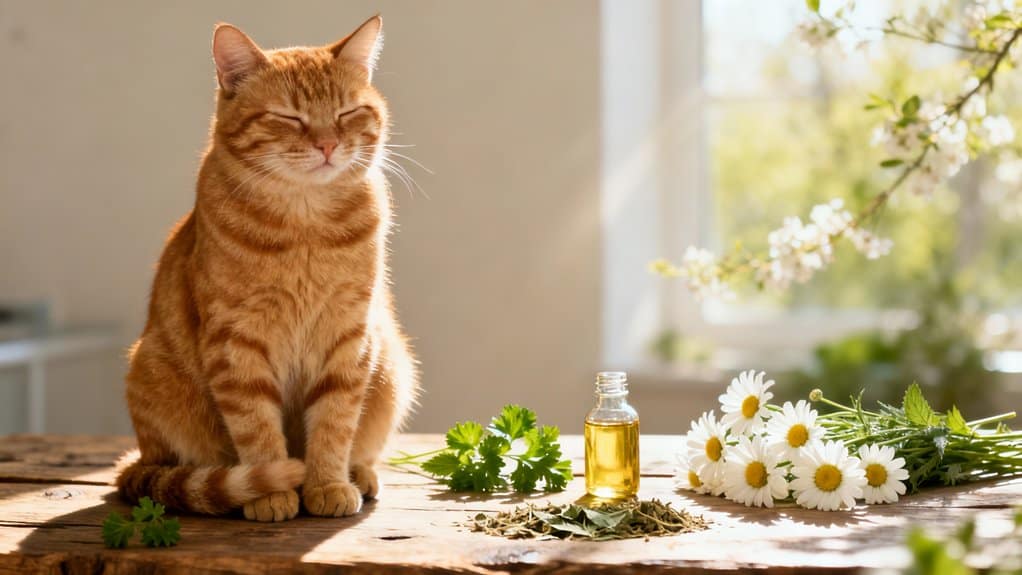
Though conventional medications certainly have their place, many cat parents are discovering that Mother Nature’s pharmacy offers some surprisingly effective allergy-fighting weapons.
Quercetin acts as a natural antihistamine, while stinging nettle tackles inflammation head-on. Pretty clever for a plant that stings humans, right?
Herbal supplements like spirulina and echinacea excel at immune modulation—basically teaching your cat’s overreactive immune system some manners. Potent herbs like Myrrh and Echinaeca Purpurea can provide additional immune support for cats dealing with allergic reactions.
Butterbur brings anti-allergy compounds to the party, and probiotics work behind the scenes in the gut, where much of immune function actually happens. Green tea can also provide natural relief by acting as another herbal antihistamine option. Omega-3 supplements can provide additional anti-inflammatory benefits for cats dealing with seasonal allergens.
Steam therapy with herbal infusions can open airways naturally. When dealing with severe congestion that affects your cat’s appetite, short antibiotic courses may sometimes complement natural approaches.
Even saline rinses help flush out troublesome allergens.
Of course, always consult your vet first. Not every remedy suits every cat.
Frequently Asked Questions
How Long Does It Take to See Results From Natural Allergy Treatments?
Natural remedies timeline typically shows initial improvement within 2-8 weeks, with full allergy treatment effectiveness developing over several months. Consistency and severity influence results, requiring patience when helping cats achieve optimal relief through holistic approaches.
Can Kittens Safely Use the Same Natural Remedies as Adult Cats?
No, kittens require special consideration. While adult cats tolerate standard treatments, kitten sensitivity demands veterinary-guided remedy dosage adjustments. Their developing systems make seemingly safe natural remedies potentially harmful, requiring caregivers to prioritize professional consultation.
What Are the Most Common Side Effects of Natural Allergy Remedies?
Common side effects from herbal supplements include gastrointestinal upset like vomiting and diarrhea, skin irritation from topical applications, lethargy from improper dosing, and allergic reactions including respiratory symptoms or facial swelling requiring immediate veterinary attention.
How Do I Know if My Cat’s Allergies Are Environmental or Food-Related?
Veterinarians distinguish between environmental and food allergies by examining symptom patterns and seasonality. Food allergies cause year-round gastrointestinal and skin issues, while environmental allergies typically show seasonal patterns with primarily skin-related allergy symptoms requiring specific diagnosis methods.
Should I Stop Conventional Medications When Starting Natural Allergy Treatments?
Absolutely not – stopping conventional medications abruptly could trigger severe symptom rebounds. Responsible caregivers should collaborate with veterinarians for gradual medication transition while introducing natural remedies, ensuring their beloved cat’s comfort throughout the process.
Conclusion
Managing cat allergies naturally becomes a three-pronged dance between environment, diet, and gentle remedies. Like conducting an orchestra, pet parents must harmonize clean air filters with quality nutrition and careful grooming routines. The payoff? Happier cats. Clearer sinuses. Less scratching at 3 AM. These natural approaches work beautifully alongside veterinary care—because frankly, both cats and their humans deserve to breathe easy in their own home.
References
- https://www.wyndly.com/blogs/learn/natural-remedies-for-cat-allergies
- https://docsmedicalgroup.com/docsurgentcare/natural-remedies-how-to-get-rid-of-cat-allergies/
- https://www.newtownvets.com/site/blog/2023/02/28/what-can-i-give-my-cat-for-allergies
- https://www.petmd.com/cat/general-health/vet-approved-home-remedies-cats
- https://vet.osu.edu/sites/default/files/documents/allergic to your cat.pdf
- https://www.animalhumanesociety.org/resource/signs-your-pet-has-seasonal-allergies-and-what-you-can-do-help
- https://www.avogel.co.uk/health/allergic-rhinitis/animal-dander/12-natural-remedies-for-pet-allergies/
- https://whiteoakvet.com/the-ultimate-guide-to-managing-cat-allergies/
- https://www.petpost.com.au/blogs/cat/9-ways-to-reduce-cat-allergens-in-your-home
- https://pmc.ncbi.nlm.nih.gov/articles/PMC7156987/