
Natural Indoor Exercise for Winter Pet Health
Natural Indoor Exercise for Winter Pet Health
You can maintain your pet's health during winter through natural indoor exercises that combine physical activity with mental stimulation. Create a dedicated exercise space by clearing hazards and setting up obstacle courses using household items like chairs and boxes. Incorporate interactive games such as hide-and-seek, tug-of-war, and treat-dispensing puzzles to engage both body and mind. Schedule regular 15-20 minute play sessions, adjusting intensity based on your pet's breed and energy levels. Use snuffle mats and scent work activities to tap into natural foraging instincts, and rotate between different activities to prevent boredom. Understanding specific exercise needs by breed type will help you develop a more effective indoor winter routine.
Main Points
- Create indoor obstacle courses using household furniture and stable items to provide physical exercise and mental stimulation during winter months.
- Implement daily scent work activities like "Find It" games to engage natural instincts and provide both mental and physical activity.
- Establish regular training sessions that combine commands with movement to maintain physical fitness and strengthen pet-owner bonds.
- Use treat-dispensing toys and puzzle games during scheduled play times to encourage natural foraging behaviors and prevent winter weight gain.
- Set up designated exercise spaces with proper lighting and temperature for safe indoor activities like fetch and tug-of-war games.
Benefits of Indoor Pet Exercise
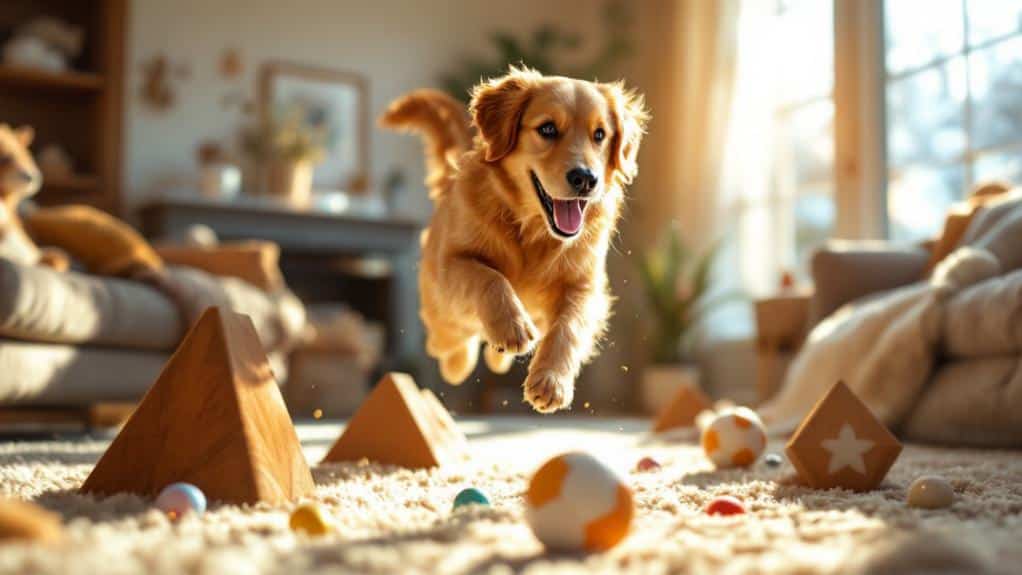
The winter blues don't have to affect your pet's health and happiness. When outdoor activities become limited due to cold weather, you'll find that indoor exercise provides essential benefits for your dog's physical and mental well-being.
Incorporating natural anxiety solutions into your indoor routine can help keep your pet relaxed and focused during confined winter months. By maintaining regular indoor activities, you're helping prevent obesity-related health issues, including joint problems, respiratory diseases, and diabetes that often develop from winter inactivity.
Your dog's mental stimulation is equally important during these indoor months, and you can enhance it through interactive games and puzzle toys that challenge their problem-solving abilities.
When you engage in activities like hide-and-seek or create indoor obstacle courses, you're not only providing physical exercise but also strengthening your bond through shared experiences. These activities help satisfy your pet's natural instincts while burning excess energy that might otherwise lead to destructive behaviors.
By incorporating treat-dispensing toys and cognitive challenges, you're keeping your dog's mind sharp and reducing stress levels that can build up from spending more time indoors.
Regular indoor exercise sessions, combined with mental enrichment activities, create a thorough approach to maintaining your dog's health during the winter season.
Creating Pet-Safe Exercise Spaces
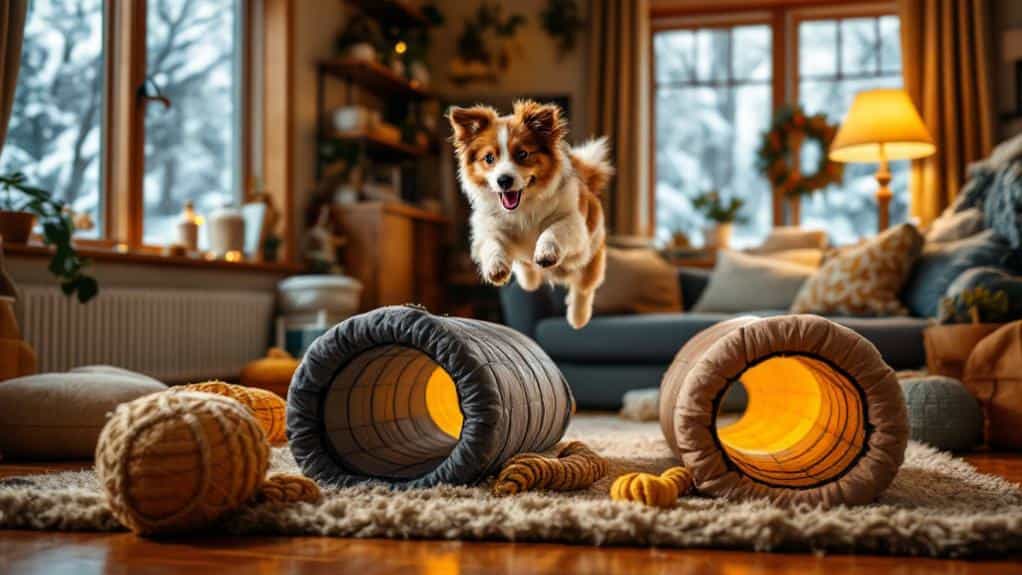
Setting up a dedicated indoor exercise space transforms your home into a pet-friendly fitness zone during winter months. To create a pet-safe exercise space, you'll need to clear a spacious area in your living room or hallway, removing any breakable items or potential hazards that could impede movement or cause injury.
Having a pet first aid kit with organic wound sprays and other essentials nearby guarantees you're prepared for any minor accidents during playtime.
You can design an indoor obstacle course using everyday furniture and household items, incorporating chairs, cushions, and other stable objects that encourage your pet to navigate different pathways. This setup provides the exercise your dog needs while developing coordination and agility.
To keep your dog entertained, rotate their toys regularly and strategically hide their favorites throughout the designated area, which promotes both physical activity and mental stimulation.
Ascertain the space has proper lighting and maintain a comfortable temperature that encourages active play. Select soft, low-bounce toys for activities like indoor fetch to prevent damage to your home while still providing engaging exercise options.
Interactive Games and Play
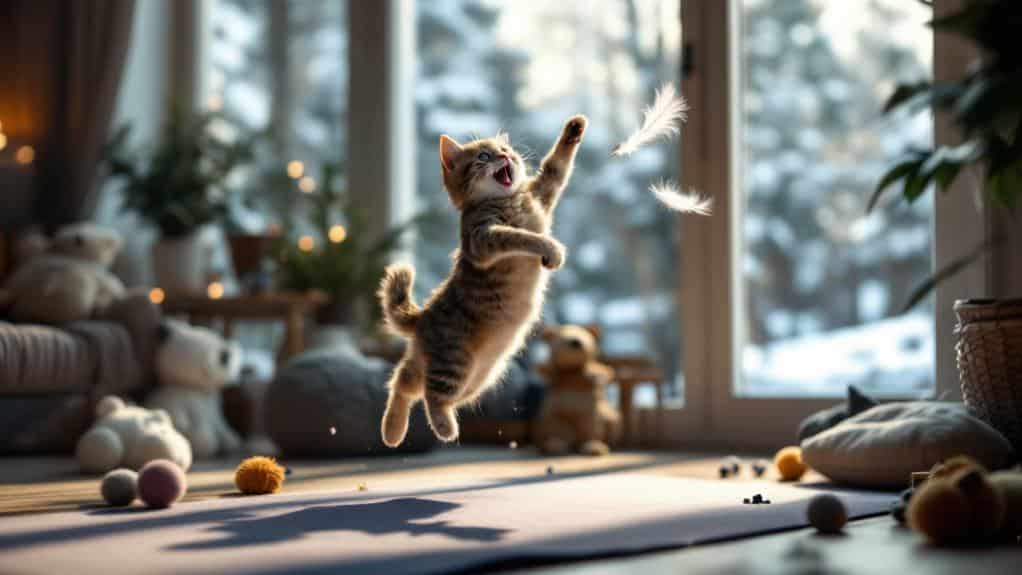
Interactive play serves as a cornerstone of indoor winter exercise, combining physical activity with mental stimulation for your dog. You'll find that traditional interactive games like tug-of-war and hide-and-seek not only provide essential physical movement but also engage your pet's problem-solving abilities, making them significant components of a well-rounded exercise routine. Supporting a natural diet approach alongside interactive play can enhance your dog's energy levels and overall vigor during indoor activities.
To maintain your pet's health during winter months, you can establish scheduled play sessions throughout the day using soft, indoor-friendly toys for fetch games. Consider creating a simple agility course using household items, which will challenge your dog's coordination while providing an engaging workout.
When designing your indoor activities, incorporate puzzle toys and treat-dispensing games that require your dog to work mentally for rewards, effectively preventing boredom and destructive behaviors.
You'll want to rotate between different types of interactive games to keep your pet interested and motivated. By combining physical challenges with mental exercises, you're supporting both cardiovascular health and cognitive development.
Remember to adjust the intensity and duration of play sessions based on your dog's energy levels and physical capabilities.
Mental Stimulation Activities
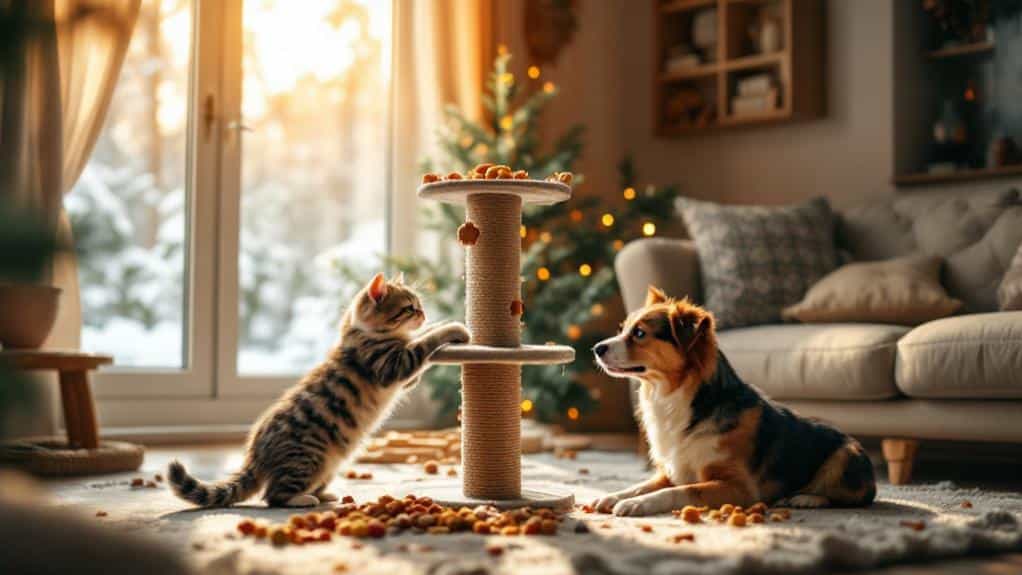
Keep your dog's mind sharp through daily brain-training sessions that combine treat-dispensing puzzles with focused problem-solving activities, which will strengthen their cognitive abilities and improve their behavior.
Using natural behavior products alongside enrichment activities helps create a more balanced training approach.
You'll want to incorporate scent work exercises, such as hiding treats around the house or using snuffle mats, to tap into your pet's natural tracking instincts and provide essential mental stimulation during winter months.
Create a structured routine of 15-20 minute puzzle toy sessions throughout the day, rotating between different challenges like lick mats, treat balls, and DIY games to maintain your dog's interest and prevent boredom-related behaviors.
Brain Games Build Focus
During the winter months, your pet's mental fitness deserves as much attention as physical exercise. Brain games and interactive play provide essential mental stimulation that keeps your dog sharp, focused, and content during indoor periods.
You'll find that engaging your pet in cognitive activities not only prevents boredom but also strengthens your bond through shared experiences.
To maximize your dog's mental exercise routine, consider these proven activities:
- Set up puzzle toys with hidden treats to encourage problem-solving skills and natural foraging behaviors.
- Create indoor scent trails using kibble or treats, promoting both mental engagement and controlled physical movement.
- Implement hide-and-seek games that combine obedience training with cognitive challenges.
- Utilize snuffle mats during meal times to extend feeding duration and enhance mental stimulation.
Scent Work Activities Daily
Scent work taps into your dog's extraordinary sense of smell, making it one of the most effective indoor mental exercises you can provide. With up to 300 million scent receptors, your dog's natural hunting instincts make these activities both stimulating and rewarding, while reducing anxiety and destructive behaviors.
| Difficulty Level | Hide Location | Time Frame |
|---|---|---|
| Beginner | Behind furniture | 5-10 minutes |
| Intermediate | Under blankets | 10-15 minutes |
| Advanced | Multiple rooms | 15-20 minutes |
To start your daily scent work routine, begin with simple "Find It" games by hiding treats in easy-to-spot locations, gradually increasing difficulty as your dog's skills improve. You'll want to guarantee consistent practice sessions, ideally incorporating 10-15 minutes of scent work exercises each day. As your dog becomes more proficient, challenge them by using different hiding spots and varying the types of items they need to find. This progressive approach not only maintains their interest but also enhances their problem-solving abilities, providing essential mental stimulation during winter months when outdoor exercise might be limited.
Problem-Solving Toy Sessions
Building on your dog's mental exercise routine, problem-solving toy sessions offer another layer of indoor enrichment. You'll find that incorporating treat-dispensing balls and puzzle toys can substantially reduce destructive behaviors while providing essential mental stimulation during winter months.
These interactive tools work by challenging your pet's cognitive abilities, encouraging them to think strategically and maintain focus.
To maximize your dog's cognitive engagement through problem-solving activities, consider these proven approaches:
- Start with simple puzzle toys and gradually increase difficulty as your dog masters each level.
- Use snuffle mats to tap into natural foraging instincts, hiding treats beneath fabric flaps.
- Create DIY challenges using household items like muffin tins and cups for treat-finding games.
- Rotate between different types of puzzle toys to maintain interest and prevent boredom.
When implementing these sessions, you'll want to supervise your dog initially to guarantee proper toy use and safety.
The regular practice of problem-solving activities helps reduce anxiety while building confidence through achievement. You can enhance the experience by using high-value treats as rewards, making the cognitive challenges more appealing and rewarding for your pet.
Training as Exercise
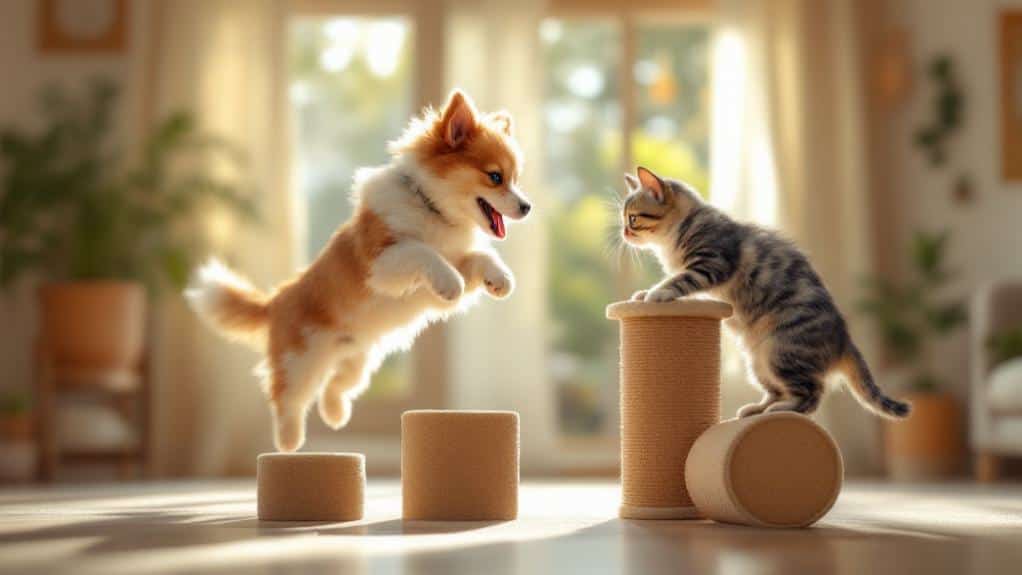
Training your dog serves a dual purpose as both a physical and mental workout during winter months. When you can't manage daily walks, structured training sessions become an excellent alternative for keeping your pet active and engaged. You'll find that commands like sit, stay, and fetch naturally incorporate movement while strengthening your bond.
| Training Activity | Exercise Benefit |
|---|---|
| Command Practice | Cardiovascular fitness |
| New Trick Learning | Mental stimulation |
| Fetch Training | Aerobic activity |
| Obstacle Course | Strength building |
To maximize the exercise benefits, keep your training sessions short but frequent throughout the day. You'll want to integrate Fun Activities like learning new tricks, which combine physical movement with mental challenges. Start with 10-15 minute sessions, gradually increasing duration as your dog's stamina improves. By incorporating training into your winter routine, you're not just improving behavior – you're providing essential exercise that keeps your pet healthy and engaged. Remember to reward progress consistently, as this encourages active participation and maintains your dog's interest in these beneficial training exercises.
DIY Pet Obstacle Courses
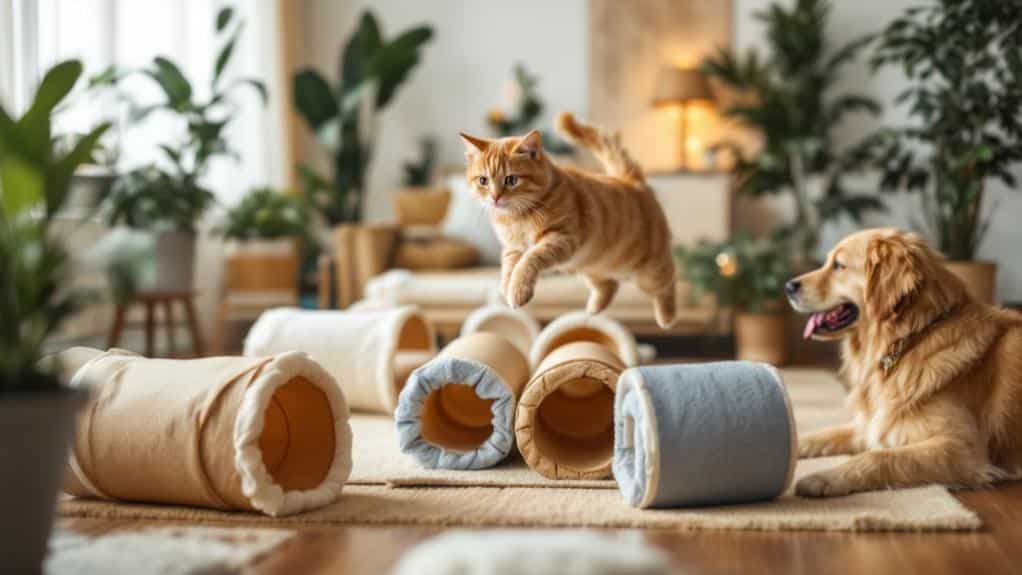
While training exercises provide excellent indoor activity, creating a DIY obstacle course takes winter exercise to the next level. During cold weather, you can transform everyday household items into engaging obstacles that'll keep your dog physically and mentally stimulated.
Adding enrichment toys between obstacles can create additional mental challenges for your pup. By arranging chairs, pillows, and blankets strategically throughout your space, you'll create an environment that encourages your dog to jump, crawl, and weave their way through various challenges.
To exercise your dog effectively and teach your dog new skills, consider these essential elements for your indoor course:
- Create tunnels using large boxes or blankets draped over chairs, encouraging exploration and agility.
- Set up jumps of varying heights using cushions and pillows, adjusting difficulty based on your dog's ability.
- Position chairs in a line to create weaving patterns that improve coordination.
- Designate specific spots for pause stations using mats or towels.
Remember to regularly modify your DIY pet obstacle course layout to maintain engagement. Use treats strategically throughout the course to motivate your pet, and always supervise their activity to guarantee safety and proper form during exercises.
Household Items for Exercise

From organizing simple play stations to creating dynamic exercise zones, common household items can transform your indoor space into an effective winter workout area for your pet.
To exercise your dog effectively, you'll find that everyday objects like chairs, cushions, and blankets can be strategically arranged into challenging obstacle courses that promote agility and balance.
To keep your dog moving during cold weather, utilize soft toys or tennis balls for indoor fetch sessions, which provide excellent cardiovascular exercise while protecting your home's interior.
You can train your dog using old towels or sturdy ropes for controlled tug-of-war games, helping them develop their natural instincts in a safe environment.
Create engaging scavenger hunts by hiding treats in boxes or under furniture, which encourages both physical activity and mental stimulation through scent tracking.
For a more structured workout, incorporate your furniture into stair climbing exercises, allowing your pet to build strength and endurance.
When using household items for exercise, always verify they're securely positioned and appropriate for your dog's size and ability level to maintain safety during indoor activities.
Social Activities at Home
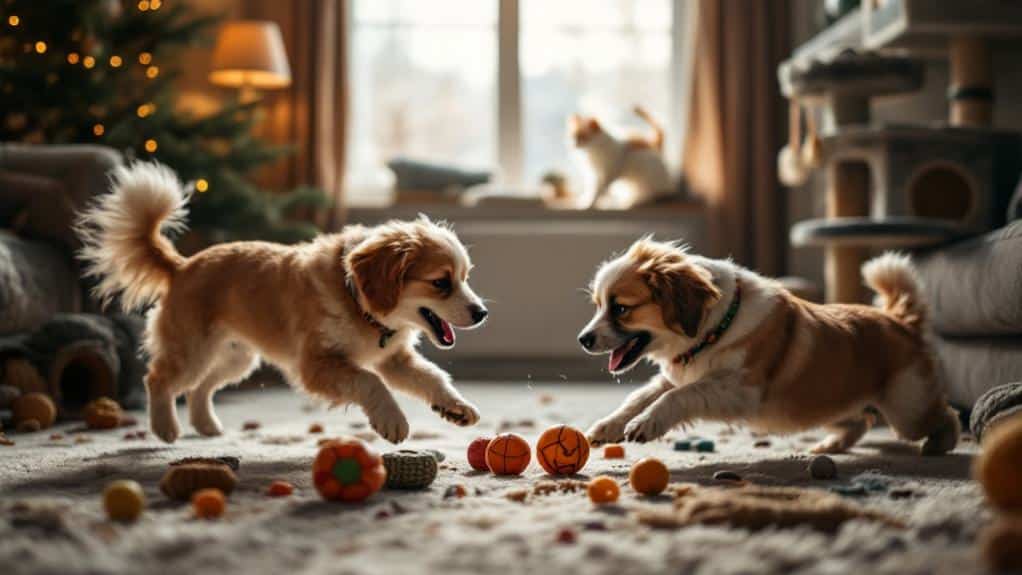
Maintaining your pet's social life during winter months proves essential for their mental and physical well-being. When outdoor activities become limited, you can create engaging social experiences in your indoor environment that promote both exercise and interaction.
Consider organizing regular playdates with trusted dog friends, which allows your pet to maintain their socialization skills while burning excess energy in a controlled setting.
To maximize your dog's social engagement during winter, implement these structured activities:
- Schedule weekly group training sessions with friends and their dogs, combining obedience practice with social interaction.
- Create themed play parties featuring obstacle courses and interactive games that encourage cooperation between multiple dogs.
- Set up designated play areas with various toys for supervised group activities like indoor fetch or gentle tug-of-war.
- Establish a rotating schedule with other pet owners to host indoor "doggy meetups" that provide consistent socialization opportunities.
Remember to monitor all interactions closely and verify your space is properly pet-proofed before hosting any gatherings.
These social activities not only help maintain your dog's physical fitness but also contribute to their emotional well-being during the winter season.
Exercise According to Pet Type
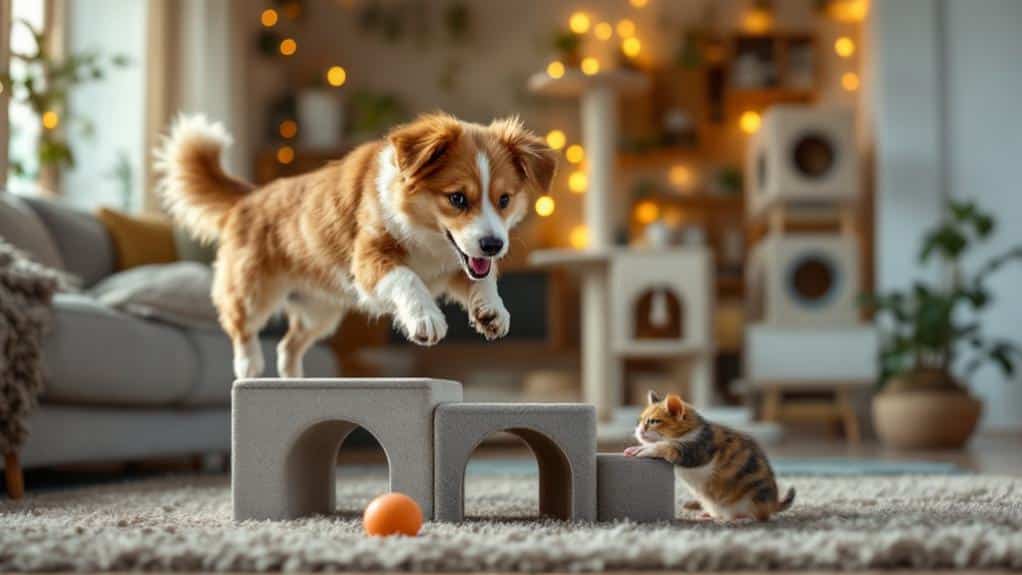
Different pets demand distinct exercise routines to maintain preferred health during winter months. When determining how much exercise your dog needs, you'll need to take into account their breed, age, and overall health status. High-energy breeds like Border Collies require 1-2 hours of vigorous activity, while smaller breeds can maintain health with 30-60 minutes of daily exercise during the colder months.
Pairing proper exercise with natural pet nutrition helps maintain ideal health during indoor winter months.
Keeping your dog active indoors during winter requires adapting their routine based on specific needs. For puppies, structure multiple short play sessions throughout the day to support healthy development, while senior dogs benefit from gentler activities that don't strain their joints.
If you're a cat owner, focus on providing 20-30 minutes of daily interactive play using toys that trigger hunting instincts, which helps maintain both physical fitness and mental stimulation.
During winter, supplement outdoor activities with indoor alternatives that match your pet's exercise requirements. Large breeds like Labradors need more structured indoor activities to meet their higher energy demands, while brachycephalic breeds can maintain fitness with shorter, less intense exercise sessions spread throughout the day.
Frequently Asked Questions
How Do I Exercise My Dog in the Winter?
You can keep your dog active during winter through a mix of indoor activities and shorter outdoor walks.
Create engaging winter games like indoor fetch or hide-and-seek, and set up training exercises using household items as obstacles.
Interactive toys, such as treat-dispensing puzzles, provide mental stimulation.
When going outside, opt for multiple brief walks rather than one long session, and always monitor your dog's comfort in cold conditions.
How Do You Give Your Dog Exercise When You're Sick?
When you're sick, you can still engage your dog through low-energy activities that provide both physical and mental stimulation.
Set up interactive toys or puzzle feeders that keep them occupied, or play indoor games like hide-and-seek from your couch.
Try short training sessions while seated, teaching new tricks or reinforcing commands.
You can also create simple obstacle courses using household items, allowing your dog to exercise independently while you rest.
Do Dogs Need Less Exercise in the Winter?
No, your dog doesn't need less exercise in winter.
While cold weather might make outdoor activities challenging, your dog's canine energy levels remain constant throughout the year.
You'll need to maintain regular exercise through a mix of outdoor walks and indoor playtime.
Consider breaking up exercise into shorter, more frequent sessions when it's cold, and incorporate indoor activities like fetch or training games to keep your pet physically and mentally active.
How Do You Exercise a Dog in Season?
You'll want to focus on indoor activities during your dog's heat cycle, just like I did when my pup was in season.
Keep her mentally stimulated with puzzle toys and basic leash training exercises inside your home. While outdoor walks are still necessary, you'll need to choose quiet times and less-traveled routes.
Replace typical socialization opportunities with controlled indoor training sessions, and don't forget interactive games like hide-and-seek to maintain physical activity.
Conclusion
You've now got an arsenal of indoor exercise options that'll transform your home into your pet's personal fitness center. By implementing these activities, you're not just keeping your pet active during winter – you're creating an environment that's a thousand times more engaging than a boring backyard. Remember to tailor these exercises to your pet's specific needs, and you'll maintain their physical and mental well-being until spring arrives.