
Natural Pest Control for Pet Households
Natural Pest Control for Pet Households
To control pests naturally in a pet-friendly home, start by using essential oils like lavender or cedarwood as repellents. Create herbal sachets with mint or rosemary for long-lasting protection. For outdoor areas, plant natural barriers using lavender, lemon balm, and basil. DIY vinegar-based solutions can effectively deter ants and spiders. Regularly inspect your home and yard for potential pest breeding grounds, and maintain cleanliness by vacuuming and washing pet bedding frequently. Use diatomaceous earth to dehydrate insects safely. Always store pest control products securely and apply them when pets are away. These methods offer a thorough approach to pest management while ensuring your pets' safety. Exploring further techniques can enhance your pest control strategy.
Main Points
- Use essential oils like lavender or cedarwood, diluted and applied as sprays, to repel pests naturally.
- Create herbal sachets with mint, rosemary, or lavender to provide long-lasting pest protection in your home.
- Implement DIY vinegar-based solutions, mixing apple cider vinegar with water and soap, for effective pest control.
- Plant pest-repelling herbs like basil, rosemary, and lemon balm in your garden to create natural barriers.
- Regularly clean pet bedding, vacuum frequently, and eliminate standing water to maintain a pest-free environment.
Understanding Pet-Safe Pest Control
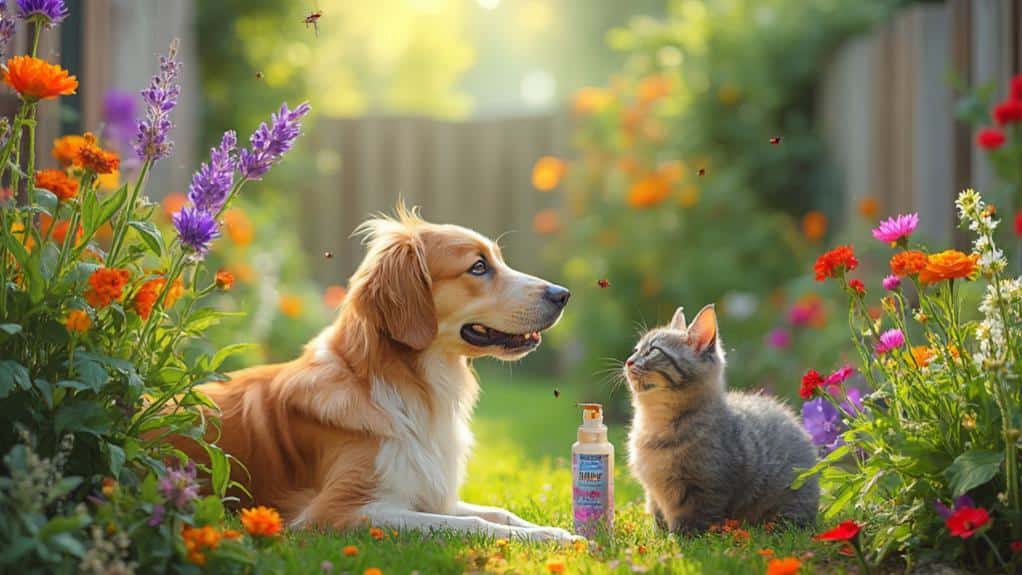
Frequently, pet owners face the challenge of managing pests while ensuring their furry friends' safety. Understanding pet-safe pest control is essential for maintaining a healthy household environment.
When selecting products, look for labels that explicitly state they're non-toxic and free from harmful chemicals like DEET and metaldehyde, which can cause severe health issues in pets. Instead, opt for natural pest control methods that are pet friendly, such as diatomaceous earth and essential oils. These alternatives effectively manage pest populations without compromising your pet's well-being.
To implement a pet-safe pest control strategy, start by thoroughly researching products and consulting with veterinarians or pest control specialists. They can guide you in choosing the most effective and safe solutions for your specific situation.
Always store pest control products securely, even if they're labeled as pet-friendly, to prevent accidental ingestion. After applying any pest control measures, closely monitor your pets for unusual behavior. This vigilance allows you to quickly address any adverse reactions, minimizing potential health risks.
Common Household Pests and Risks

While understanding pet-safe pest control methods is important, it's equally essential to recognize the common household pests that threaten your pets' well-being.
Fleas, ticks, and mosquitoes pose significant health risks to your furry companions. Fleas can quickly infest your home, with a single female laying up to 50 eggs daily, causing skin irritations and allergic reactions in pets. Ticks, often overlooked, can transmit serious diseases like Lyme disease and Rocky Mountain spotted fever. Mosquitoes, carriers of heartworm disease, can be fatal to pets if left unchecked.
Using plant-based formulas can effectively repel these pests while ensuring the safety of your pets and home environment.
To protect your pets, it's vital to implement effective pest control strategies that are safe for your pets.
Start by regularly inspecting your pet's fur for signs of fleas or ticks. Use pet-safe pest control products to treat your yard and home, focusing on areas where pests are likely to breed.
Don't forget about rodents, which can carry diseases like leptospirosis and salmonella. Seal entry points to prevent infestations, and keep food sources secured.
Natural Repellents for Indoor Use
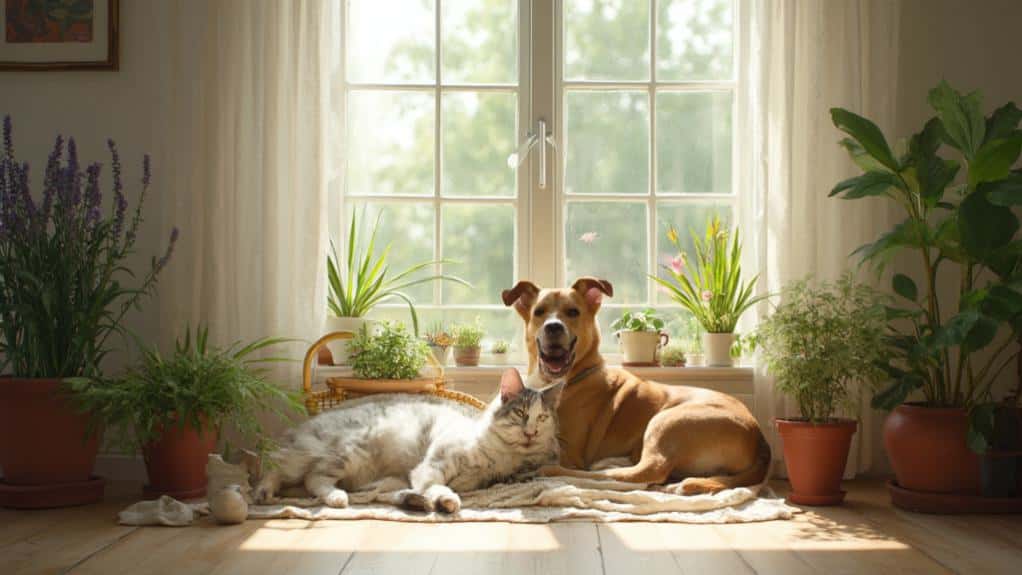
You can create effective natural repellents for indoor use that are safe for pets using essential oils, herbs, and common household ingredients.
Start by mixing diluted essential oils like lavender or cedarwood with water in a spray bottle for a quick and easy pest deterrent.
For longer-lasting protection, consider making herbal sachets with dried herbs such as mint or rosemary, or try a DIY vinegar-based solution by combining apple cider vinegar, water, and a few drops of dish soap to repel and trap flying insects.
Essential Oil Spray Recipes
Pet owners seeking natural pest control solutions can easily create effective essential oil sprays for indoor use.
To make a mosquito repellent, combine 12 drops of geranium oil, 10 drops of lavender oil, and 10 drops of cedarwood oil with distilled water in a spray bottle. For a simple ant deterrent, mix equal parts vinegar and water.
To combat fleas, prepare a solution of 1 part dish soap, 1 part white vinegar, and 2 parts warm water, which can be safely sprayed on surfaces where fleas hide.
You can also create a versatile pest repellent by infusing peppermint and lemon balm essential oils in water. These natural sprays are safe for pets and effective against various household pests.
When making these solutions, verify you're using high-quality essential oils and distilled water to maximize effectiveness. It's vital to apply these sprays regularly to maintain protection against indoor pests.
Remember to shake the bottle well before each use, as essential oils may separate from water over time.
Herbal Sachets and Pouches
Nature's aromatic defenders, herbal sachets and pouches offer an effective and pet-friendly approach to indoor pest control. You can easily create these safe, natural repellents using pest-deterring herbs like lavender, rosemary, and mint.
To make your own herbal sachets, simply fill breathable fabric bags with your chosen herbs, which will release essential oils to repel insects while providing a pleasant scent in your home.
Place these sachets strategically in areas where pests are likely to enter or congregate, such as closets, cabinets, and near doors or windows. The herbs' essential oils, including eucalyptus and citronella, are particularly effective against mosquitoes and flies, offering a natural alternative to chemical repellents.
To maintain their potency, refresh your herbal sachets every few weeks by replacing the herbs or adding a few drops of essential oil.
DIY Vinegar-Based Solutions
While herbal sachets offer a fragrant pest control option, another effective and pet-safe method involves common household ingredients. You can create a powerful DIY vinegar-based solution to deter indoor pests without resorting to harsh chemical products.
Mix 2 cups of white vinegar with 1 cup of water to produce a natural repellent that's safe for households with pets. This solution works by disrupting pests' pheromone trails, making it difficult for them to navigate and communicate.
To use, spray the mixture in areas where you frequently spot pests, such as entry points, crevices, and high-activity zones. The vinegar's acetic acid content not only repels pests but also cleans surfaces, removing food residues that might attract them.
For best results, apply the solution regularly, reapplying as needed to maintain its effectiveness. This method is particularly useful against common indoor pests like ants and spiders.
Outdoor Pest Management Techniques

To effectively manage outdoor pests while keeping your pets safe, consider implementing a multi-faceted approach.
Start by creating natural barriers using pet-safe plants like lavender and lemon balm, which not only repel insects but also enhance your garden's aesthetics.
You can supplement these plant barriers with DIY natural repellent sprays, using ingredients such as apple cider vinegar or essential oils diluted in water, and apply them to areas where pests frequently gather.
Additionally, focus on environmental pest deterrents by eliminating standing water, maintaining a tidy yard, and introducing beneficial insects to naturally control pest populations without risking your pets' health.
Pet-Safe Plant Barriers
Creating a green barrier against pests doesn't mean compromising your pet's safety. You can strategically plant various herbs and flowers that not only deter unwanted insects but also provide a safe environment for your furry friends.
Start by incorporating lavender and lemon balm into your outdoor spaces. These plants not only add visual appeal but also act as natural mosquito repellents, ensuring your pet can roam freely without the nuisance of biting insects.
Next, consider planting basil, which serves a dual purpose. It's an edible herb for your culinary needs and effectively deters various pests.
Catnip is another excellent choice, particularly if you have feline companions. It attracts cats while repelling mosquitoes, creating a pet-friendly pest control solution.
For a more robust defense, add rosemary to your garden. This versatile herb protects against pests, offers a pleasant fragrance, and can be used in cooking.
Finally, include peppermint in your plant barrier. It repels ants and mosquitoes while providing an invigorating scent.
Natural Repellent Sprays
Natural repellent sprays offer another layer of protection for your pet-friendly outdoor spaces. These sprays, often made with essential oils like geranium, lavender, and cedarwood, effectively keep pests at bay while remaining safe for your pets and family.
You can create your own homemade mosquito repellent by mixing essential oils with distilled water, then spraying the solution around patios, doors, and windows. For tick prevention, consider a vinegar-based spray combining white vinegar, water, and almond oil.
Plant-based options, such as citrus extract sprays, not only repel insects but also provide a pleasant scent for your outdoor areas.
To maintain effectiveness, apply these natural repellent sprays regularly, especially in high-pest activity zones. This consistent application guarantees ongoing protection for both your pets and their environment.
When using these sprays, focus on areas where your pets spend the most time outdoors. Remember to reapply after rain or heavy dew to maintain a protective barrier.
Environmental Pest Deterrents
Environmental pest deterrents offer a thorough approach to outdoor pest management that's both effective and pet-friendly. By implementing these strategies, you'll create a safer environment for your furry companions while keeping pests at bay.
Start by regularly draining standing water around your property, as even small puddles can become mosquito breeding grounds. Next, incorporate pest-repelling plants like lavender, basil, and rosemary into your garden, which not only add beauty but also naturally deter insects without harming pets.
Consider using diatomaceous earth around your yard to control crawling pests. When applied correctly, this natural substance causes dehydration in insects but remains safe for pets.
Create natural barriers using citrus peels or coffee grounds to repel ants and slugs in your garden beds. These eco-friendly solutions are harmless to pets while effectively deterring pests.
Finally, maintain a consistent yard care routine by trimming overgrown vegetation and clearing debris. This practice greatly reduces pest habitats and protects your pets from potential infestations.
DIY Pet-Friendly Pest Solutions

Tackle pest problems in your pet-friendly home with these effective DIY solutions.
To keep flying insects and pests away, create a natural mosquito repellent by mixing 12 drops of geranium oil, 10 drops of lavender, and 10 drops of cedarwood with distilled water. This solution is safe for pets and can be applied to areas where mosquitoes are prevalent.
For tick prevention, combine 2 cups of white vinegar, 1 cup of water, and 2 tablespoons of almond oil. Spray this mixture in tick-prone areas around your property.
Another versatile DIY pet-friendly pest solution is diatomaceous earth (DE), which effectively dehydrates insects with exoskeletons upon contact while remaining safe for pets.
To deter various insects naturally, plant basil, rosemary, and lemon balm in your garden. These herbs repel pests without harming your pets.
For flea infestations on surfaces, create a homemade spray by mixing equal parts dish soap and white vinegar with warm water. Apply this solution to affected areas, ensuring thorough coverage.
These DIY methods provide effective, pet-safe alternatives to commercial pesticides, allowing you to maintain a pest-free environment without compromising your pet's health.
Maintaining a Pest-Free Environment
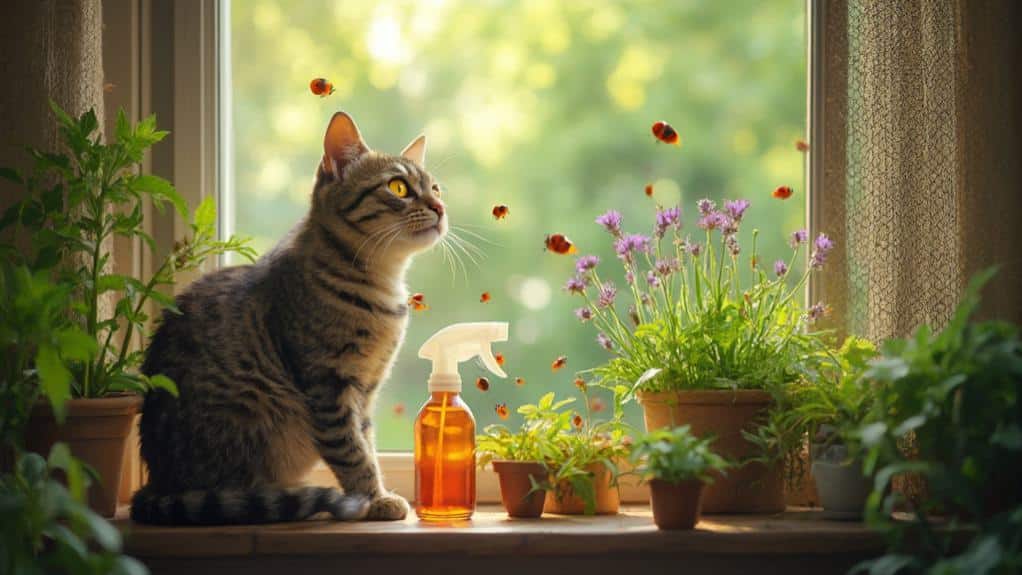
While DIY solutions offer effective pest control, maintaining a pest-free environment requires ongoing effort and vigilance.
Regularly inspect your home and yard for potential pest breeding grounds, such as standing water and debris. Keep your outdoor spaces tidy by trimming overgrown foliage and securing wood piles, which can harbor fleas and ticks.
Utilize pet-safe plants in your garden to naturally repel insects while creating a safe environment for your pets.
Inside your home, implement a routine of vacuuming and washing pet bedding to minimize flea populations. When using pest control products, store them securely and apply them when pets are away to guarantee their safety.
Remember to:
- Check for standing water in flower pots, birdbaths, and gutters
- Clear fallen leaves and branches from your yard
- Seal entry points around your home's foundation and windows
- Wash pet toys and accessories regularly
Frequently Asked Questions
What Is the Best Pest Control When You Have Pets?
When you have pets, opt for eco-friendly solutions and pet-safe methods for pest control. Use Diatomaceous Earth and Catchmaster Fly Paper, which are effective and safe.
Prevent mosquito breeding by draining standing water around your home. Keep your yard clean by removing wood piles and trimming overgrown vegetation to deter fleas and ticks.
Plant natural repellents like lavender and lemon balm in your garden. Always store pest control products securely and apply them when pets are away to guarantee their safety.
What Are Natural Pesticides for Pets?
Did you know that 85% of pet owners prefer natural pest control methods?
For safe, natural pesticides around pets, you can use herbal repellents and essential oils. Create a spray with water and pet-safe oils like lavender or peppermint, being cautious with cats.
Diatomaceous earth is effective against crawling insects, while neem oil works well for plants.
Remember to always dilute essential oils properly and test in small areas first.
These natural options provide effective pest control without compromising your pet's safety.
What DIY Pest Control Is Safe for Dogs?
You can create safe, DIY pest control for dogs using homemade repellents and essential oils.
Try a flea spray with equal parts dish soap, white vinegar, and water.
For ticks, mix 2 cups white vinegar with 1 cup water.
Use diatomaceous earth to dehydrate insects safely.
Create a mosquito repellent by combining geranium, lemon balm, or cedarwood essential oils with water.
Natural options like lavender and rosemary can deter pests while being safe for your canine companions.
How to Get Rid of Bugs in House With Pets?
Don't let bugs bug you out! To rid your house of pests while keeping pets safe, start with bug prevention tips.
Seal entry points and maintain cleanliness to discourage infestations. Use pet-friendly traps and natural repellents like Diatomaceous Earth or vinegar-water sprays.
Vacuum regularly to remove insect habitats. Store pest control products securely and apply when pets are away.
Consider homemade solutions using lavender or basil as deterrents. These methods guarantee a pest-free home without compromising your furry friends' safety.
Conclusion
By implementing these natural pest control methods, you're not just keeping pests at bay; you're creating a safe haven for your furry friends. Remember, consistency is key. Regularly inspect your home, maintain cleanliness, and address potential entry points. As you fine-tune your approach, you'll find the perfect balance between pest management and pet safety. With diligence and care, you can enjoy a pest-free home without compromising your pets' well-being. Stay vigilant, adapt as needed, and relish in the harmony of a pest-free, pet-friendly household.