
Natural Solutions for Dog Anxiety
Natural Solutions for Dog Anxiety
To naturally calm your anxious dog, start by identifying triggers and implementing a consistent routine. Provide daily exercise and mental stimulation through puzzle toys and interactive games. Create a soothing environment with white noise machines, comfortable bedding, and safe spaces. Consider using pheromone diffusers or herbal supplements like valerian root or chamomile, but always consult your veterinarian first. Gradually desensitize your dog to anxiety-inducing stimuli and use counter-conditioning techniques to associate these triggers with positive experiences. Implement independence training for separation anxiety and maintain a regular schedule for feeding, exercise, and sleep. By combining these strategies, you'll develop an all-encompassing approach to managing your dog's anxiety. Further exploration of these methods will reveal additional techniques to support your pet's emotional well-being.
Main Points
- Regular exercise and mental stimulation reduce anxiety by providing physical outlets and cognitive engagement.
- Creating a calm environment with white noise, comfortable spaces, and pheromone diffusers promotes relaxation.
- Herbal supplements like valerian root, chamomile, and CBD oil may help alleviate anxiety symptoms.
- Behavioral techniques such as desensitization and counter-conditioning can address specific anxiety triggers.
- Establishing a consistent daily routine for feeding, exercise, and sleep enhances a dog's sense of security.
Understanding Canine Anxiety Triggers
If you've ever noticed your dog trembling, pacing, or excessively vocalizing, you're likely witnessing signs of canine anxiety. Understanding dog anxiety triggers is essential for implementing natural solutions and managing stress in dogs effectively.
Separation anxiety affects about 14% of dogs, causing destructive behaviors when left alone. This common trigger can be exacerbated by changes in routine, such as moving or altering your schedule, which create confusion and stress for your pet.
Gentle remedies can help soothe your dog's anxiety, providing natural calming aids that are safe and effective for your furry friend.
Loud noises, including thunderstorms and fireworks, often result in situational anxiety, leading to panic responses like hiding or trembling.
Socialization issues, stemming from limited exposure to diverse environments or other dogs, can contribute to anxiety in unfamiliar situations.
As your dog ages, chronic anxiety may worsen, potentially compounded by cognitive dysfunction or environmental factors.
To address these concerns, focus on early intervention and consistent management strategies. Identify specific triggers for your dog's anxiety, then implement targeted natural solutions to alleviate stress.
This might involve desensitization techniques, creating safe spaces, or using calming aids. By recognizing and addressing these triggers, you'll be better equipped to support your dog's emotional well-being.
Exercise and Mental Stimulation
Having identified your dog's anxiety triggers, implementing a robust exercise and mental stimulation routine can greatly reduce stress and promote overall well-being. Start by ensuring your dog receives adequate physical exercise through daily walks or play sessions, which release endorphins that naturally reduce anxiety. Aim for at least 30 minutes to two hours of activity daily, depending on your dog's breed and energy level.
Complement physical exercise with engaging activities that provide mental stimulation. Introduce puzzle toys, interactive games, and training sessions to prevent boredom and discourage anxiety-related behaviors. Activities that encourage problem-solving, such as hide-and-seek or treat-finding games, enhance your dog's cognitive skills and satisfy their natural instincts.
Environmental enrichment toys can also provide much-needed mental stimulation and help alleviate anxiety in dogs. This combination of physical and mental engagement is essential for maintaining your dog's health and reducing stress.
Establish a consistent routine that incorporates both exercise and mental stimulation throughout the day. This predictability creates a sense of security for your dog, greatly lowering anxiety levels.
Calming Environmental Adjustments
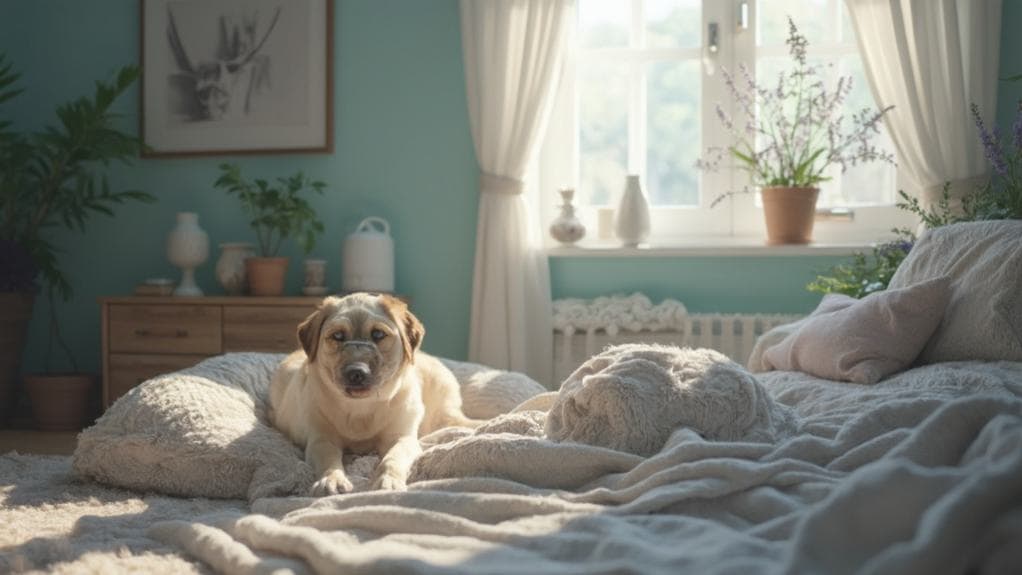
Creating a calm environment is essential for managing your dog's anxiety. Start by introducing white noise machines or soft music to mask triggering sounds, particularly during stressful events like thunderstorms or fireworks.
Establish a consistent daily routine for feeding, exercise, and sleep to provide your pet with a sense of security and predictability. Set up comfortable bedding and safe spaces within your home, allowing your dog to retreat when feeling overwhelmed.
Holistic pet diffusers can also be highly effective, with some products showing up to 90% improvement in dogs within two weeks of use.
To further enhance a calming environment, consider these steps:
- Use pheromone diffusers or sprays, such as Adaptil®, to mimic natural calming scents
- Keep departure and arrival routines low-key to minimize anxiety triggers
- Incorporate sound-dampening materials in your dog's designated area
- Gradually expose your dog to anxiety-inducing stimuli in a controlled manner
Herbal Remedies and Supplements
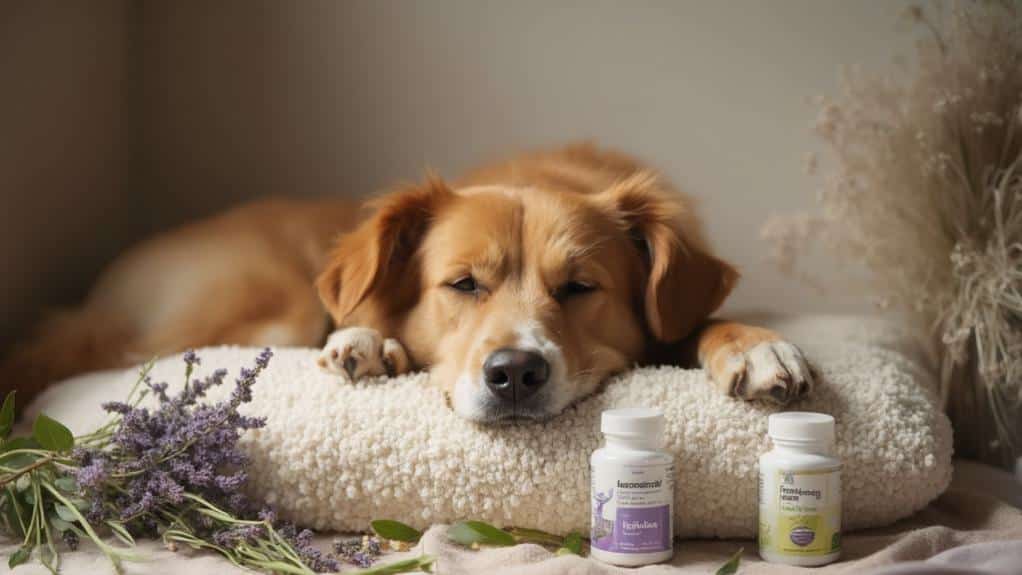
Several herbal remedies and supplements can provide natural relief for your dog's anxiety. Valerian root and chamomile are known for their calming properties, offering sedative effects that can help reduce anxiety in dogs.
CBD oil, derived from hemp, interacts with your pet's endocannabinoid system and may alleviate anxiety symptoms. Typically, you'll administer 1-5 mg per 10 pounds of body weight.
For immediate calming effects, consider Rescue Remedy, a blend of flower extracts available in liquid or spray form.
Pet Calm combines valerian root and chamomile for non-sedating relaxation and can be easily administered via dropper or mixed with food every 4-6 hours.
L-tryptophan, an amino acid found in turkey, acts as a natural mood stabilizer by promoting serotonin production and is often included in dog supplements for anxiety management.
When introducing herbal remedies or supplements to your dog's routine, it's essential to consult your veterinarian first. They can provide guidance on safe dosages and potential interactions with existing medications.
Your vet will help you determine the most appropriate natural solutions for your dog's specific anxiety issues, ensuring that you're using these remedies effectively and safely.
Behavioral Techniques for Anxiety Management
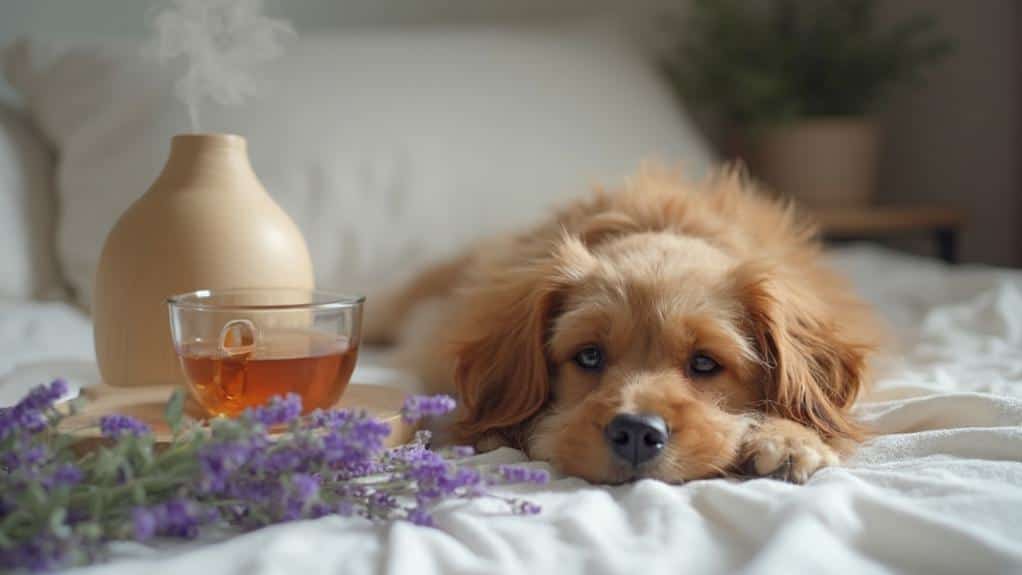
While natural remedies can be helpful, behavioral techniques play a crucial role in managing your dog's anxiety. To calm dog anxiety and ease your dog's stress, you can employ several effective strategies that focus on training and conditioning.
Gradual desensitization involves slowly exposing your dog to anxiety triggers in controlled settings, helping them learn to cope over time. Pair this with counter-conditioning, which associates stressful stimuli with positive experiences, altering your dog's emotional response to anxiety-inducing situations. These techniques are essential components of natural anxiety solutions for dogs, providing long-lasting relief without medication.
To address separation anxious behaviors, train your dog to be independent through short absences, gradually increasing the duration they're left alone. Establishing a consistent daily routine for feeding, exercise, and play provides a sense of security and predictability, reducing anxiety.
Additionally, engage your dog in mental stimulation activities to distract from anxiety-inducing situations and promote relaxation.
Here are four key behavioral techniques to implement:
- Practice gradual desensitization to anxiety triggers
- Use counter-conditioning with treats or praise
- Establish a consistent daily routine
- Engage in regular mental stimulation activities
Frequently Asked Questions
What Is the Best Natural Remedy for Dog Anxiety?
To address dog anxiety naturally, you can try a combination of methods.
Start with herbal supplements and essential oils, under veterinary guidance. Incorporate calming music and use anxiety wraps like Thundershirts.
Provide interactive toys for mental stimulation and introduce gentle yoga exercises. Offer natural treats during stressful times, and use pheromone diffusers in your home.
Consider routine changes and environmental enrichment to reduce overall stress.
What to Do for a Dog With Bad Anxiety?
To help a dog with severe anxiety, first identify dog anxiety signs like excessive panting or pacing.
Implement calming techniques such as gentle massage or soothing music.
Make environmental adjustments by creating safe spaces and minimizing anxiety triggers.
Consider herbal supplements after consulting your vet.
Develop anxiety reduction strategies through consistent routines and exercise, which offer numerous benefits.
Practice socialization gradually to build confidence.
How Can I Calm My Dog Down Naturally?
As cool as a cucumber, you can naturally calm your anxious pup using various methods.
Start by establishing a consistent exercise routine and creating a safe space. Incorporate calming music and aromatherapy oils to soothe your dog's senses.
Try massage techniques and herbal supplements, but consult your vet first. Use interactive toys to distract from anxiety triggers, and maintain routine consistency.
Positive reinforcement helps build confidence. Remember, patience is key when addressing your dog's anxiety naturally.
Can You Train Anxiety Out of a Dog?
You can't completely train anxiety out of a dog, but you can considerably reduce it through various methods.
Start by identifying anxiety triggers and implementing calming techniques. Use training methods that focus on positive reinforcement and behavior modification.
Make environmental adjustments to create a safe space. Implement socialization strategies and exercise routines to boost confidence.
Utilize relaxation aids when necessary. Remember, each dog is unique, so you may need to try different approaches to find what works best for managing your dog's anxiety symptoms.
Conclusion
As you've explored these natural solutions for dog anxiety, you've gained valuable tools to help your furry friend. Remember, every dog is unique, so you'll need to tailor these approaches to your pet's specific needs. Consistency and patience are key. Isn't your dog's happiness worth the effort? By combining exercise, environmental adjustments, herbal remedies, and behavioral techniques, you're well-equipped to tackle canine anxiety. Stay observant, be responsive, and don't hesitate to consult a professional if your dog's anxiety persists or worsens.