
Natural Solutions for Pet Anxiety
Natural Solutions for Pet Anxiety
To address pet anxiety naturally, start by creating a calm environment with consistent routines and soothing elements like calming music. Engage your pet in regular exercise and interactive play to reduce stress. Implement positive reinforcement training techniques, focusing on desensitization and counterconditioning. Consider aromatherapy using pet-safe essential oils or hydrosols. Natural supplements like CBD oil, valerian root, or chamomile may provide relief when used under veterinary guidance. Incorporate massage and touch therapy to strengthen your bond and promote relaxation. Utilize music therapy or white noise machines to mask triggering sounds. For a thorough approach, consult with your veterinarian to develop a tailored anxiety management plan. Further exploration will uncover additional strategies for your pet's well-being.
Main Points
- Create a calming environment with consistent routines, soothing music, and designated safe spaces.
- Implement regular exercise and interactive play to reduce anxiety and promote mental stimulation.
- Use positive reinforcement training techniques, including desensitization and counterconditioning, to address anxiety triggers.
- Consider aromatherapy with pet-safe scents like lavender or chamomile to promote relaxation.
- Explore natural supplements and herbs, such as CBD oil or valerian root, under veterinary guidance.
Understanding Pet Anxiety
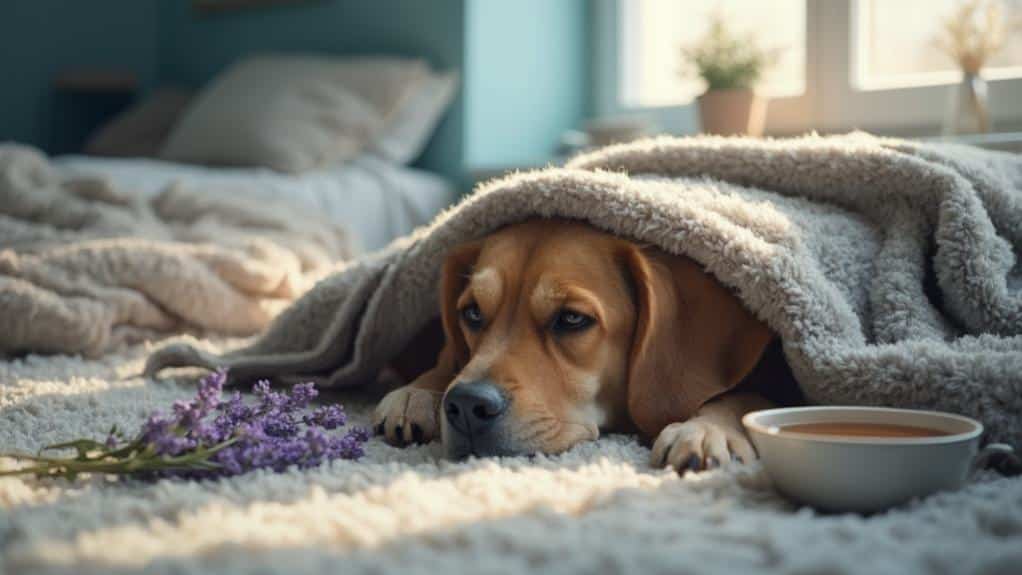
Anxiety in pets is a widespread issue that can greatly impact their well-being and your relationship with them. As a pet parent, it's essential to recognize the signs of stress in your dog and understand the various forms of anxiety they may experience.
Separation anxiety, affecting approximately 14% of dogs, can lead to destructive behavior and excessive vocalization when you're away. Other types of anxiety, such as noise phobias or general anxiety, may manifest through trembling, panting, or restlessness.
Natural anxiety solutions like weighted blankets or calming coats can provide comfort by mimicking a reassuring hug, helping to reduce stress during thunderstorms or other anxiety-inducing situations.
To help ease your pet's anxiety, you'll need to identify triggers and potential root causes. Environmental changes, past trauma, or genetic predisposition can all contribute to your dog's nervous system being on high alert.
By observing your pet's behavior and noting when anxiety symptoms occur, you can begin to develop natural solutions tailored to their specific needs. Early intervention is key to preventing worsening symptoms and improving your pet's quality of life.
Regular Exercise and Play
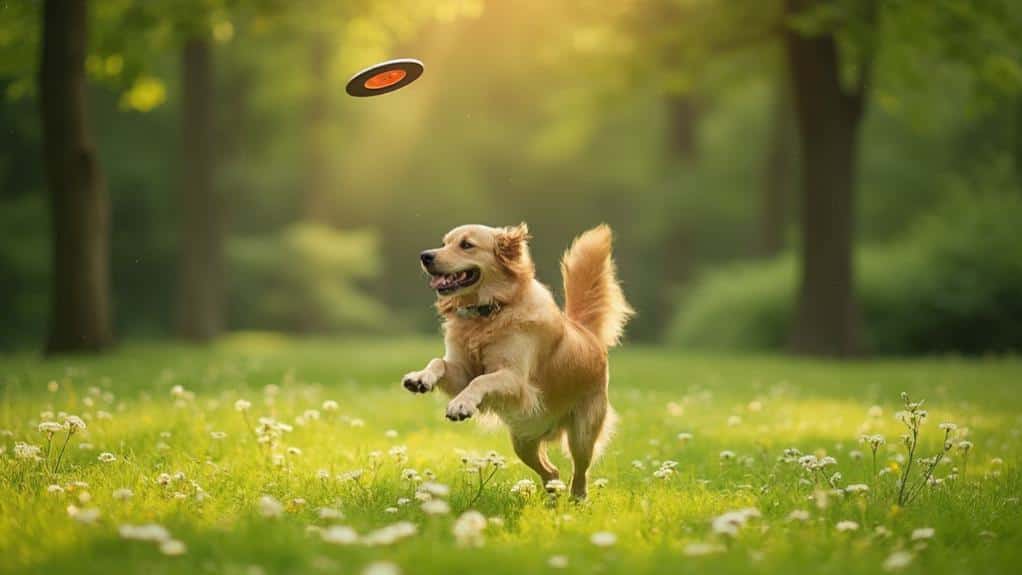
Having identified your pet's anxiety triggers, it's time to explore one of the most effective natural solutions: regular exercise and play. Regular exercise is essential for your dog's well-being, as it not only burns off excess energy but also releases endorphins that greatly reduce anxiety levels. Engage your pet in interactive play, such as fetch or tug-of-war, to promote bonding and provide mental stimulation that helps alleviate stress.
To guarantee your dog receives adequate physical activity without overexertion, tailor activities to their age, breed, and health condition. Incorporate a combination of physical exercise and mental challenges to enhance your pet's overall well-being and reduce anxiety symptoms. Consider the following options:
| Physical Exercise | Mental Stimulation |
|---|---|
| Walking | Puzzle toys |
| Running | Training sessions |
| Hiking | Scent work |
Creating a Calming Environment
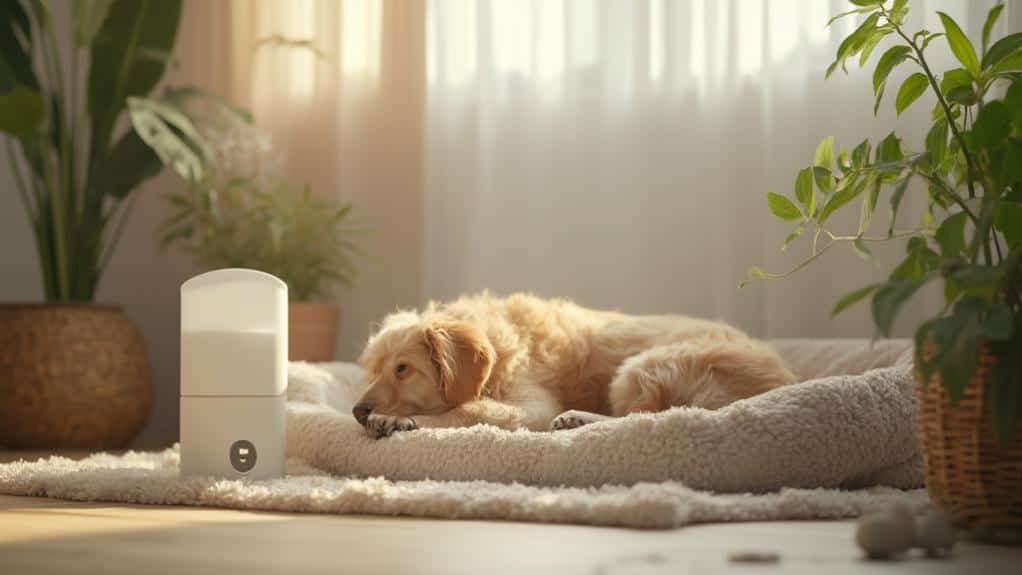
While regular exercise plays a crucial role in managing pet anxiety, creating a calming environment at home is equally important. To reduce stress in dogs, start by establishing a consistent routine for feeding, exercise, and sleep times. This predictability helps anxious pets feel more secure in their surroundings.
Next, incorporate soothing elements like calming music or white noise to mask potentially triggering sounds from the environment. Create a safe space for your dog by designating a quiet area with comfortable bedding and familiar toys, providing a retreat during stressful situations.
Consider using calming products such as pheromone diffusers or Thundershirts, which can enhance the peacefulness of your home by mimicking comforting scents and providing gentle pressure. Anxiety shirts have been shown to reduce symptoms in 85% of dogs, offering a drug-free solution for various anxiety triggers.
Regular grooming sessions can also serve as a relaxing routine, promoting bonding and reducing anxiety in dogs through physical touch and care. By implementing these strategies, you'll create a tranquil atmosphere that helps your pet feel more at ease.
Aromatherapy for Pets
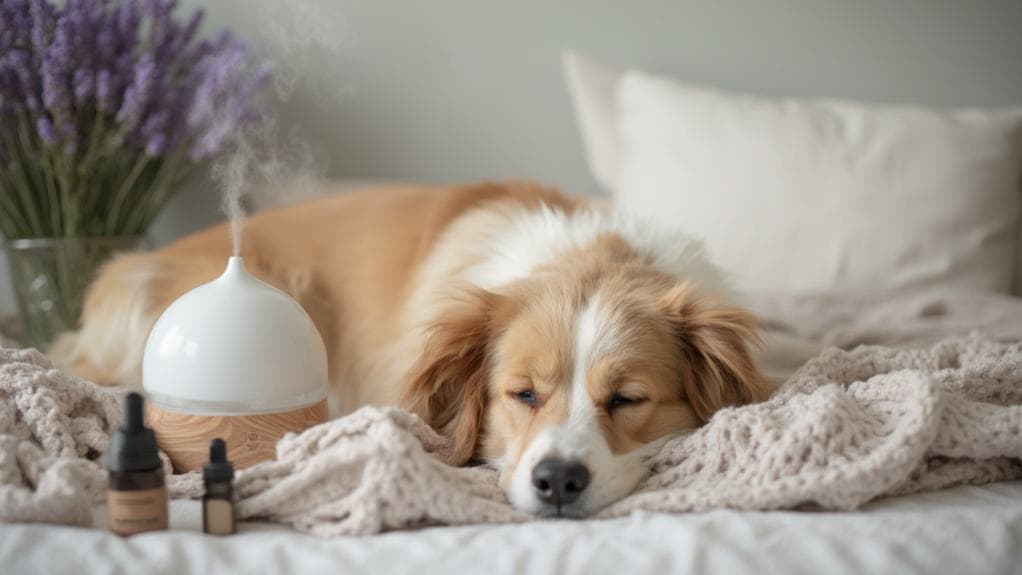
Scents can greatly influence your pet's mood and behavior. Aromatherapy for pets, using essential oils like lavender and chamomile, has been shown to reduce anxiety in dogs. When using this method to calm your dog, it's vital to dilute the oils properly. Mix 1-2 drops of essential oil with a tablespoon of carrier oil before applying topically or diffusing.
For a safer alternative, consider using hydrosols in calming sprays or on your pet's bedding. These less concentrated solutions provide a soothing environment without the risks associated with pure essential oils.
| Anxiety Trigger | Essential Oil Blend | Application Method |
|---|---|---|
| Separation | Neroli + Vetiver | Diffuser |
| Loud Noises | Frankincense | Diluted Topical |
| General Stress | Lavender + Chamomile | Hydrosol Spray |
| Travel | Bergamot + Ylang Ylang | Bedding Application |
| New Environments | Cedarwood + Marjoram | Collar Drop |
Before introducing any aromatherapy treatments, consult a veterinarian to guarantee they're safe for your pet's specific needs and health conditions. They can guide you on proper usage and help tailor a blend that addresses your anxious dog's particular triggers, assuring a more effective and safer approach to pet aromatherapy.
Behavioral Training Techniques
When addressing pet anxiety, behavioral training techniques can be highly effective, natural solutions.
You'll want to focus on positive reinforcement methods, which reward desired behaviors to encourage their repetition.
Gentle remedies can also be incorporated into your training routine to help soothe your dog's anxiety naturally.
Desensitization and counterconditioning are particularly useful strategies, involving gradual exposure to anxiety triggers paired with positive experiences, helping your pet build tolerance and associate the triggers with pleasant outcomes.
Positive Reinforcement Methods
Positive reinforcement methods are powerful tools for managing pet anxiety. These techniques help reduce stress by rewarding desired behaviors, which can help calm an anxious dog over time.
To implement positive reinforcement effectively, you'll need to consistently reward your dog for displaying calm behavior in stressful situations. This process of training and conditioning can gradually desensitize dogs to anxiety-triggering stimuli.
When using positive reinforcement to help your dog overcome anxiety, keep training sessions short and engaging, typically lasting 5-10 minutes. This approach maintains your dog's focus and prevents frustration.
Incorporate treats, praise, or play as rewards, tailoring the reinforcement to your dog's preferences. For precise timing in marking desired behaviors, consider using clicker training. This method enhances the learning process for anxious dogs by clearly communicating which actions are being rewarded.
Desensitization and Counterconditioning
Behavioral training techniques like desensitization and counterconditioning form the backbone of anxiety management for pets. These methods work together to help your dog overcome fear and stress associated with specific triggers.
Desensitization involves gradual exposure to anxiety-inducing stimuli, while counterconditioning pairs these triggers with positive experiences.
To implement these techniques effectively:
- Start with low-intensity exposure to keep your dog calm
- Use treats or praise to create positive associations
- Increase exposure gradually as your pet becomes more comfortable
Consistency is key when applying desensitization and counterconditioning. Plan short, frequent training sessions to maintain your dog's engagement without overwhelming them.
Throughout the process, carefully monitor your pet's behavior for signs of stress or anxiety. If you notice any negative reactions, decrease the intensity of exposure immediately.
Natural Supplements and Herbs
Several natural supplements and herbs offer promising solutions for pet anxiety. CBD oil, a natural supplement, interacts with your dog's endocannabinoid system, potentially stabilizing mood and reducing anxiety symptoms effectively.
Herbal remedies like valerian root and chamomile are known for their calming properties, serving as natural mood stabilizers for anxious dogs. You can also consider L-tryptophan, an amino acid found in turkey, as a dietary supplement to promote relaxation and alleviate anxiety in your furry friend.
Melatonin and thiamine are additional ingredients commonly found in calming supplements that support nervous system function and promote relaxation in dogs.
For a holistic approach, try the Rescue Remedy formula, which combines flower essences such as Rock Rose and Cherry Plum. This blend provides a gentle, side-effect-free method to calm anxious pets.
However, it's important to consult a veterinarian before introducing any new supplements or herbs to your dog's routine. Your vet can confirm the safety and appropriate dosage based on your pet's individual health needs.
Massage and Physical Touch
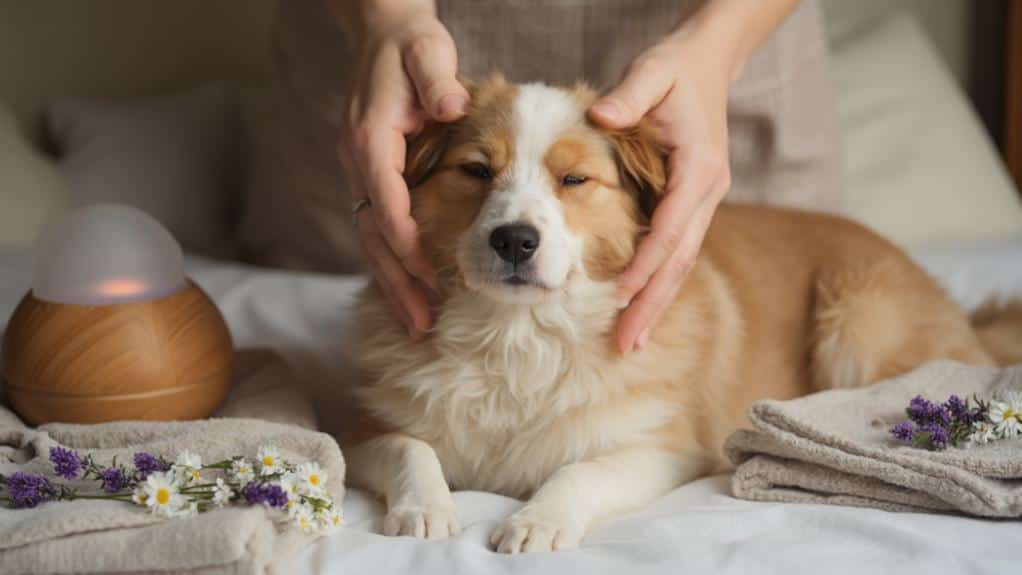
When it comes to soothing your anxious pet, massage and physical touch can be powerful tools.
You'll want to start with long, slow strokes along your dog's body, applying gentle pressure to promote relaxation and reduce stress hormone levels.
Essential massage tools can enhance your pet massage experience and provide additional benefits for your furry friend.
As you progress, incorporate circular finger movements using the TTouch method, which can activate cell function and enhance your pet's sense of calm, while simultaneously strengthening your bond and providing a comforting routine for both of you.
Calming Massage Techniques
Throughout the ages, pet owners have sought natural ways to soothe their anxious companions. Calming massage techniques have proven to be an effective method to reduce stress levels and help alleviate anxiety in dogs. By incorporating physical touch into your pet's routine, you can create a calming environment that fosters relaxation and emotional stability.
To soothe anxious dogs using massage:
- Use long, slow strokes along your dog's body
- Apply gentle pressure with circular finger movements (TTouch method)
- Focus on specific body areas to activate cell function and enhance relaxation
These techniques not only lower cortisol levels but also release endorphins, contributing to your dog's overall sense of well-being. As you practice these methods, you'll likely notice a reduction in signs of anxiety, such as trembling or excessive vocalization.
Regular massage sessions will strengthen the bond between you and your pet while promoting a state of calm.
When implementing calming massage techniques, it's crucial to maintain a consistent routine. Start with short sessions and gradually increase duration as your dog becomes more comfortable.
Benefits of Touch Therapy
Touch therapy offers five key benefits for anxious pets, making it a powerful natural solution for managing their stress.
First, it promotes the release of endorphins, which are natural mood elevators that help calm your dog.
Second, specific techniques like the TTouch method, using gentle circular movements, activate cell function and stimulate relaxation in dogs suffering from anxiety.
Third, regular physical touch through petting strengthens the bond between you and your pet, providing emotional reassurance and contributing to your dog's overall health.
Fourth, massage can lower heart rates and decrease stress-related behaviors, making it an effective tool to relieve stress during challenging situations.
Finally, engaging in calming massages for just 10-15 minutes daily can alleviate symptoms of anxiety, such as excessive barking and restlessness, by creating a soothing routine.
To implement touch therapy, start by finding a quiet space and gently petting your dog in long, slow strokes.
Gradually introduce circular movements, paying attention to your dog's response.
Focus on areas like the ears, chest, and back.
Consistency is key, so incorporate this practice into your daily routine for maximum benefits.
Music and Sound Therapy

For many pet owners, music and sound therapy offer a natural and effective way to soothe anxious dogs. By utilizing specially curated playlists or white noise machines, you can create a soothing atmosphere that masks loud environmental noises and promotes calmness in your furry friend.
Research shows that music designed for dogs, such as that by "Through a Dog's Ear," can notably reduce anxiety and even decrease heart rates in stressed pets. While herbal calming diffusers are popular, sound therapy provides a non-invasive alternative that can be easily combined with other anxiety management methods.
To implement sound therapy effectively, consider the following:
- Use calming music during stressful situations like vet visits or when leaving your dog alone
- Employ white noise machines to drown out sudden loud noises during storms or fireworks
- Play gentle classical music to reduce barking and improve overall behavior
Consultation With Veterinary Professionals
A essential step in managing your pet's anxiety is consulting with a veterinary professional. Your veterinarian can help develop a tailored anxiety management plan that addresses your dog's specific triggers and symptoms.
During the consultation, they'll assess potential underlying health issues that might contribute to anxiety, ensuring a thorough approach to treatment. They can also recommend natural calming ingredients like melatonin, valerian root, and chamomile, which are common in many anxiety supplements for dogs.
Professional guidance is important when considering medication options for severe anxiety cases. Your veterinarian can provide insights into appropriate dosages and potential side effects, helping you make informed decisions about your pet's care.
They can also recommend natural remedies and supplements that align with your dog's health history and conditions, ensuring safe and effective alternatives to pharmaceutical interventions.
Remember that anxiety management is an ongoing process. Schedule regular follow-ups with your veterinarian to assess the effectiveness of the chosen treatments and make necessary adjustments.
These check-ins allow you to track your pet's progress and refine the anxiety management strategy as needed. By maintaining open communication with your veterinary professional, you'll be better equipped to provide your anxious pet with the most appropriate and effective care.
Frequently Asked Questions
How to Stop Worrying About Your Pet?
To stop worrying about your pet, identify their anxiety triggers and implement calming techniques.
Create safe spaces and maintain consistent routines to reduce stress. Use positive reinforcement and relaxation methods during mindful interactions.
Engage in regular pet care activities, including exercise and mental stimulation. When routine changes occur, gradually introduce them.
Stay informed about your pet's needs and behaviors, consulting a vet if necessary. Remember, your calm demeanor can help your pet feel more secure.
Can You Fix Separation Anxiety in Dogs?
Picture your dog as a ship lost at sea, desperately seeking its anchor. You can fix separation anxiety by recognizing signs and implementing training techniques.
Start with gradual departures and positive reinforcement. Utilize calming aids and anxiety relief toys.
Make environmental changes, including crate training, to create a safe space. Consistency is key; you'll need patience and persistence.
How to Get Rid of a Dog's Social Anxiety?
To address your dog's social anxiety, start with desensitization techniques and controlled exposure to low-stress situations.
Use positive reinforcement during socialization exercises, rewarding calm behavior. Gradually increase outdoor adventures and interactions with other dogs.
Establish safe spaces and routines to build your pet's confidence. Consider calming products like pheromone diffusers or anxiety wraps.
Consistency is key; maintain a regular schedule of training and exposure. Remember, progress may be slow, but with patience and persistence, you'll see improvement in your dog's social comfort.
What Is a Natural Anti Depressant for Dogs?
You've got a dog with the blues? Don't fret, there are natural anti-depressants for your furry friend.
Consider herbal remedies like valerian root or chamomile, or try calming treats with L-tryptophan. Essential oils, used carefully, can provide soothing scents.
Establish regular exercise routines and incorporate training techniques to boost your dog's mood. Music therapy and anxiety wraps can also help.
Conclusion
As you implement these natural solutions for pet anxiety, you'll likely notice improvements in your furry friend's behavior. Remember, what works for one pet may not work for another. It's crucial to observe your pet's reactions and adjust your approach accordingly. While these methods can be effective, severe anxiety cases may require professional intervention. Always consult with your veterinarian if you're unsure about your pet's well-being. By combining these techniques, you're taking proactive steps to guarantee your pet's comfort and happiness.