
Safe Humidifier Guide for Pets’ Comfort & Health
Safe Humidifier Guide for Pets’ Comfort & Health
Select a cool-mist evaporative humidifier for your pets’ safety and comfort, as warm-mist models pose burn risks. Place the unit on a high, stable surface away from curious paws, and maintain humidity levels between 40-60% using distilled water only. Clean your humidifier every three days with natural solutions to prevent mold growth. You’ll notice improved respiratory health, better sleep, and healthier skin in your pets. Discover more ways a properly maintained humidifier can enhance your pet’s well-being.
Main Points
- Choose cool-mist evaporative humidifiers over warm-mist models to eliminate burn risks and ensure optimal safety for pets.
- Maintain humidity levels between 40-60% using a hygrometer to support respiratory health and prevent skin irritation.
- Place humidifiers on high, stable surfaces away from pets’ reach and ensure automatic shut-off features work properly.
- Clean the humidifier every three days with natural solutions and use only distilled water to prevent mold growth.
- Monitor pets for signs of humidity-related stress, including excessive panting, coat changes, or unusual lethargy.
Why Pet Owners Should Consider Humidifiers
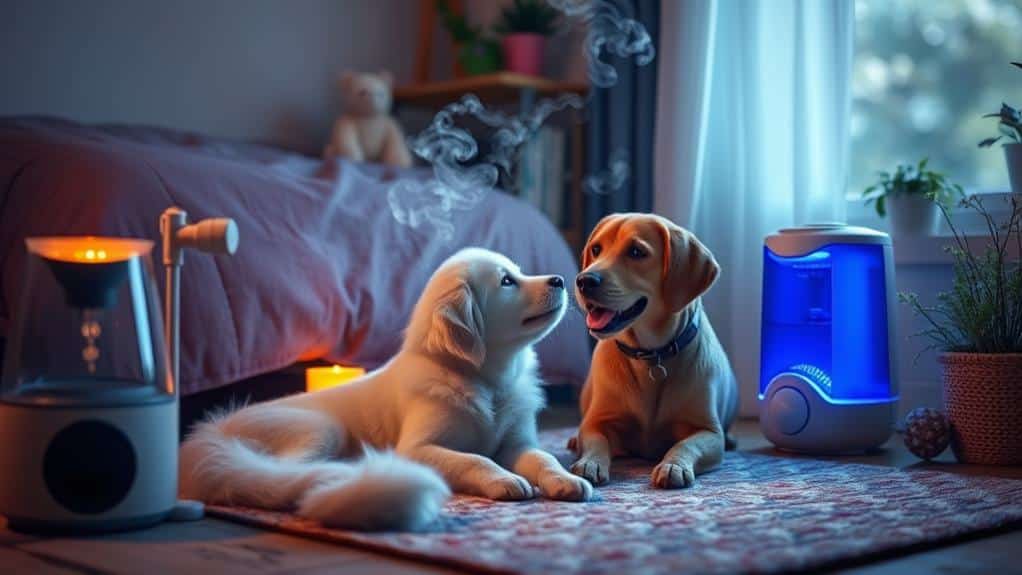
When winter arrives and indoor heating systems kick in, your pets can experience various health challenges from dry air. A humidifier can transform your home into a healthier environment for your furry companions by addressing multiple wellness concerns.
Your pets’ respiratory health greatly improves with proper humidity levels, as moisturized air helps clear congestion and makes breathing easier. Regular use of humidifiers can help prevent sneezing and coughing. Maintaining the ideal humidity range of 40 to 60 percent creates the perfect environment for optimal pet health. If your dog or cat suffers from allergies, asthma, or frequent respiratory infections, a humidifier can provide essential relief. The addition of moisture vapor emission helps maintain optimal humidity for your pets’ respiratory comfort. Ultrasonic humidifiers provide fine mist dispersion that’s gentle and efficient for your pets.
Beyond breathing benefits, these devices help maintain your pet’s skin and coat health by preventing dryness and irritation. Proper humidity levels can reduce excessive scratching and prevent skin problems from developing.
You’ll notice enhanced pet comfort as humidifiers reduce static electricity in fur, promote better sleep, and create an atmosphere that helps your pets regulate their body temperature more effectively.
Best Types of Humidifiers for Your Furry Friends
With several humidifier options available, choosing the right one for your pet’s needs can make a significant difference in their comfort and health. Warm-mist models should be avoided since they pose serious burn risks to curious pets.
Cool mist evaporative humidifiers stand out as the safest choice, eliminating burn risks while effectively filtering out impurities that could affect your pet’s respiratory health. Many models like the Dreo operate at just 42 decibels on high settings, ensuring peaceful rest for your pets. Away from outlets these units should be placed to ensure maximum safety. Regular cleaning with vinegar and water helps maintain optimal performance and prevents bacteria growth.
If you’re concerned about noise, ultrasonic benefits include whisper-quiet operation that won’t startle sensitive pets. These units create a fine mist that quickly adjusts room humidity.
For tech-savvy pet owners, smart humidifiers offer precise control through smartphone apps and automatic adjustments based on your home’s conditions.
Consider an HVAC-integrated system if you’re looking for a whole-house solution. It’ll maintain consistent humidity levels throughout your home while requiring minimal maintenance, ensuring your pets stay comfortable in every room.
Health Benefits of Proper Humidity for Pets
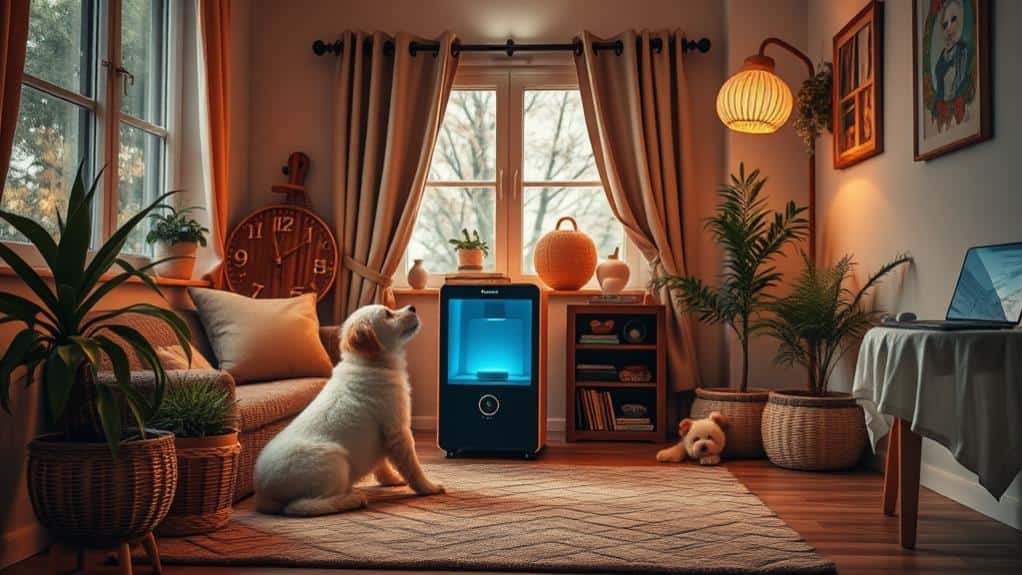
Maintaining proper humidity levels in your home can considerably impact your pet’s health and well-being. When you keep humidity between 40-60%, you’ll help guarantee ideal skin hydration and prevent issues like flaking, itching, and potential infections. Birds especially benefit from maintaining 55% humidity levels to prevent potential mold issues in their environment. Regular natural oil distribution through grooming helps maintain healthy skin and coat condition. Similar to early morning exercise, indoor activities during peak heat hours help prevent heat-related stress.
Your pet’s fur will stay healthier with reduced static and breakage while maintaining its natural oils. Using cranberry supplements can provide additional antioxidant benefits for overall pet health. Regular monitoring using quality hygrometers helps ensure consistent humidity control.
Proper moisture levels also support respiratory health by keeping your pet’s airways functioning effectively. You’ll notice fewer respiratory issues, and if your pet has asthma, they’ll breathe easier in a properly humidified environment.
The right humidity levels can also help manage allergies by reducing airborne irritants and dust mites. Plus, your pet will sleep better, regulate their temperature more effectively, and maintain healthier paw pads in a properly humidified space.
Essential Safety Precautions and Risk Management
To guarantee your pet’s safety around humidifiers, you’ll need to implement several essential precautions.
Choose an evaporative cool mist model over ultrasonic options, as these are safer for sensitive pet hearing and don’t release potentially harmful minerals into the air. Place your humidifier on a high, stable surface away from electrical outlets and your pet’s reach.
Monitor humidity thresholds using a hygrometer, maintaining levels between 30-70%. Central humidifiers integrated with your HVAC system can provide more consistent and controlled moisture distribution throughout your home. Pet owners must be aware that respiratory irritation can occur if proper humidity levels aren’t maintained.
Never add essential oils or fragrances, which can trigger pet allergies or cause serious health issues, especially in cats and birds. Use only distilled water and clean your device regularly to prevent mold growth. Automatic shut-off features provide an additional layer of safety when operating humidifiers around pets.
Watch your pet closely when first introducing the humidifier, and stop using it immediately if you notice any signs of respiratory distress or discomfort.
Setting Up Your Pet-Friendly Humidifier
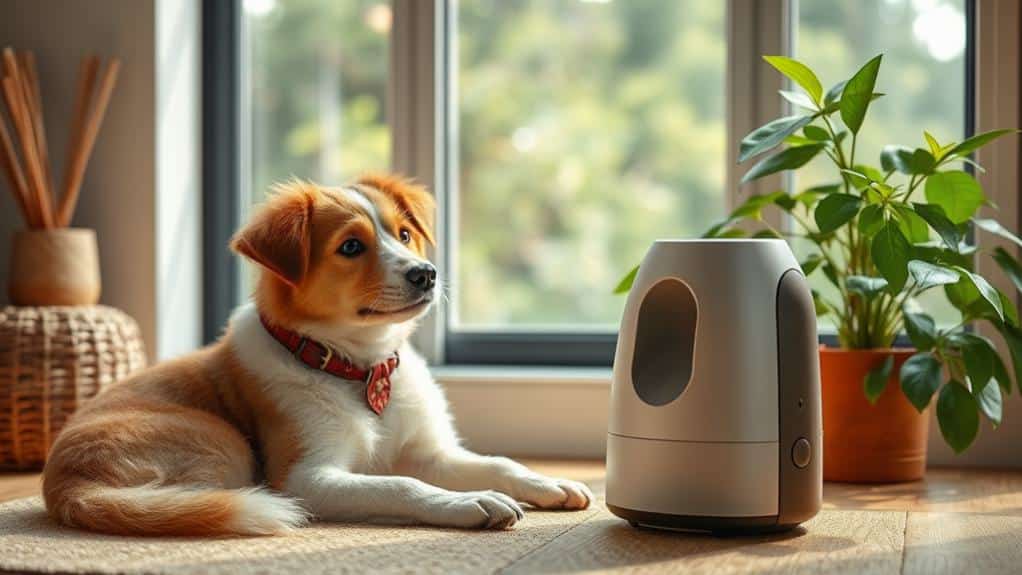
Once you’ve selected the right humidifier for your pet, proper setup plays an essential role in guaranteeing both safety and effectiveness.
When considering humidifier placement, choose a stable, flat surface away from electrical outlets to prevent accidents. Water quality is important – always use distilled water to avoid mineral buildup and maintain clean air for your pets. The device’s UV-filtered moisture provides a safe environment without visible mist that could startle pets. Like enzyme-based cleaners, regular monitoring helps maintain optimal air quality. Regular cleaning weekly will ensure optimal performance and prevent harmful bacteria growth.
For peak performance, fill the tank to the indicated line and confirm the lid is securely fastened.
- Position device on a sturdy surface where it can’t be knocked over
- Maintain humidity levels between 40-60% using a hygrometer
- Use distilled water to prevent mineral dust and contamination
- Fill tank according to room size (4L for 300 sq ft, 6L for 500 sq ft)
- Connect to smart apps if available for precise humidity control
Maintenance Tips for a Safe Humidification System
Because a well-maintained humidifier directly impacts your pet’s health, proper cleaning and upkeep should be your top priority. Using natural cleaning solutions helps eliminate harmful mineral buildup safely. Placing the unit on stable surfaces only prevents accidents and spillage. Follow a consistent cleaning schedule by emptying and drying the tank daily, and perform deep cleaning every three days using vinegar for mineral deposits and a 10% bleach solution for disinfection. The EPA advises cleaning every 3 days for optimal air quality and safety. Eco-conscious pet owners can use diluted vinegar solutions instead of harsh chemicals for regular maintenance.
| Task | Frequency | Method |
|---|---|---|
| Water Change | Daily | Use distilled water only |
| Filter Replacement | As needed | Check before each use |
| Deep Clean | Every 3 days | Vinegar + bleach solution |
Don’t forget regular filter replacement based on your manufacturer’s guidelines. Keep the humidifier on a high shelf, away from your pet’s reach, and use only distilled water to prevent white dust emission. Monitor humidity levels to maintain a comfortable 30-50% range for your pets, and always check for signs of moisture buildup or mold growth.
Understanding Your Pet’s Response to Humidity Changes
While maintaining your humidifier keeps the air quality ideal, recognizing how your pet responds to humidity changes will help you fine-tune your home’s environment. Using calming supplements like NaturVet Quiet Moments can help pets adjust more comfortably to environmental changes. Natural digestive supplements can help maintain your pet’s overall health and comfort during seasonal humidity changes. Holistic treatments can provide relief from allergy-related discomfort that may be worsened by humidity fluctuations. Your pet’s behavior can signal their humidity sensitivity, allowing you to make necessary adjustments before discomfort becomes a health issue. High humidity can make it particularly difficult for pets to regulate their body temperature since panting becomes less effective. A weighted blanket effect can provide additional comfort for pets experiencing anxiety during humid conditions. Starting with smaller doses helps assess your pet’s tolerance to any new anxiety remedies during environmental changes.
Watch for these key indicators of humidity-related stress in your pets:
- Excessive panting or labored breathing, even when the temperature isn’t particularly high
- Changes in coat texture, including unusual dryness or increased matting
- Scratching more frequently or showing signs of skin irritation
- Unusual lethargy or changes in normal activity patterns
- Increased water consumption or reduced appetite
References
- https://heydewy.com/blogs/news/are-humidifiers-safe-for-dogs
- https://www.everlastingcomfort.net/blogs/comfy-reads/are-humidifiers-good-for-dogs
- https://www.dogster.com/dog-health-care/are-humidifiers-safe-for-dogs
- https://www.straighttwist.com/post/are-humidifiers-safe-for-pets
- https://neaterpets.com/blogs/news/are-humidifiers-safe-for-pets
- https://www.catster.com/cat-health-care/is-humidifier-safe-for-cat/
- https://cats.com/are-humidifiers-safe-for-cats
- https://www.petco.com/content/content-hub/home/questions/01/32/614204.html
- https://www.walmart.com/c/kp/humidifier-for-pets
- https://www.poodlesandparrots.com/blog/posts/the-benefits-of-humidifiers-for-pets-and-how-to-choose-the-right-one
- https://www.everythinghumidifiers.com/are-humidifiers-safe-for-small-pets/
- https://petwellbeing.com/blogs/news/are-humidifiers-good-for-pets
- https://hellocarepod.com/en-ca/blogs/learn/the-link-between-humidifiers-and-pet-health-what-every-pet-owner-should-know
- https://getcanopy.co/blogs/news/are-humidifiers-good-for-pets
- https://caninecountry.org/does-my-dog-need-a-humidifier/
- https://aircare.com/blog/are-humidifiers-safe-for-animals/
- https://sitmeanssitmt.com/do-dogs-benefit-from-humidifiers/
- https://shop.mirohome.com/blogs/tips/can-a-humidifier-benefit-my-pet
- https://www.thespruce.com/best-mist-humidifiers-4066052
- https://air-innovations.com/blogs/feel-better/is-a-home-humidifier-good-for-pets