
Understanding Raw Feeding: Complete Guide
Understanding Raw Feeding: Complete Guide
Raw feeding for dogs replicates their ancestral diet, consisting of 80% muscle meat, 10% raw edible bone, and 10% organ meats. You'll need to calculate 2-3% of your dog's ideal weight for daily portions, adjusting for age and activity level. Shift gradually over 7-10 days to avoid digestive issues. This diet can boost immunity, improve coat health, and increase energy levels. Be mindful of breed-specific needs and life stages when planning meals. Always prioritize safety by avoiding cooked bones and weight-bearing bones from large animals. Proper implementation of a raw diet requires careful consideration of various factors to guarantee your dog's peak health.
Main Points
- Raw feeding aims to replicate a dog's natural diet, consisting of 80% muscle meat, 10% bone, and 10% organ meats.
- Calculate daily portions as 2-3% of your dog's ideal body weight, adjusting for age, size, and activity level.
- Transition gradually to a raw diet over 7-10 days to avoid digestive issues and ensure proper adaptation.
- Raw diets may boost immune function, improve coat health, increase energy levels, and potentially prevent certain health issues.
- Tailor raw feeding strategies to your dog's breed size, life stage, and specific health needs for optimal nutrition.
Raw Feeding Fundamentals
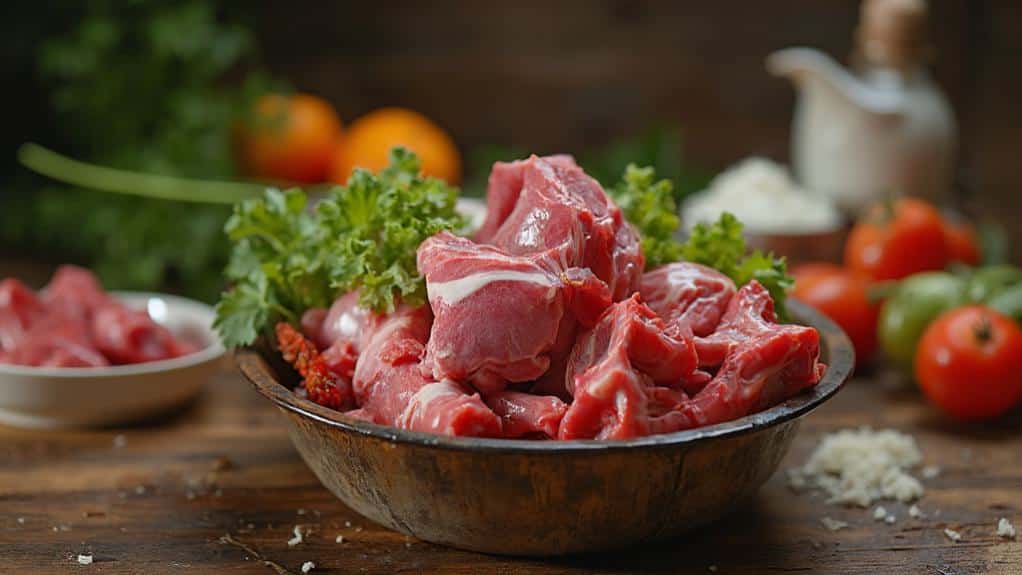
At its core, raw feeding is about returning to a dog's natural diet. This raw feeding guide will help you understand the fundamentals of providing a balanced raw diet that meets your dog's nutritional needs.
The ideal composition consists of 80% muscle meat, 10% raw edible bone, 5% liver, and 5% other organ meats, closely mimicking your dog's ancestral feeding habits. To determine the daily amount, calculate 2-3% of your dog's ideal weight. For example, a 50-pound dog would need 1-1.5 pounds of raw food daily.
When shifting to a raw diet, it's essential to do so gradually over 7-10 days. Start by mixing 25% raw food with your dog's current diet, slowly increasing the proportion of raw food. This approach helps prevent digestive disturbances.
As you implement this diet, remember to avoid cooked bones and weight-bearing bones from large animals, as they can cause dental damage or splinter.
Health Benefits and Safety
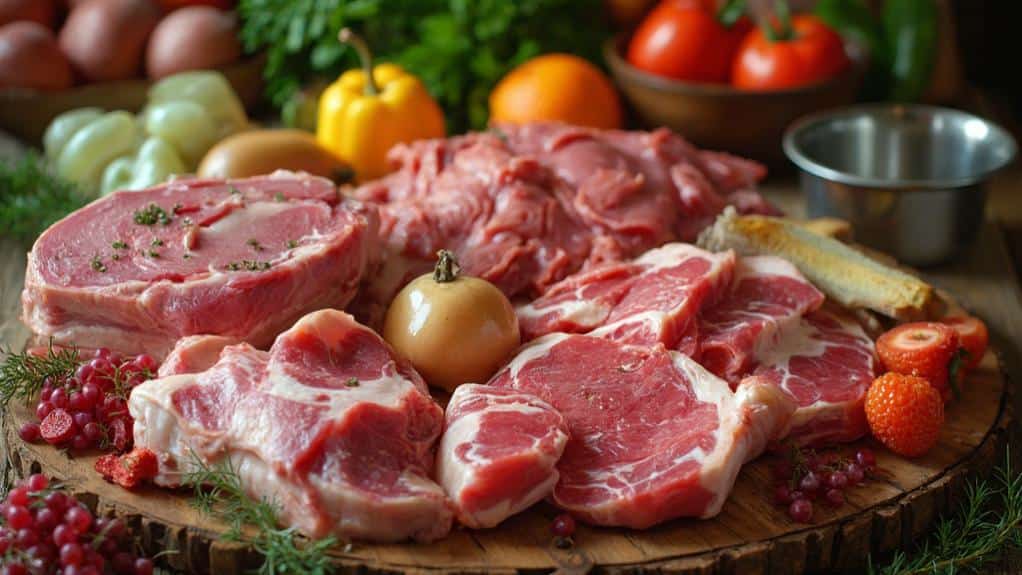
Through extensive research and real-world evidence, raw feeding has been linked to numerous health benefits for dogs. When you provide a balanced raw diet for dogs, you're offering a nutritional powerhouse that can boost their immune system, improve coat health, and increase energy levels.
The BARF Diet, which emphasizes 80% muscle meat, 10% raw edible bone, and 10% organs, guarantees your dog receives a complete and balanced array of nutrients to keep them thriving.
To implement raw feeding safely, it's essential to handle raw meat properly. Use USDA-certified meats and consider high-pressure processing (HPP) to reduce pathogens without compromising nutritional quality.
Dogs are biologically designed to digest raw meat due to their strong stomach acidity, aligning with their ancestral eating habits.
Raw diets have shown promise in alleviating common health issues such as obesity, arthritis, allergies, and diabetes, potentially leading to longer lifespans. By providing a diet rich in natural, unprocessed nutrients, you're supporting your dog's overall well-being.
Calculating Raw Food Portions
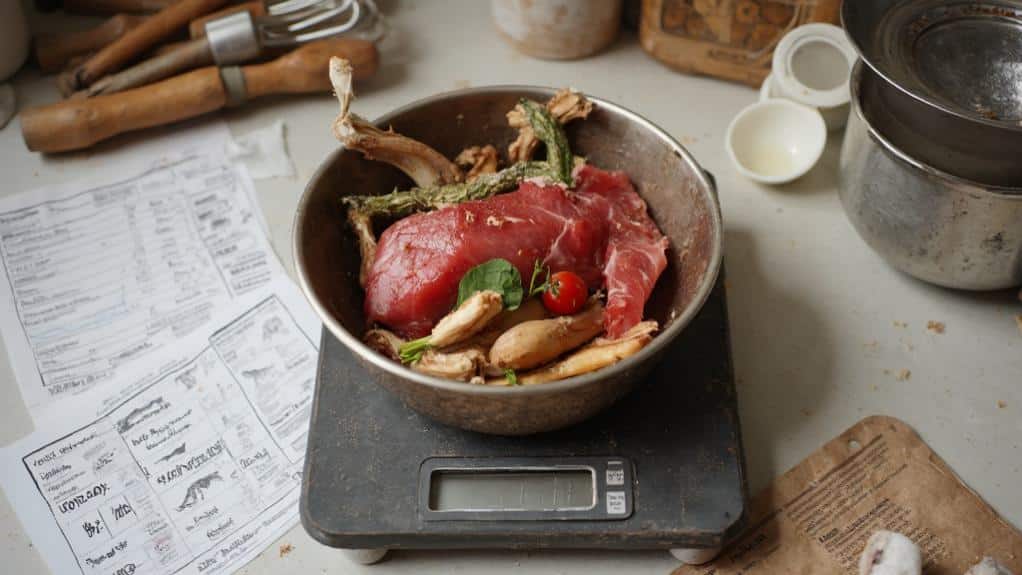
In light of the numerous health benefits associated with raw feeding, it's vital to guarantee your dog receives the right amount of food. Calculating raw food portions accurately is important for maintaining your pet's best health. To begin, you'll need to determine your dog's ideal adult body weight and use this as a baseline for daily feeding amounts.
Raw pet food guides can provide valuable insights into portion control and nutritional balance for your furry friend.
For adult dogs, the general rule is to feed 2-3% of their ideal body weight daily, adjusting based on their activity level and age. Puppies require more frequent meals, with 50-60% of their expected adult weight in ounces split into 3-6 daily portions.
Small adult dogs should receive a maximum of 5 ounces per day, while large breeds typically need 2-3% of their body weight in raw food, divided into two meals.
To fine-tune your dog's diet, use a raw dog food calculator that considers factors like size, breed, and life stage. Remember to monitor your dog's weight, energy levels, and overall appearance regularly.
This ongoing assessment will help you make necessary adjustments to guarantee your dog maintains the best health on their raw food diet.
Breed-Specific Feeding Strategies
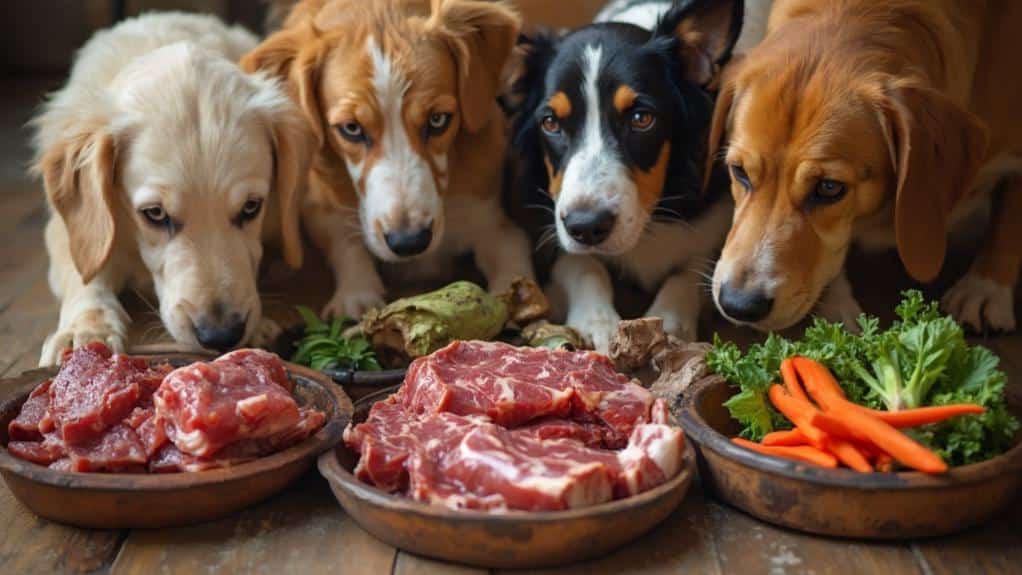
While calculating raw food portions is important for all dogs, breed-specific feeding strategies can further optimize your pet's nutrition. When implementing a raw food diet, it's essential to take into account your dog's size and energy requirements. Small breeds, weighing 15 lbs or less, typically need about 5 ounces of raw food daily, while medium and large breeds often require 2-3% of their body weight in raw food.
Raw feeding benefits include improved digestion, healthier skin and coat, and increased energy levels. This natural approach to pet nutrition closely mimics their ancestral diet.
To tailor your feeding strategy, reflect on these factors:
- Age and health status
- Activity level and energy expenditure
- Susceptibility to specific health issues
- Breed-specific nutritional needs
For small breeds, focus on providing nutrient-dense meals in smaller portions. Medium breeds may need adjustments based on their activity level, while large breeds require careful portioning to prevent obesity.
As medium breeds age, you'll need to modify their diet to address potential health concerns like arthritis and cognitive decline. This may involve reducing caloric intake while increasing protein content.
Nutritional Needs Across Life Stages

Nutritional needs vary considerably across a dog's life stages, requiring careful adjustments to their raw food diet.
When feeding raw to puppies, provide 50-60% of their expected adult weight in ounces daily, divided into 3-6 meals to support healthy growth.
For adult dogs, small breeds need up to 5 ounces daily, while large breeds require 2-3% of their body weight in raw food, split into two meals.
During pregnancy, increase food intake for small dogs in the third trimester, while pregnant or lactating large breeds need 5-10% more food.
Senior dogs have unique nutritional needs, with small breeds requiring 2% of their body weight daily and a 50% increase in protein intake to maintain muscle mass.
For aging medium and large breeds, adjust their diet to prevent obesity, arthritis, and cognitive decline.
To guarantee you're meeting your dog's nutritional needs across all life stages, consider breed-specific requirements when feeding raw.
Pay close attention to protein intake, body weight, and meal frequency.
Frequently Asked Questions
What Are the Guidelines for Raw Dog Food?
When feeding your dog raw food, focus on nutritional balance with 80% muscle meat, 10% bone, and 10% organs.
Source high-quality ingredients and practice strict food safety. Feed 2-3% of your dog's ideal body weight daily, adjusting for age and activity.
Shift gradually over 10 days to avoid digestive issues. Raw diets can benefit dog health, but consult your vet to address common misconceptions.
Control portions, monitor weight, and adjust as needed. Remember, feeding frequency varies based on your dog's size and age.
What Does Complete Mean in Raw Dog Food?
When you're feeding your dog a raw diet, "complete" means providing all essential nutrients in the right proportions.
You'll need to follow specific feeding ratios, typically 80% muscle meat, 10% bone, and 10% organ meat.
Guarantee meal variety by sourcing high-quality ingredients and incorporating a range of meats, organs, and small amounts of fruits and vegetables.
This balanced diet supports digestive health and overall well-being.
How to Feed Raw Dog Food for Beginners?
Ready to start raw feeding but don't know where to begin? First, calculate your dog's daily food requirements using a raw food calculator.
Gradually shift over 7-10 days, starting with 25% raw and increasing to 100%. Focus on a balanced diet of 80% muscle meat, 10% raw edible bone, and 10% organ meats.
Monitor your dog's health and adjust portions as needed. Choose high-quality ingredients, avoid harmful items, and consider supplements for complete nutrition.
Always prioritize safety precautions and consult your vet for personalized advice.
Why Do Vets Disagree With Raw Feeding?
Vets' disagreement with raw feeding stems from several concerns.
You'll find they worry about nutritional balance, as raw diets may lack essential nutrients if not properly formulated.
Food safety is a major issue, with bacterial contamination risks for both pets and humans.
Digestive issues and potential injuries from bones are also cited.
Vets often consider the cost comparison with commercial foods, long-term health effects, and ethical considerations.
Additionally, they may have reservations about raw diets' impact on pets with allergies or specific health conditions.
Conclusion
You've now become a raw feeding guru, ready to serve your furry friend a gourmet platter of uncooked delights. Picture yourself as a canine chef, meticulously measuring organs and bones while your dog drools nearby. Remember, it's not just about tossing raw meat into a bowl; it's a precise science. You'll need to balance nutrients, adjust portions, and cater to your dog's specific needs. With this knowledge, you're equipped to make informed decisions about your pet's diet, ensuring they thrive on their natural menu.