
Winter Paw Care: Natural Protection
Winter Paw Care: Natural Protection
To protect your dog's paws in winter, start by applying a natural paw balm made from shea butter and coconut oil before walks. This creates a barrier against cold, ice, and chemical deicers. After walks, wipe paws with a towel and rinse in lukewarm water to remove harmful residues. Dry thoroughly and reapply balm if needed. For DIY solutions, mix coconut oil with beeswax for a homemade protective balm. Regularly trim fur between toes to minimize ice buildup. Create a snow-free path in your yard for safer outings. Consistent care and attention to your dog's paws will help prevent winter-related injuries and discomfort. Further exploration of these methods can enhance your pet's winter well-being.
Main Points
- Apply natural paw balm with shea butter and coconut oil to create a protective barrier against winter elements.
- Clean and dry paws after walks to remove harmful residues and prevent skin irritation.
- Use lukewarm water soaks post-walk to enhance circulation and promote healing of paw pads.
- Create DIY paw balm using natural ingredients like beeswax and plant-based oils for affordable protection.
- Trim fur between toes and apply petroleum jelly before walks to minimize ice buildup and chemical exposure.
Understanding Winter Paw Risks
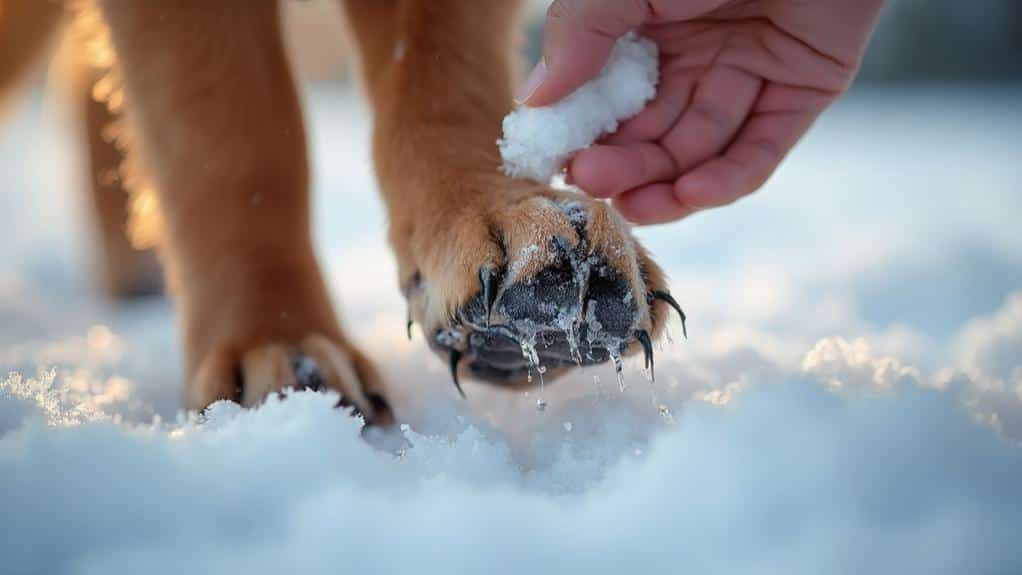
When winter's icy grip takes hold, your furry friend's paws face a host of potential risks. Cold temperatures and harsh conditions greatly increase the chances of frostbite and dryness in your dog's paw pads. To protect your dog's paws, it's essential to understand these dangers and take preventive measures.
Using natural paw waxes can provide a protective barrier against harsh winter elements, keeping your pet's paws comfortable and safe. These waxes often contain ingredients like beeswax and coconut oil that help moisturize and protect paw pads.
First, be aware that snow and ice can accumulate between your dog's toes, causing discomfort and potential injuries. Regularly check for ice build-up and gently remove it to prevent irritation.
Additionally, chemical deicers and sidewalk salt pose serious threats, as they can cause chemical burns on paw pads or lead to gastrointestinal issues if ingested. Always wipe your dog's paws after walks to remove any harmful substances.
Another concern is paw pad hyperkeratosis, a condition where excessive keratin builds up due to prolonged exposure to cold weather. This can result in dry, cracked skin on the pads. To combat this, moisturize your dog's paws regularly with pet-safe balms or oils.
Natural Paw Protection Methods
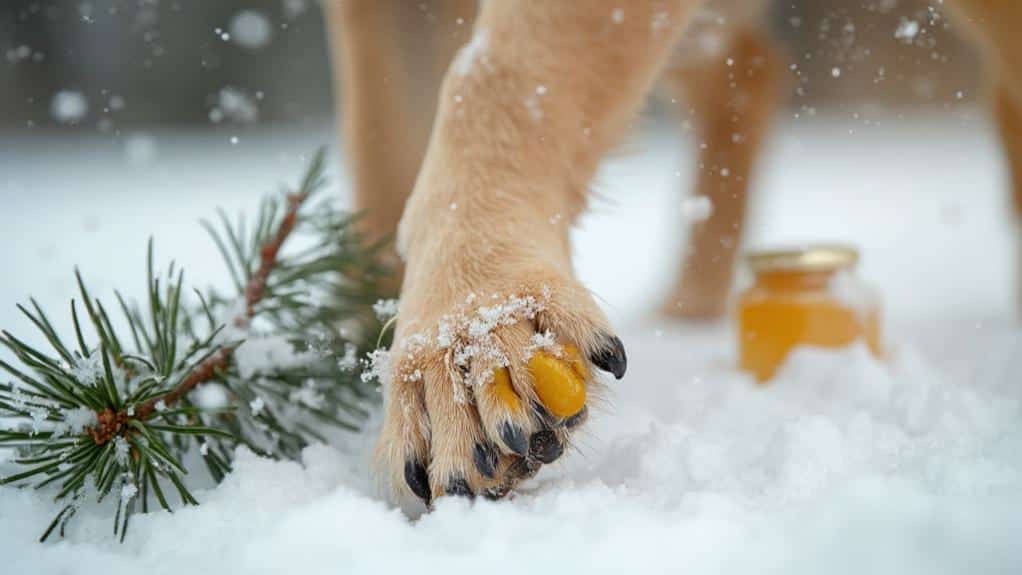
Your dog's paw health doesn't have to rely on synthetic products. Natural paw protection methods offer effective alternatives for winter dog care. Start by applying paw balm made from ingredients like shea butter and coconut oil before walks. This creates a protective barrier against snow, ice, and salt, preventing irritation between toes and reducing the risk of cracking.
Regular use of these balms helps moisturize and protect against harsh winter conditions. Natural paw balms containing vitamin E and aloe vera can provide additional soothing benefits and promote faster healing of damaged paw pads.
Coconut oil, known for its healing properties, can be used to treat dry and damaged paw pads. It offers antiviral and antibacterial benefits, making it an excellent choice for paw care.
After walks, wipe your dog's paws with a towel to remove harmful residues from chemicals and salt, reducing the likelihood of skin irritation or injury. To enhance circulation and promote healing, create a warm environment for paws post-walk by soaking them in lukewarm water. This method can help alleviate any potential damage caused by winter elements.
Paw Balm Application Techniques
To properly apply paw balm, start by cleaning your dog's paws thoroughly and ensuring they're completely dry.
Apply a thin layer of balm to the paw pads and between the toes, gently massaging it in for better absorption.
For best results, use the balm daily during harsh winter conditions, gradually reducing frequency as your dog's paw health improves, and always wipe off any excess after walks to maintain cleanliness.
Proper Application Techniques
Before applying paw balm, it's important to start with clean, dry paws to guarantee maximum absorption and effectiveness. This preparation guarantees the balm can properly protect your dog's paws during winter.
Once the paws are ready, apply a thin layer of balm, focusing on the pads and any dry areas. Remember, a little goes a long way in creating a protective barrier.
During application, distract your dog to prevent licking, which can hinder the balm's absorption. Use treats or toys to keep them occupied while you work.
For best results, apply the balm daily until you notice improvement, then continue as needed to maintain paw health. It's vital to regularly check the paws after application to confirm the balm isn't causing irritation and to monitor for any signs of damage or discomfort.
Frequency of Use
Maintaining a consistent paw balm routine is crucial for your dog's winter paw care. Apply a thin layer of balm daily until you notice improvement in your dog's paw condition. Once the paws are adequately protected, you can adjust the frequency to maintain hydration and prevent damage.
For ideal Winter Paw protection, apply the balm before walks to create a barrier against harsh elements like snow, ice, and salt.
To guarantee effective absorption, distract your dog during application to prevent licking. This allows the balm to penetrate the skin properly. Regular use of paw balm can prevent cracking and dryness, especially during winter when paws are more vulnerable.
Monitor your dog's paws frequently and adjust the application schedule based on environmental conditions and your dog's specific needs.
You'll need to be vigilant about your dog's paw health during winter. Increase balm application frequency during particularly cold or icy periods, and decrease it when conditions are milder.
Paw Preparation Steps
When applying paw balm, proper preparation is key to maximizing its effectiveness. Before you begin, make sure your dog's paws are clean and dry. This step is essential for ideal absorption of the natural ingredients and enhanced paw protection.
Once the paws are ready, apply a thin layer of balm directly onto the paw pads and between the toes, focusing on areas prone to cracking from exposure to snow and ice.
To make certain the balm has time to absorb and provide maximum benefit, follow these steps:
- Gently massage the balm into your dog's paw pads
- Distract your dog with a toy or treat to prevent immediate licking
- Allow 2-3 minutes for the balm to absorb before letting your dog walk
For best results, apply paw balm daily during winter months. After walks, consider reapplying to reinforce protection and maintain hydration, especially if your dog isn't wearing winter boots.
This routine will help keep your dog's paws moisturized and protected from harsh winter conditions. Remember, consistent application is key to maintaining healthy, protected paws throughout the cold season.
Post-Walk Care Essentials
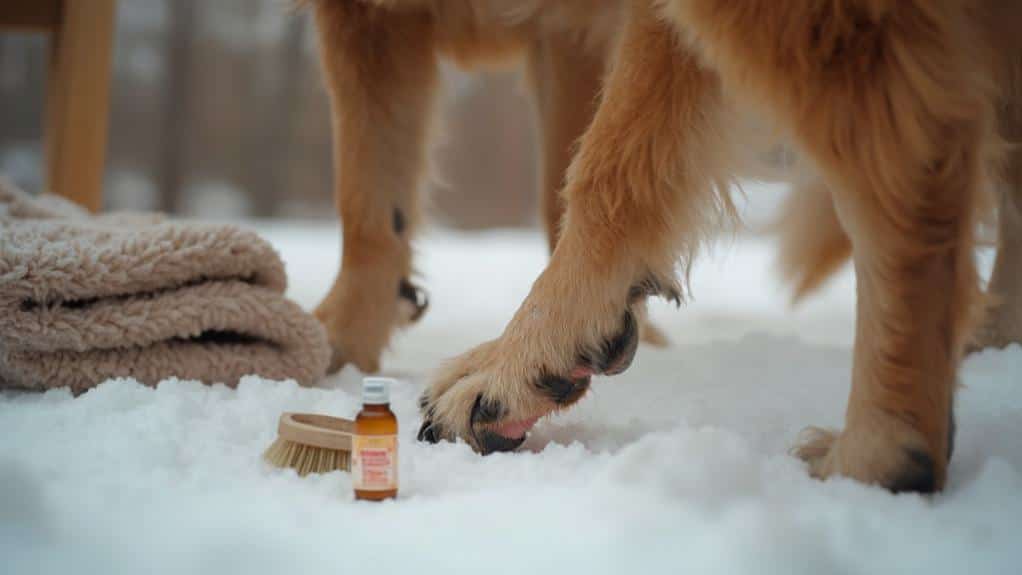
How you care for your dog's paws after a winter walk can make all the difference in their comfort and health. To prevent ice and salt from causing irritation or chemical burns, it's vital to implement a thorough post-walk care routine. As soon as you return home, use a dedicated towel to wipe your dog's paws thoroughly, removing any harmful residues. For a more effective cleanse, consider dipping your dog's paws in warm water, which helps dissolve and rinse away stubborn debris and salt.
Keep your dog's paws healthy by following these essential steps:
| Step | Action | Purpose |
|---|---|---|
| 1 | Wipe paws with towel | Remove surface debris |
| 2 | Dip paws in warm water | Dissolve salt and ice |
| 3 | Dry thoroughly | Prevent moisture-related issues |
| 4 | Inspect paw pads | Check for signs of irritation |
| 5 | Apply paw balm if needed | Moisturize and protect |
DIY Paw Protection Solutions
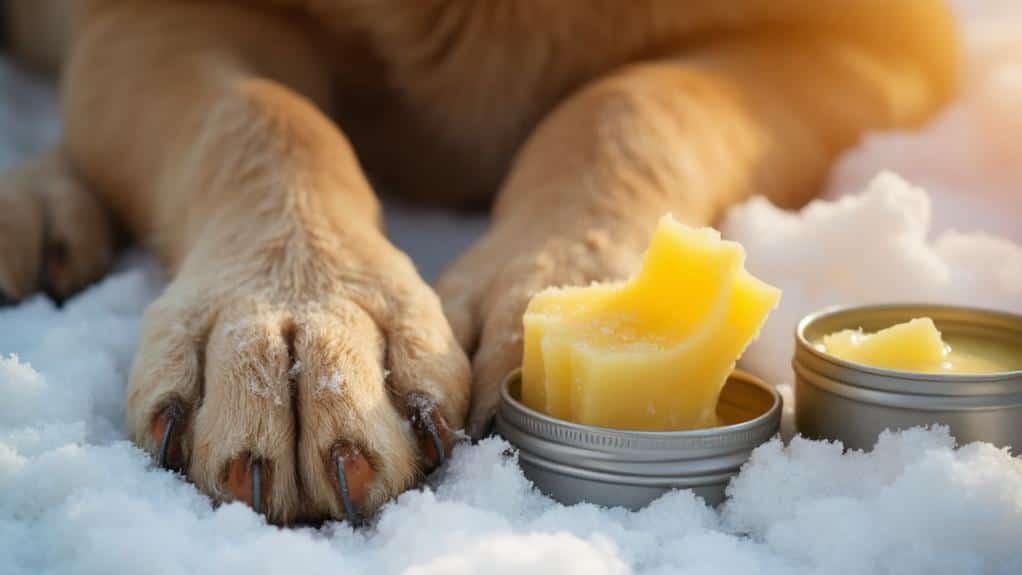
DIY paw protection solutions offer dog owners affordable and customizable options to safeguard their pets' paws during winter walks.
Creating a homemade paw balm using natural ingredients like shea butter, coconut oil, and beeswax can effectively protect your dog's paws from dryness and cracking. To apply, warm a small amount between your fingers and gently massage it into your dog's paw pads before heading outside.
For enhanced cleaning and protection, consider incorporating plant-based ingredients like aloe vera or pomegranate juice into your DIY paw balm recipe, which can provide additional soothing and antibacterial properties.
For a quick and easy solution, apply a thin layer of petroleum jelly to your dog's paws, creating a protective barrier against ice and salt. Alternatively, mix coconut oil with vanilla extract for a moisturizing treatment that supports skin health due to vanilla's antioxidant properties.
To maintain ideal paw health during winter:
- Trim the fur between your dog's toes regularly to minimize ice buildup
- Clean paws after walks using warm water and gentle soap
- Apply DIY paw balm or petroleum jelly before outdoor activities
After walks, it's essential to clean your dog's paws thoroughly. Mix warm water with a few drops of gentle soap to remove any harmful chemicals or salt residue.
Gently pat the paws dry and apply your chosen moisturizing solution to prevent further dryness or cracking.
Winter-Proofing Your Dog's Environment

Preparedness is key when it comes to winter-proofing your dog's environment. To protect your furry friend's paws from harsh winter elements, start by shoveling a designated path in your yard. This simple step will provide a safe route for quick outings, minimizing exposure to snow and ice.
Next, consider covering outdoor paths with straw or other insulating materials to reduce snow accumulation and prevent ice formation on your dog's paws.
Regularly clear outdoor areas of snow and ice to guarantee safe access for your dog and prevent exposure to potential irritants. Create a designated potty area that's free from snow and ice, which won't only allow for easier waste clean-up but also protect your dog's paws from cold and wet conditions.
Frequently Asked Questions
How to Protect Dog Paws From the Cold?
To protect your dog's paws from the cold, start by investing in well-fitted paw booties for winter walks.
Apply protective sprays or balms before heading out to create a barrier against salt exposure and icy conditions.
After walks, clean your dog's paws thoroughly to remove any harmful residues.
Limit time outdoors in extreme cold, and regularly check for signs of irritation.
Can I Put Coconut Oil on My Dogs Paws in Winter?
Yes, you can put coconut oil on your dog's paws in winter. It's an excellent natural remedy for paw moisturization and protection.
Apply a thin layer before walks to create a barrier against harsh elements. Coconut oil's benefits include healing and soothing irritated skin, making it ideal for winter paw health.
As a pet-safe oil, it's a great choice for natural paw remedies. Remember to wipe off excess after walks to keep paws clean and prevent ingestion.
Does Vaseline Protect Dogs Paws From Cold?
Yes, Vaseline can protect your dog's paws from cold. It creates a protective barrier that shields paw pads from ice, snow, and harmful chemicals.
For ideal dog paw health, apply a thin layer before walks. While Vaseline offers benefits, you might also consider paw balms or natural alternatives like coconut oil.
Remember to wipe paws clean after walks to prevent ingestion. As part of your cold weather precautions, regularly check your dog's paws for any signs of irritation or discomfort.
What Temperature Do Dogs' Paws Freeze At?
Picture a winter wonderland where your furry friend's paws tread on icy crystals.
You'll need to be vigilant, as dogs' paws can start freezing at 20°F (-6°C). However, frostbite risk begins at 32°F (0°C) in wet conditions.
Wind chill, dog paw anatomy, and breed factors affect temperature sensitivity.
Watch for paw frostbite symptoms like lifting paws or limping during winter walks.
Take precautions by limiting exposure time and using protective gear.
If injury occurs, seek veterinary care for proper paw recovery.
Conclusion
You've now armed yourself with the knowledge to protect your furry friend's paws from winter's icy grip. By implementing these natural methods, applying balms correctly, and providing post-walk care, you're setting your dog up for comfortable winter adventures. Remember, prevention is key; winter-proofing your dog's environment can make a world of difference. With these tools in your arsenal, you'll be able to navigate the frosty months like a seasoned musher, ensuring your pup's paws remain as snug as a bug in a rug.